English
 Español
 italiano
What Is Wrinkle Resistant TR Fabric and Why Is It So Popular?
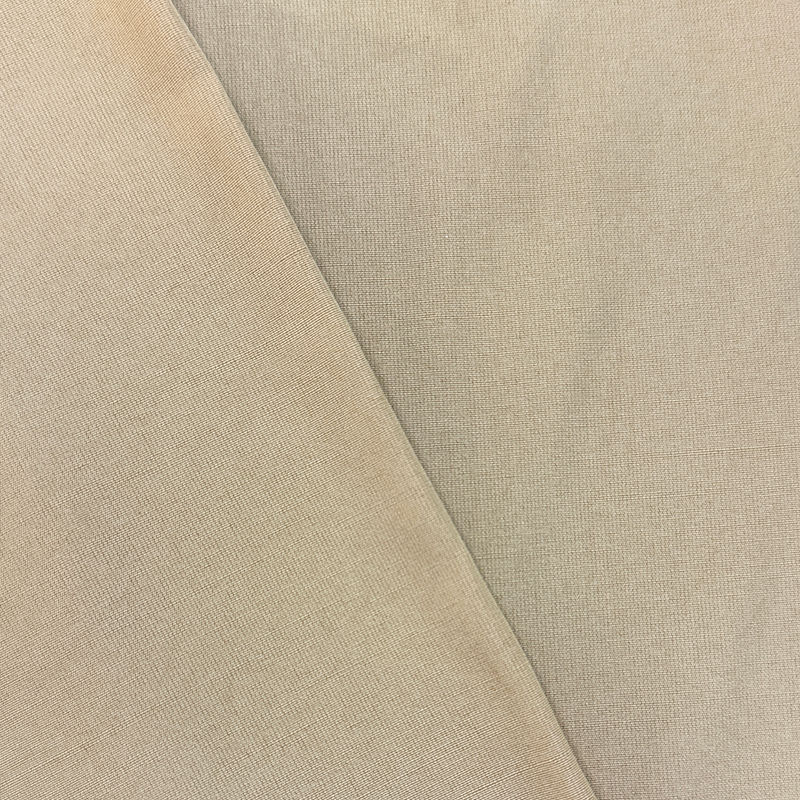
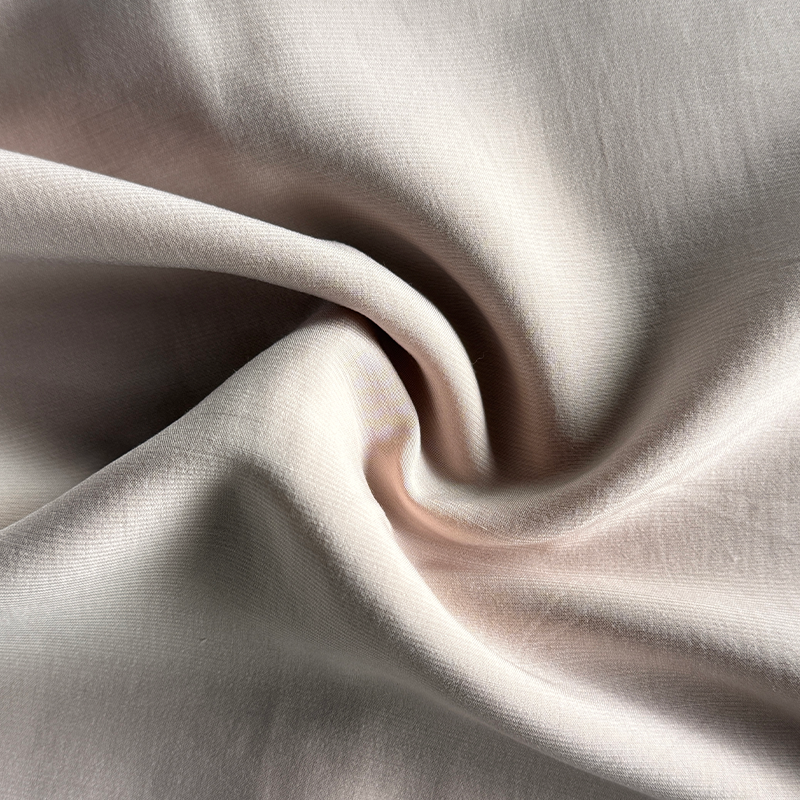
Wrinkle resistant TR fabric — a blend of Terylene (polyester) and Rayon — is one of the most widely adopted materials in modern apparel manufacturing because it combines the crease-recovery strength of polyester with the soft drape and breathability of rayon into a single, high-performance textile. In practical terms, a standard TR blend (typically 65% polyester / 35% rayon or 80/20) retains its smooth surface through a full workday, resists pilling, and recovers its original shape after washing without ironing. These properties make it the default choice for formal trousers, blazers, uniforms, and school wear across Asia, Europe, and the Americas.
The global market for polyester-blended fabrics exceeded USD 92 billion in 2023 and is projected to grow at a CAGR of roughly 5.8% through 2030, with TR fabric representing one of the fastest-growing sub-segments driven by demand for low-maintenance professional wear. Understanding what makes TR fabric tick — its construction, performance benchmarks, sustainability profile, and supply chain dynamics — is essential for any buyer, brand, or manufacturer making sourcing decisions today.
The Composition and Construction of TR Fabric
TR fabric is fundamentally a woven blended fabric produced from blended yarn that combines polyester staple fiber and viscose rayon staple fiber. The two most common blend ratios on the market are 65/35 (polyester/rayon) and 80/20, though custom ratios exist for specialized end uses. Polyester contributes dimensional stability, wrinkle resistance, abrasion resistance, and color fastness; rayon contributes moisture absorption, a silky hand feel, and natural drape. The interplay between these two fiber types at the yarn level determines the final fabric's character.
The yarn used in TR fabric is typically ring-spun or open-end spun blended yarn, with counts ranging from Ne 20/1 to Ne 45/2 depending on the target fabric weight. A medium-weight suiting fabric commonly uses Ne 32/2 or Ne 40/2 blended yarn. After weaving on rapier or air-jet looms, the greige fabric undergoes a sequence of finishing processes — singeing, desizing, scouring, heat-setting, dyeing (usually piece-dyeing with disperse + direct dyes in a two-bath process), and finally a wrinkle-resistant finish applied via a resin treatment. The resin cross-links cellulose chains in the rayon component, significantly improving crease recovery angle (CRA). Well-finished TR fabric achieves a warp+weft CRA of 270°–300°, which meets or exceeds most international standards for wrinkle-resistant apparel fabrics.
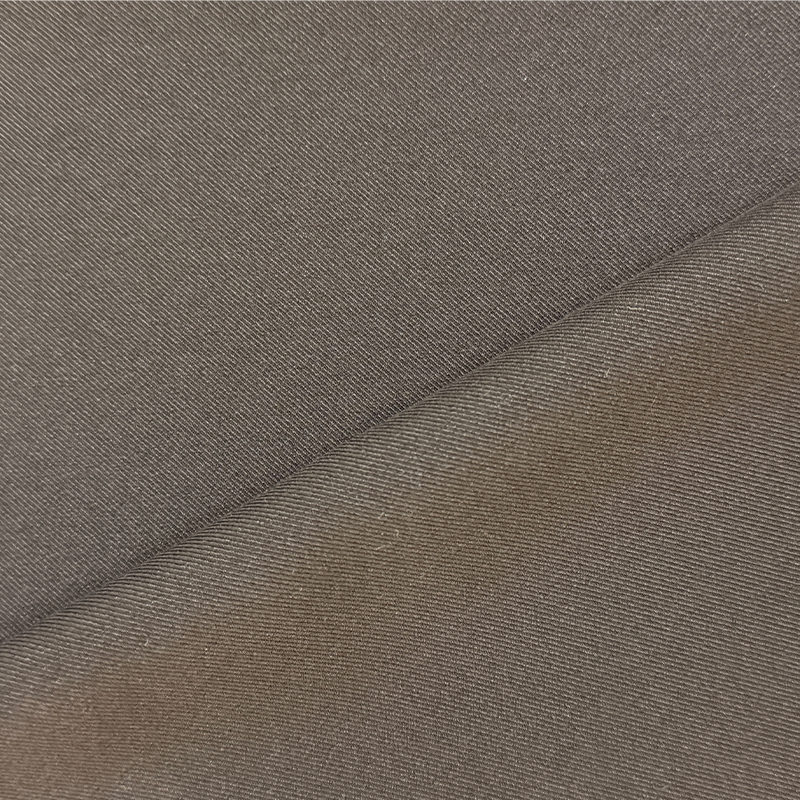
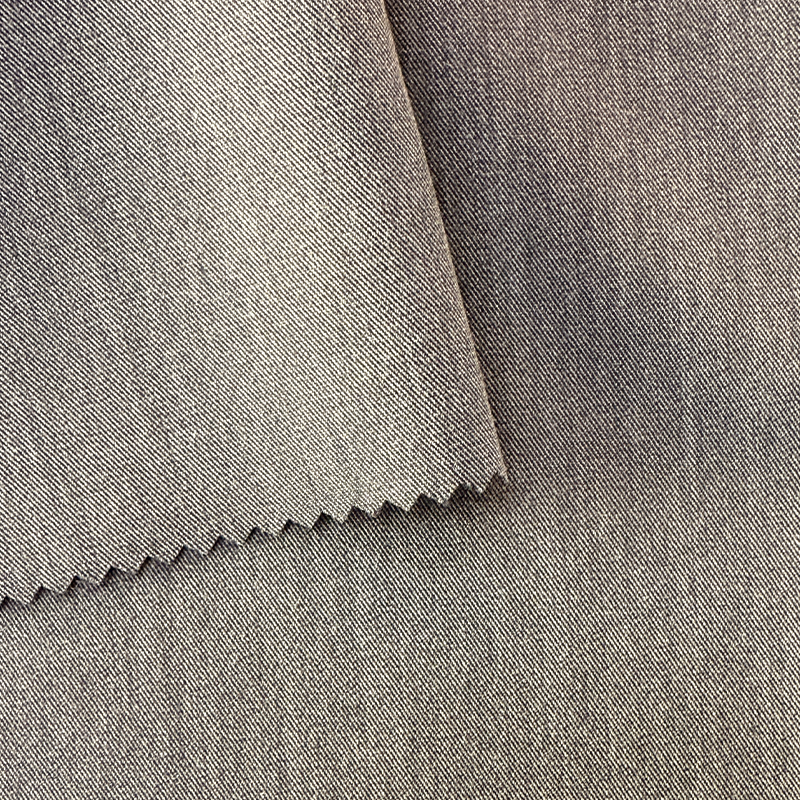
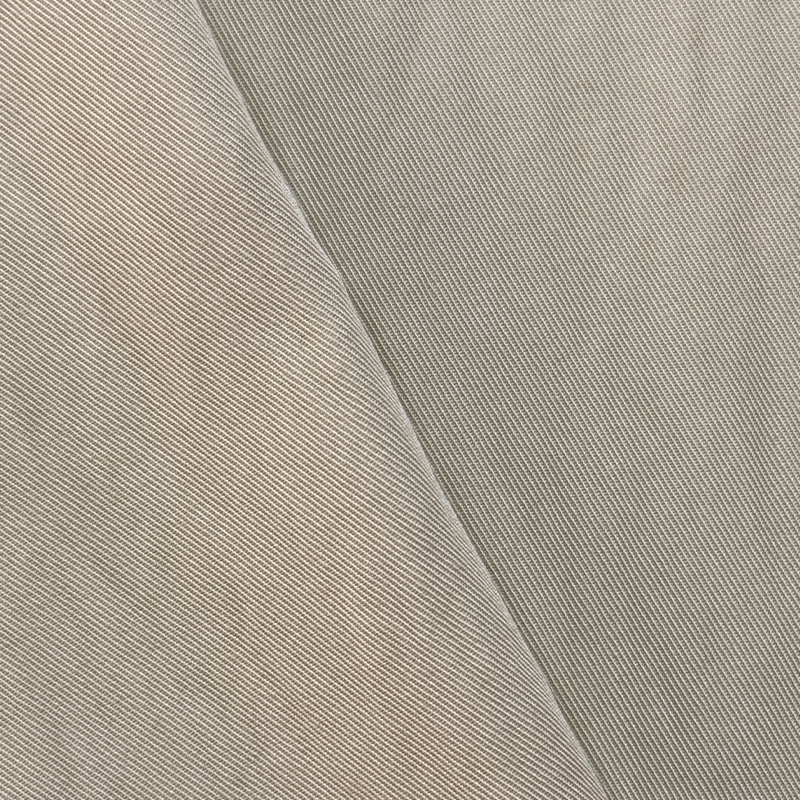
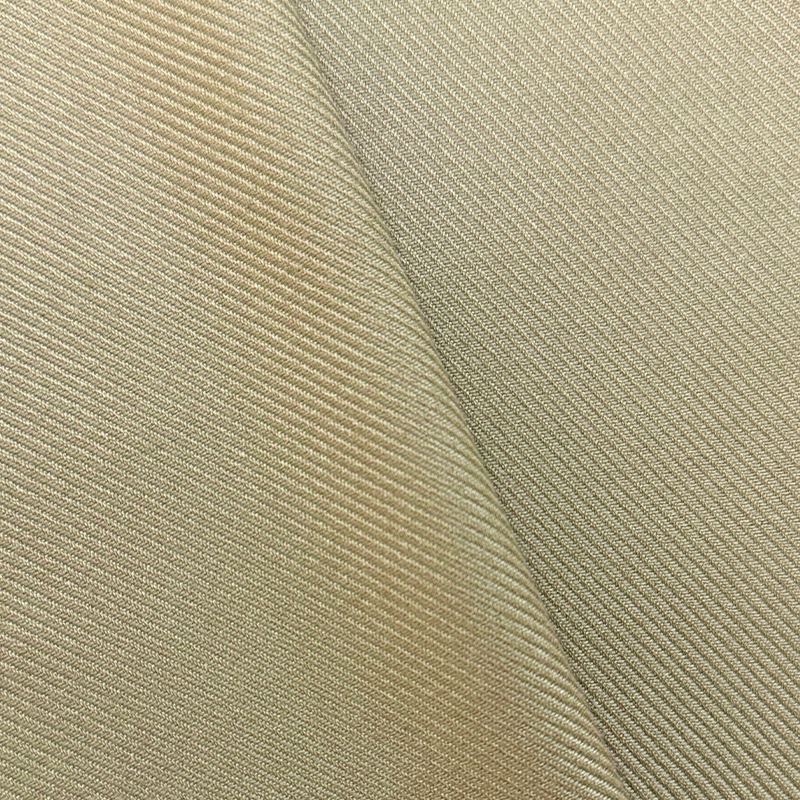
Fabric weight for standard TR suiting ranges from 180 g/m² to 260 g/m², with lighter variants around 120–150 g/m² used for summer linings and lightweight tropical suiting. Construction (thread count and weave structure) also plays a critical role: plain weave TR offers the most stable base for heavy dyeing and printing, while twill weave (2/1 or 2/2) produces the characteristic diagonal rib seen in most TR suiting trousers and blazers.
Fiber Contribution to TR Fabric Key Properties (%)
This horizontal bar chart illustrates the relative contribution of polyester (dark) and rayon (grey) to five critical TR fabric performance properties. Polyester dominates wrinkle resistance and abrasion durability, contributing approximately 85–90% of these characteristics due to its synthetic polymer structure and high elastic recovery. Rayon, by contrast, is the primary driver of drape, hand feel, and moisture absorption — properties that make TR fabric wearable and comfortable throughout the day. Color fastness reflects a more balanced contribution: polyester accepts disperse dyes with exceptional wash-fastness (4–5 grade), while rayon's direct or reactive dyeing adds depth and richness of shade. This complementary fiber interaction is precisely why TR blends outperform single-fiber fabrics in most garment applications. The chart underscores that neither fiber alone would achieve the performance profile that has made TR fabric a global standard in professional suiting.
Performance Benchmarks: How TR Fabric Compares
Performance comparison is the most direct way to understand why TR fabric has displaced pure wool, pure polyester, and pure rayon in the mid-market suiting segment. Below is a structured comparison across seven key performance dimensions that matter to garment manufacturers and end consumers alike.
| Performance Metric | TR Fabric (65/35) | Pure Polyester | Pure Rayon | Wool Blend |
|---|---|---|---|---|
| Wrinkle Recovery (CRA°) | 270–300° | 290–310° | 180–220° | 240–270° |
| Moisture Absorption (%) | 5–7% | 0.4–0.8% | 11–13% | 15–18% |
| Abrasion Resistance (Martindale cycles) | 25,000–40,000 | 40,000+ | 8,000–15,000 | 20,000–30,000 |
| Wash Shrinkage (%) | <2% | <1% | 5–10% | 3–8% |
| Pilling Resistance (Grade 1–5) | 4–5 | 3–4 | 2–3 | 3–4 |
| Color Fastness to Washing (Grade) | 4–5 | 4–5 | 3–4 | 3–4 |
| Hand Feel / Drape Score (1–10) | 8 | 5 | 9 | 9 |
The data above reveals the core value proposition of TR fabric: it achieves near-polyester levels of wrinkle resistance and dimensional stability while dramatically improving on polyester's notoriously poor hand feel and moisture management. Compared with pure rayon, TR fabric offers 3–5× better abrasion resistance and reduces wash shrinkage from a problematic 5–10% down to under 2%, making it far more suitable for machine-washable garments. Against wool blends, TR fabric holds its own on wrinkle recovery while offering superior color fastness and significantly lower care requirements.
Why TR Fabric Dominates the Suiting and Uniform Market
The dominance of TR fabric in professional and uniform apparel is not accidental — it is the result of a convergence of economic, performance, and logistical advantages that no competing fabric type has been able to replicate simultaneously.
Cost Efficiency Across the Value Chain
TR fabric's raw material inputs — polyester staple fiber and viscose rayon — are both commodity fibers produced at massive global scale, which keeps yarn costs stable and predictable even during supply chain disruptions. A blended yarn manufacturer working with Ne 32/2 TR yarn can typically produce at yarn costs 30–40% below equivalent wool-blend yarns and 15–20% below comparable cotton-polyester blended yarns on a per-meter fabric basis. This cost structure makes TR fabric viable for large-volume uniform programs — military, school, hospitality, and corporate — where thousands to millions of meters are ordered annually.
Low Care Requirements Drive Consumer Adoption
A 2022 consumer survey conducted across five Asian markets found that 74% of buyers of formal trousers cited "wrinkle resistance" as their top purchase criterion, ahead of fit (68%) and color range (52%). TR fabric directly addresses this preference. Garments made from well-finished TR fabric can be machine washed at 40°C, tumble dried on low, and worn with minimal or no ironing — a care profile that wool-blend garments cannot match without significant quality degradation over time. For busy professionals and institutional buyers managing large uniform inventories, this difference translates directly into reduced laundry costs and longer garment service life.
Versatility in Weave Structures and Finishing Options
As a woven fabric factory material, TR lends itself to an exceptionally wide range of weave structures. Beyond standard plain and twill weaves, TR fiber can be processed on jacquard looms to produce sophisticated dobby or brocade patterns used in premium suiting and ceremonial wear, positioning TR fabric at the crossroads of mass-market practicality and design versatility. Finishing options further expand the product range: anti-static finishing, water-repellent (DWR) coating to create a waterproof polyester fabric-style functional surface, stretch finishing by adding elastane in the weft, and antimicrobial treatments for healthcare and food-service uniforms.
Global Polyester Blended Fabric Market Size 2019–2030 (USD Billion)
This line chart tracks the trajectory of the global polyester blended fabric market from 2019 through 2030, with actual data shown as a solid line and projections beyond 2025 displayed in dashed format. The 2021 dip reflects supply chain disruption caused by the global pandemic, which temporarily reduced apparel manufacturing output and raw material demand. Despite this interruption, the market rebounded strongly in 2022 and entered a sustained growth phase driven by expanding formal wear consumption in South and Southeast Asia, continued uniform program expansions in the Middle East and Africa, and a growing preference among fast-fashion brands for wrinkle-resistant blended fabrics as a cost-effective alternative to technical wovens. The forecast trajectory from 2025 to 2030 implies compound annual growth of approximately 5.8%, reaching an estimated USD 124 billion by 2030. This growth will be disproportionately concentrated in functional and sustainable variants — recycled polyester blends, stretch TR, and antimicrobial-finished fabrics — reflecting broader industry shifts toward performance-oriented textiles. For suppliers and manufacturers, this sustained market expansion underlines the importance of investing in finishing capability and sustainable raw material sourcing to remain competitive.
TR Fabric Variants: From Standard to Functional
The TR fabric family is not monolithic. Over the past decade, manufacturers and finishing mills have developed a spectrum of TR variants that extend the basic wrinkle-resistant blended fabric concept into specialized functional categories. Understanding these variants is essential for buyers matching fabric to end-use requirements.
- Standard TR (65/35 or 80/20): The workhorse of the suiting market. Used for trousers, blazers, school uniforms, and corporate workwear. Available in plain, twill, and herringbone weaves. Weight range 180–260 g/m².
- Stretch TR (TR + Spandex): Incorporates 2–5% elastane (spandex) in weft or both directions to produce a stretch blended fabric with 15–30% elongation. Ideal for slim-fit trousers and activewear-inspired formal garments. The stretch blended fabric manufacturer must use covered yarn or core-spun elastane yarn to ensure durability through repeated washing.
- Lightweight TR: Produced at 120–160 g/m² for tropical suiting and warm-climate professional wear. Uses finer yarn counts (Ne 45/2 or higher) and open weave structures to maximize breathability. A key product category for the lightweight polyester fabric supplier serving the Middle East, South Asia, and sub-Saharan Africa markets.
- Water-Repellent TR: Finished with a durable water repellent (DWR) coating — typically fluorocarbon-free C0 chemistry in response to environmental regulations — to create a surface that causes water to bead and run off. Functions similarly to a waterproof polyester fabric for light rain protection in outerwear applications. Repellency rated at ≥ 80 (AATCC 22 spray test).
- Recycled TR: Uses recycled polyester fabric supplier-grade rPET fiber (derived from post-consumer PET bottles) blended with rayon to produce a functionally equivalent fabric with a significantly reduced carbon footprint. GRS-certified recycled content typically at 35–65% of total fiber weight. Growing rapidly as brands seek to meet sustainability commitments without sacrificing performance.
- Jacquard TR: Woven on jacquard fabric factory looms to produce self-patterned fabrics — brocades, damasks, geometric dobbies — using TR fiber. Primarily used in ceremonial wear, high-end uniform programs, and premium suiting where pattern texture adds visual distinction. More technically demanding to produce but commands a higher price point in export markets.
- Antimicrobial TR: Finished with silver-ion or zinc-based antimicrobial agents for healthcare, food processing, and military uniform applications. Effectiveness maintained for 30–50 industrial wash cycles, meeting ISO 20743 standards for antibacterial activity.
Radar Chart: Performance Profile Comparison of TR Fabric Variants
This radar chart overlays the performance profiles of three key TR fabric variants across six critical dimensions: wrinkle resistance, durability, water repellency, sustainability, breathability, and stretch. Standard TR (solid black polygon) scores highest on wrinkle resistance and durability, confirming its strength in core suiting applications, but scores lowest on sustainability and stretch — areas where it is being challenged by newer variants. Recycled TR (dashed dark polygon) sacrifices minimal performance on core metrics while dramatically improving the sustainability score, making it the preferred option for brands with ESG commitments. Stretch TR (light dashed polygon) trades some sustainability and water repellency in exchange for exceptional stretch performance, repositioning TR fabric in slim-fit and active professional wear categories. The chart clearly demonstrates that no single variant dominates all dimensions — buyers must prioritize based on end-use requirements. The broadening of the TR variant landscape is a key factor in the fabric's sustained market growth, allowing it to address segments that standard TR could not previously serve competitively.
Sustainability and Recycled Polyester in TR Fabric Manufacturing
Sustainability has become a non-negotiable consideration in textile procurement, particularly for large institutional buyers and international brands subject to ESG disclosure requirements. The TR fabric supply chain has responded with meaningful structural changes, most notably the integration of recycled polyester fiber (rPET) as a direct substitute for virgin polyester in blended yarn manufacturing.
The life cycle assessment data is compelling: producing rPET fiber from post-consumer PET bottles generates approximately 59% fewer greenhouse gas emissions than producing virgin polyester, according to Higg MSI benchmarks. It also consumes 42% less energy and reduces water usage by roughly 20%. A recycled polyester fabric supplier working with GRS-certified rPET can offer buyers third-party-verified chain-of-custody documentation that satisfies the requirements of major brands' supplier codes of conduct and enables on-product recycled content labeling.
However, sustainability in TR fabric is not limited to fiber sourcing. The finishing stage — particularly the resin treatment that imparts wrinkle resistance — has historically used formaldehyde-based cross-linking agents that raise health and environmental concerns. Modern TR fabric finishing increasingly uses low-formaldehyde or zero-formaldehyde resin systems (e.g., DMDHEU-free or 1,2,3,4-butanetetracarboxylic acid [BTCA] chemistry) that achieve comparable CRA performance while meeting Oeko-Tex Standard 100 Class I requirements (free formaldehyde limit: ≤ 20 ppm for baby products, ≤ 75 ppm for direct skin contact). This is a significant product development milestone that has opened new market segments for TR fabric in children's schoolwear and intimate apparel.
The dyeing process also offers sustainability improvement opportunities. TR fabric's two-component fiber structure traditionally requires a two-bath dyeing process (disperse + direct or reactive), which is water- and energy-intensive. Advances in carrier-free dyeing, low-liquor-ratio dyeing machines, and fiber-reactive disperse dye systems have allowed forward-looking TR fabric suppliers to reduce water consumption by 30–40% per meter and cut dyeing energy use by up to 25% without compromising color performance.
Environmental Impact Reduction: rPET vs. Virgin Polyester (%)
This column chart quantifies the environmental benefits of replacing virgin polyester with GRS-certified recycled polyester (rPET) in TR fabric production, expressed as percentage reduction relative to virgin PET baseline. The most dramatic improvement is in greenhouse gas emissions, where rPET achieves a 59% reduction — a figure that is increasingly significant as brands calculate their Scope 3 supply chain emissions under frameworks like the Science Based Targets initiative (SBTi). Energy use reduction of 42% reflects the elimination of the energy-intensive polymerization stage required for virgin PET production. Water consumption reduction of 20%, while less dramatic, still represents meaningful progress in an industry that has faced sustained pressure from NGOs and regulators over freshwater impacts. Collectively, these improvements allow a TR fabric supplier working with rPET to offer buyers fabrics with a materially lower environmental footprint without changing the garment's performance characteristics in any measurable way. As regulatory requirements around recycled content declarations and extended producer responsibility tighten in the EU and other markets, these documented improvements will become a sourcing prerequisite rather than a differentiator.
The TR Fabric Supply Chain: From Blended Yarn to Finished Fabric
A robust understanding of TR fabric's supply chain helps buyers make better sourcing decisions, identify quality control leverage points, and build more resilient procurement strategies. The TR fabric supply chain spans four main stages: fiber production, blended yarn manufacturing, greige fabric weaving, and finishing and dyeing.
Stage 1: Fiber Production
Polyester staple fiber (PSF) is produced from PTA and MEG through polymerization, spinning, and cutting processes at large-scale chemical fiber plants — primarily in China, India, and Taiwan. Rayon staple fiber (viscose) is produced from dissolving-grade wood pulp through the viscose process, with major production in China, Indonesia, and India. Both fibers are commodity products with published market prices that fluctuate based on feedstock costs (crude oil for polyester; wood pulp for rayon). A durable woven fabric supplier with stable supply chain relationships can typically contract fiber at 60–90 day forward prices, providing cost predictability for fabric quotes.
Stage 2: Blended Yarn Manufacturing
This is where TR fabric's distinctive properties are largely determined. The blended yarn manufacturer combines PSF and viscose in the correct ratio, opens and blends the fibers in draw frames, and spins the blended sliver into yarn. The quality of blending — uniformity of fiber distribution, yarn evenness (CV%), and twist factor — directly affects the fabric's appearance, pilling resistance, and strength. A high-quality TR yarn should have a CV% below 12%, a tenacity of at least 12 cN/tex, and a twist factor appropriate for the intended weave structure. Yarn count accuracy is critical: TR fabric for fine suiting typically requires a count tolerance of ±2%.
Stage 3: Greige Fabric Weaving
A woven fabric factory producing TR greige fabric typically operates high-speed rapier or air-jet looms running at 600–900 RPM. For standard twill TR suiting, a construction of 110–130 ends/inch × 80–90 picks/inch is common. Weaving defect rates must be kept below 3% (on a 4-point grading system) to maintain downstream processing efficiency. For jacquard TR variants, the jacquard fabric factory deploys electronic jacquard heads with 1,344 to 10,240 hooks, allowing complex repeat patterns while maintaining the structural integrity of the TR blend.
Stage 4: Finishing and Dyeing
This is the most technically demanding stage and the primary quality differentiator between TR fabric suppliers. Pre-treatments (singeing, desizing, scouring) must be optimized for the specific TR blend ratio to avoid rayon degradation. Dyeing requires precise management of two incompatible dye systems (disperse for polyester, direct/reactive for rayon) to achieve level dyeing and matching shade across both fiber components. The wrinkle-resistant resin finish is applied on a pad-dry-cure machine with strict temperature and chemical concentration control — variation in cure temperature of ±5°C can change CRA by 10–15°. Final inspection uses ASTM or ISO methods for CRA, tensile strength, color fastness, and dimensional stability.
TR & Polyester Blended Fabric — Major Export Destination Shares (2023, %)
This column chart illustrates the distribution of TR and polyester blended fabric exports by destination region in 2023, based on trade flow analysis of major exporting countries. South Asia — primarily Bangladesh and Pakistan — accounts for the largest share at approximately 28%, driven by the region's massive garment manufacturing sector, which converts TR fabric into finished trousers, blazers, and uniforms for global brands. Southeast Asia follows at 22%, with Vietnam, Cambodia, and Indonesia emerging as important production hubs for formal and workwear garments requiring TR fabric. The Middle East represents 18%, largely driven by government uniform programs, school uniform mandates, and the region's growing domestic fashion industry. Africa at 14% is the fastest-growing destination, fueled by expanding school enrollment programs and government-sponsored uniform distribution schemes. Europe's 12% share reflects demand from niche suiting manufacturers and recycled-content-focused brands sourcing sustainable TR variants. Understanding this regional breakdown helps TR fabric suppliers calibrate their product development and certification investments — European buyers prioritize Oeko-Tex and GRS credentials, while South and Southeast Asian customers typically prioritize delivery speed and price competitiveness.
Quality Standards and Testing Protocols for TR Fabric
Quality assurance in TR fabric procurement is a multi-layered process that spans yarn inspection, greige fabric assessment, and finished fabric testing. Buyers working with a TR fabric supplier for the first time should establish clear quality specifications before production commences, covering at minimum the following parameters and test methods.
Critical Test Parameters for TR Fabric
- Crease Recovery Angle (CRA): AATCC 66 or ISO 2313. Target: warp+weft ≥ 270°. This is the defining test for wrinkle resistance.
- Tensile Strength: ISO 13934-1 (grab method). Minimum: 200N warp, 150N weft for standard suiting weight.
- Tear Strength: ISO 13937-2. Minimum: 15N warp and weft for 200 g/m² fabric.
- Dimensional Stability (Shrinkage): ISO 6330 or AATCC 135. Maximum: ±2% warp and weft after 3 wash cycles at 40°C.
- Color Fastness to Washing: ISO 105-C06. Minimum grade: 4 (color change), 3–4 (staining).
- Color Fastness to Rubbing: ISO 105-X12. Minimum: Grade 4 dry, Grade 3 wet.
- Pilling Resistance: ISO 12945-2 (Martindale). Minimum Grade 4 at 2,000 cycles for suiting fabric.
- Free Formaldehyde Content: ISO 14184-1. Maximum: 75 ppm (direct skin contact per Oeko-Tex 100 Class II).
- Fabric Weight: ISO 3801. Tolerance: ±5% from specified gsm.
- Thread Count (EPI/PPI): ISO 7211-2. Tolerance: ±3% from specification.
For recycled polyester fabric supplier products, additional documentation requirements include a valid Global Recycled Standard (GRS) transaction certificate for each shipment, a fiber composition test report (FTIR or mass balance), and traceability documentation linking rPET fiber back to pre- or post-consumer waste streams. These requirements are increasingly mandated by brands' social and environmental compliance programs and cannot be substituted with supplier declarations alone.
Applications Across Industries: Where TR Fabric Creates Value
TR fabric's combination of performance and versatility has secured it a dominant position across multiple apparel and textile segments. The following overview covers the key application areas where TR fabric generates the most commercial value.
Corporate and Professional Wear
The largest single application for TR fabric globally. Corporate uniform programs at major organizations often involve tens of thousands of garments produced from the same TR specification annually. Key requirements in this segment include precise shade consistency across multiple production batches (metamerism control), consistent fabric weight (±3%), and washable color fastness to maintain appearance through hundreds of industrial laundry cycles. A durable woven fabric supplier capable of holding shade tolerance within DE≤1.5 (CIELab) across lots is a significant competitive advantage in this segment.
School and Educational Uniforms
School uniforms represent one of the most consistent demand drivers for TR fabric in Asia, Africa, and the Middle East. The typical school uniform specification prioritizes wrinkle resistance (students often sit for long periods), abrasion resistance (active children wear fabric hard), and color fastness (uniforms are washed daily in many markets). Low-formaldehyde TR fabric meeting Oeko-Tex Standard 100 Class II is increasingly specified for direct skin contact children's applications.
Hospitality and Service Industry
Hotels, airlines, and food service operations require fabrics that maintain a polished appearance through extended wearing periods and frequent laundering. TR fabric in 200–240 g/m² twill is the standard specification for hotel front-desk uniforms, cabin crew trousers, and restaurant staff clothing. The combination of wrinkle resistance, color retention, and dimensional stability reduces uniform replacement cycles from every 8–10 months (for lesser fabrics) to 18–24 months, delivering measurable cost savings for large hospitality operators.
Fashion and Retail Garments
Beyond uniforms, TR fabric has expanded significantly into fashion retail — particularly in fast fashion and value-fashion segments where consumers seek a professional aesthetic at accessible cost. Stretch TR is driving this growth, enabling slim-fit trousers and tailored blazers with a modern silhouette. The stretch blended fabric manufacturer serving fashion brands must meet additional requirements for elastane content consistency, recovery after elongation (≥ 90% after 3 cycles at 30% extension), and compatibility with high-output cutting and sewing operations.
How to Select the Right TR Fabric Supplier
Selecting a TR fabric supplier involves evaluating capabilities across production, quality, compliance, and service dimensions. The following framework provides a structured approach to supplier assessment.
Production Capability Assessment
Assess whether the supplier has integrated production from yarn to finished fabric or is primarily a trading company sourcing from multiple mills. An integrated blended fabric manufacturer with in-house spinning, weaving, and finishing offers tighter quality control and faster response to specification changes. Key questions: What is the minimum order quantity (MOQ) by fabric type? What is lead time from order to shipment for standard and custom specifications? Can the supplier produce sample yardage before full production? What finishing capabilities are available in-house versus outsourced?
Quality System and Certification
A credible TR fabric supplier should hold ISO 9001 certification for quality management systems as a baseline. Oeko-Tex Standard 100 certification is essential for garments intended for skin contact. GRS certification is required for recycled content claims. GOTS (Global Organic Textile Standard) certification is relevant for TR variants incorporating organic rayon. Request the scope certificate, not just a logo claim, and verify the certificate's validity on the certifying body's online database. For buyers in regulated markets, ask specifically about REACH compliance documentation for chemical substances used in finishing.
Service and Responsiveness
Technical service capability matters as much as production capability for TR fabric procurement. A supplier with dedicated textile engineers who can advise on fabric construction optimization, troubleshoot garment sewing issues, and manage color matching across production runs adds tangible value beyond the fabric roll itself. Response time to technical inquiries, sample turnaround speed (target ≤ 10 working days for lab dips), and post-delivery claims handling are practical indicators of service quality that are best assessed through reference checks with existing customers.
TR Fabric Supplier Evaluation: Criteria Importance vs. Typical Difficulty to Verify
This scatter-bubble chart maps eight key supplier evaluation criteria on two axes: importance to the buyer (horizontal) and difficulty to verify through standard due diligence (vertical). Criteria in the upper-right quadrant — such as quality certifications and sustainability documentation — demand the most buyer attention because they are both critically important and challenging to verify without in-person audits or third-party testing. Production capacity and technical service capability sit in the middle zone, important but verifiable through factory visits and reference conversations. Criteria in the lower-right quadrant, like MOQ and lead time, are highly important but easy to verify in the initial commercial inquiry. Logistics and references fall in the lower-left, less strategically critical but still worth confirming. The bubble size roughly represents the relative weight buyers assign to each factor in practice. This framework helps procurement teams allocate due diligence effort proportionally — spending the most time and resources on the criteria that matter most and are hardest to assess, while handling simpler verifications efficiently in the early stages of supplier qualification.
About Shaoxing Echoes Textile Co., Ltd.
Shaoxing Echoes Textile Co., Ltd. is a full-category import and export fabric company that integrates research and development, production, and sales within a single operational structure. With years of deep expertise in the textile industry, the company leverages its two core production bases — an 80-acre specialized greige fabric factory and an 80-acre modern cotton yarn factory — to achieve full industrial chain control from raw materials to finished products.
Backed by strong production capabilities, consistent quality assurance, and a mature supply chain system, Echoes focuses on textile import and export operations, offering a wide range of products, including various cotton yarns, greige fabrics, and related textile products, which are exported to numerous regions worldwide. As an established blended fabric manufacturer, TR fabric supplier, and polyester fabric supplier, Echoes maintains the production flexibility to serve orders ranging from sample development to large-volume production programs across TR suiting, stretch blended fabric, lightweight and recycled polyester variants, and jacquard woven structures.
Supported by a professional international trade service team, Echoes precisely aligns with customer needs, delivers efficient order fulfillment, provides customized solutions, and ensures comprehensive after-sales service. Whether you are sourcing standard TR suiting fabric, developing a custom wrinkle resistant TR fabric specification, or building a sustainable supply chain using recycled polyester fabric with GRS certification, Echoes has the production infrastructure, technical expertise, and service capability to support your program from initial inquiry through final delivery.
Frequently Asked Questions About Wrinkle Resistant TR Fabric
Q1: What does "TR" stand for in TR fabric, and what is the standard blend ratio?
"TR" stands for Terylene-Rayon, where Terylene is the trade name for polyester fiber (specifically polyethylene terephthalate, PET). The most widely used blend ratio is 65% polyester / 35% rayon, which balances wrinkle resistance from the polyester component with the softness and drape contributed by rayon. An 80/20 (polyester/rayon) blend is also common in applications requiring maximum dimensional stability and wrinkle resistance, such as military and institutional uniforms. Custom ratios outside these standards are possible from specialized blended yarn manufacturers but typically require higher minimum order quantities.
Q2: How does wrinkle resistant TR fabric achieve its crease recovery performance?
TR fabric's wrinkle resistance derives from two mechanisms. First, the polyester fiber itself has high elastic recovery due to its crystalline polymer structure — when bent or compressed, polyester fibers spring back toward their original shape, contributing passive crease recovery. Second, the rayon component (which would otherwise wrinkle significantly in its untreated state) is treated with a resin finishing system during the fabric production process. The resin creates cross-links between adjacent cellulose chains in the rayon fiber, restricting chain mobility and preventing the permanent deformation that causes wrinkles. Well-finished TR fabric achieves a combined warp+weft crease recovery angle of 270°–300° by the AATCC 66 test method, which represents a level that is practically invisible as wrinkling in normal wearing conditions.
Q3: Is TR fabric suitable for garments that require frequent machine washing?
Yes, well-constructed TR fabric is among the most machine-washable professional fabrics available. Standard TR fabric can be washed at 30–40°C in a conventional washing machine using a normal or gentle cycle, tumble dried on a low heat setting, and worn with little or no ironing. Its dimensional stability (shrinkage under 2% per ISO 6330) and color fastness (typically Grade 4–5 on ISO 105-C06) remain stable through repeated washing cycles. This is one of the primary advantages TR fabric holds over wool-blend suiting, which often requires dry cleaning or delicate hand washing to maintain appearance and dimensions. For institutional applications such as school or corporate uniforms subjected to daily washing, TR fabric's wash durability is a key specification requirement.
Q4: What is the difference between standard TR fabric and recycled TR fabric, and does recycled TR perform the same way?
Recycled TR fabric uses rPET fiber (polyester fiber recycled from post-consumer PET bottles or post-industrial waste) in place of virgin polyester as the polyester component of the blend. The rayon component remains conventional viscose rayon (though bio-based or ECOVERO-type rayon is also possible). In terms of performance, rPET fiber of equivalent quality to virgin PET produces fabric with identical mechanical, aesthetic, and durability properties — the recycling process does not degrade fiber tenacity, dyeability, or elastic recovery to a measurable degree at the fabric level. The key differences are environmental: rPET production generates approximately 59% fewer greenhouse gas emissions per kilogram than virgin PET. From a certification standpoint, recycled TR requires GRS (Global Recycled Standard) certification and transaction certificates to support recycled content claims, which adds a documentation layer but does not change the fabric's performance specification.
Q5: What minimum order quantities (MOQ) should buyers expect when sourcing TR fabric from a manufacturer?
MOQ varies significantly depending on whether you are sourcing a stock color (from a supplier's standard color card) or a custom shade requiring dedicated dyeing, and whether the fabric construction is standard or customized. For stock colors in standard TR constructions, MOQs from established woven fabric factories typically start at 300–500 meters per color. For custom shades or custom constructions, MOQs commonly range from 1,000–3,000 meters to amortize the costs of yarn preparation, loom setup, and dyehouse sampling. Jacquard TR and specialty functional finishes (stretch, water repellent, antimicrobial) generally carry higher MOQs of 2,000–5,000 meters due to the complexity of setup. Buyers with smaller volume requirements should discuss consolidation options or ask about stock programs where suppliers maintain inventory in popular colors.
Q6: How can buyers verify that a TR fabric supplier's wrinkle resistance claims are accurate before committing to production?
The most reliable approach is to request pre-production fabric samples and submit them to an accredited third-party testing laboratory (e.g., SGS, Intertek, Bureau Veritas, or HKRIC) for CRA testing per AATCC 66 or ISO 2313, along with a full physical and chemical test battery covering shrinkage, tensile strength, color fastness, and formaldehyde content. This pre-production testing typically costs USD 150–300 per full test report and takes 5–10 working days. Additionally, ask the supplier to provide test reports from recent production lots of the same or similar fabric as reference. Reputable TR fabric suppliers will have current test reports on file for their standard product range and will offer to include specific test parameters in the production quality control plan. Do not rely solely on supplier-issued test reports for compliance-sensitive parameters — independent third-party testing is the industry standard for verification.