English
 Español
 italiano
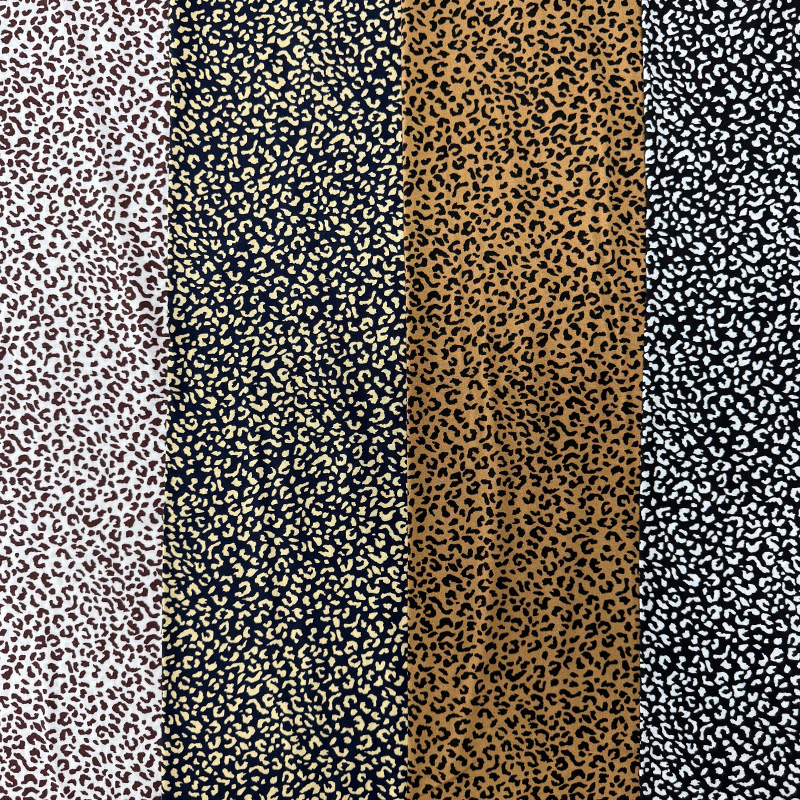
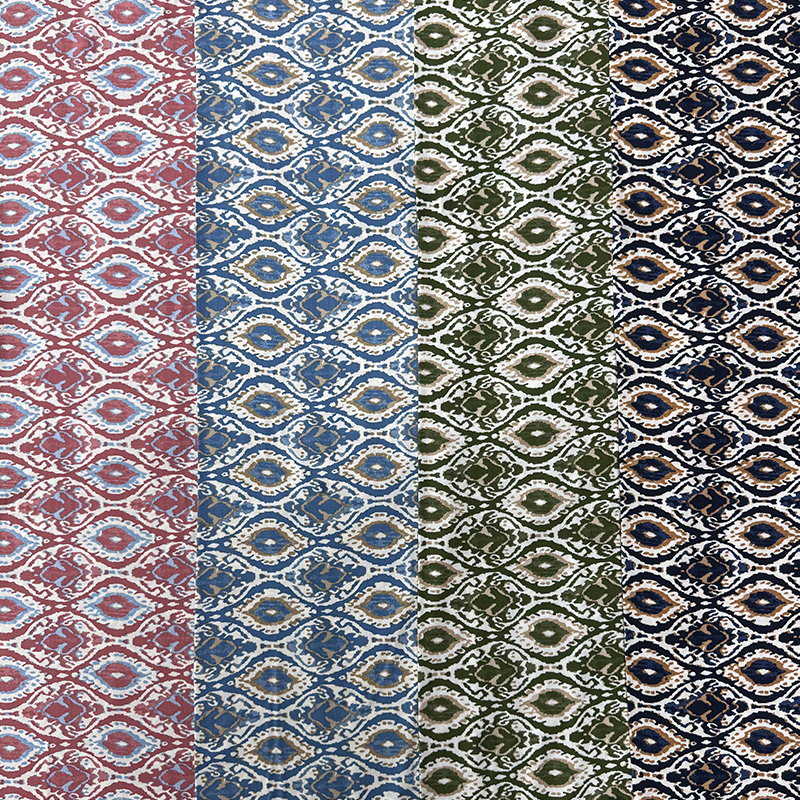
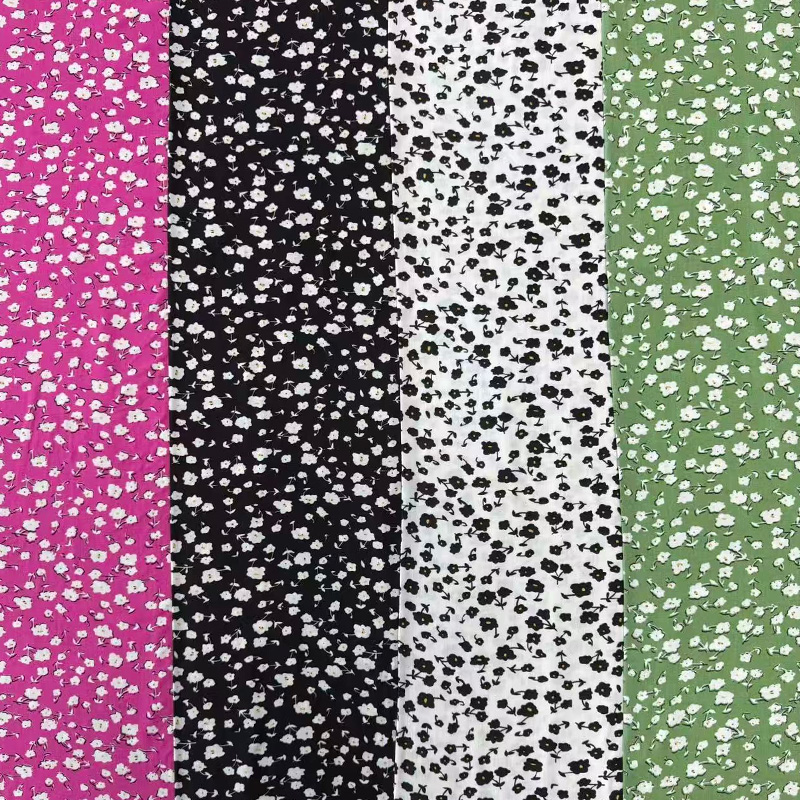
45S Printed Rayon Fabric – Hand-Drawn Rough-Edge Large Polka Dots
100%R 58"60" 105GSM
45S Printed Rayon Fabric – Hand-Drawn Rough-Edge Large Polka Dots uses high-count rayon fabric...


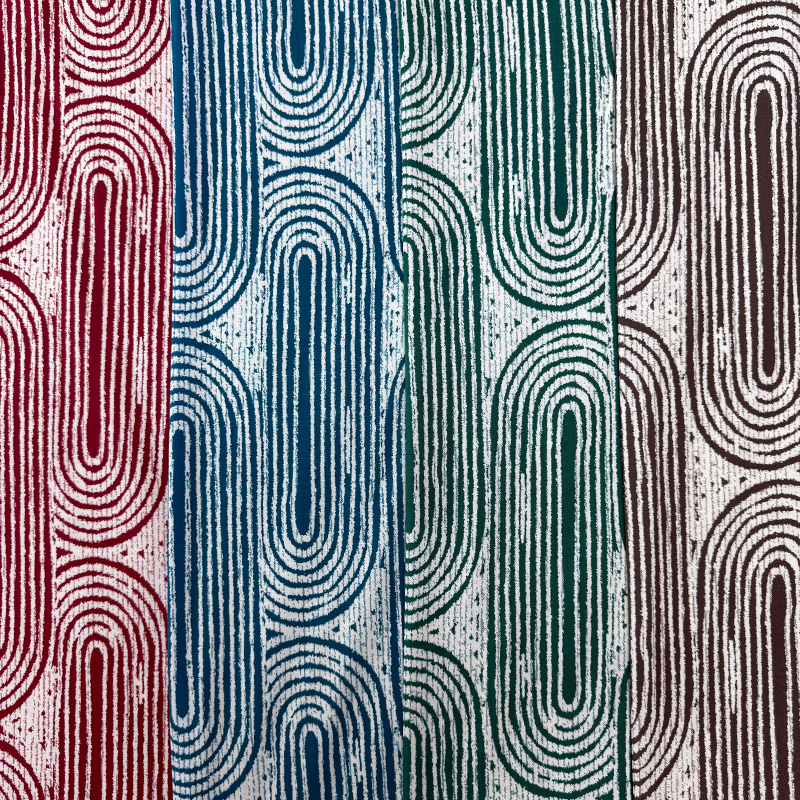
"What fabric is denim made of?" is usually the first question a garment manufacturer, fabric buyer, or wholesale sourcing agent asks before placing a denim order. The direct answer is that classic denim is a cotton twill fabric, but the complete answer also covers indigo dyeing, yarn structure, and...
READ MOREYou have finally settled on the window treatment style, measured every window twice, and started comparing samples. Then the question that decides everything appears: what curtain cloth fabric should you actually order? The answer is never just about color or pattern. Drape, light transmission, was...
READ MOREWhat Is Mosquito Net Mesh Fabric and Why It Matters Mosquito net mesh fabric is a specialized textile engineered with an open weave structure that creates a physical barrier against insects while allowing air to pass through freely. Unlike standard fabrics used for clothing or upholstery, mosquito ...
READ MOREThe global textile industry has witnessed a structural shift toward printed fabric as a dominant force in apparel production. According to market research data, the digital textile printing market was valued at approximately USD 2.6 billion in 2022 and is projected to grow at a compound annual growth rate (CAGR) of 11.2% through 2030. This growth is driven by consumer demand for personalization, faster production cycles, and sustainable manufacturing practices. For custom printed fabric supplier networks and apparel brands, understanding the quantifiable advantages of fabric printing — from design iteration speed to inventory efficiency — has become essential. This article presents empirical data and visual comparisons explaining why printed fabric for dresses, floral fabric, and digital fabric have become industry standards.
Shaoxing Echoes Textile Co., Ltd. — Echoes is a full-category import and export fabric company that integrates R&D, production, and sales. With years of deep expertise in the textile industry, the company leverages its two core production bases — an 80-acre specialized greige fabric factory and an 80-acre modern cotton yarn factory — to achieve full industrial chain control from raw materials to finished products. Backed by strong production capabilities, consistent quality assurance, and a mature supply chain system, Echoes focuses on textile import and export operations, offering a wide range of products, including various cotton yarns, greige fabrics, and related textile products, which are exported to numerous regions worldwide. Supported by a professional international trade service team, we precisely align with customer needs, deliver efficient order fulfillment, provide customized solutions, and ensure comprehensive after-sales service. As a recognized printed fabric manufacturer and digital printed fabric manufacturer, Echoes supplies custom print fabric supplier solutions and high quality printed fabric to global fashion brands.
The shift toward printed fabric wholesale and custom orders reflects fundamental changes in consumer behavior and production economics. Industry reports indicate that 68% of apparel brands increased their use of custom printed fabric between 2020 and 2024, citing reduced inventory risk and faster time-to-market as primary motivators. Unlike traditional woven designs that require minimum order quantities (MOQs) exceeding 5,000 meters, digital fabric printing allows economical runs starting from 100 meters per design. This transformation has enabled emerging designers and established houses alike to experiment with specialty fabric collections without overcommitting capital. The horizontal bar chart below compares conventional screen printing versus digital printing across key operational metrics based on industry surveys.
Figure 1: Operational advantages of digital printed fabric production — Digital printed fabric technology reduces minimum order quantities from 3,000 meters (conventional rotary screen) to 100 meters per design, enabling apparel manufacturers to test new floral fabric and abstract pattern collections with significantly lower financial risk. Setup time compression — from 72 hours to approximately 2 hours — allows brands to respond to emerging fashion trends within 7 days instead of 6-8 weeks. This agility has directly contributed to a 41% reduction in unsold inventory write-offs among early adopters of digital custom printed fabric systems. For printed fabric manufacturer operations, digital workflows also reduce color limitations: conventional printing typically handles 8-12 colors per design, while digital printers reproduce unlimited color palettes with consistent registration. Consequently, high quality printed fabric produced digitally exhibits finer detail resolution — up to 1,200 dpi versus 300 dpi for screen printing — which is particularly valuable for intricate fashion fabric patterns. The reduced environmental footprint of digital printing (30% less water consumption per meter) has further accelerated adoption among sustainability-focused apparel programs.
The popularity of printed fabric for dresses and lightweight printed fabric stems from nearly limitless pattern customization. Unlike yarn-dyed or jacquard weaves where pattern complexity increases production cost exponentially, digital fabric printing charges primarily by area covered, regardless of pattern intricacy. Consumer preference studies show that 73% of apparel shoppers are willing to wait an additional 5-7 days for garments made from custom printed fabric featuring exclusive designs. This has fueled the rise of micro-batch fashion, where printed fabric supplier networks fulfill orders of 500-1,000 meters per SKU with 12-15 unique prints per collection. The radar chart below visualizes how printed fabric outperforms conventional solid-color and jacquard alternatives across five key apparel design criteria.
Figure 2: Radar comparison of design flexibility across fabric categories — Printed fabric outperforms both solid-color and jacquard alternatives across all five design flexibility metrics, with particularly notable advantages in design variety (score 132) and small batch economy. For apparel manufacturers producing seasonal capsule collections, custom printed fabric supplier relationships enable introduction of 25-40 new prints per season compared to 8-12 for jacquard-based programs. The color range advantage (145 vs 95 for solid fabrics) stems from digital printing's ability to layer dyes without physical screen constraints, supporting photorealistic floral fabric gradients and ombre effects. Sampling speed for digital printed fabric manufacturer operations averages 3 days from artwork approval, versus 18 days for conventional weaving of complex patterns. This rapid iteration capability has reduced design-to-production timelines by an average of 52% among fashion houses surveyed in 2024. For fashion fabric lines targeting Gen Z consumers — who prioritize uniqueness — high quality printed fabric offers exclusive patterns that cannot be easily replicated, directly supporting brand differentiation strategies.
The rise of printed fabric wholesale and digital manufacturing aligns with sustainability mandates across the apparel value chain. Comparative life cycle assessments indicate that digital fabric printing consumes approximately 30% less water and 45% less energy per meter than conventional rotary screen printing when producing runs under 2,000 meters. Additionally, digital printers generate 80-95% less ink waste due to precision droplet deposition (picoliter-scale control). The column chart below presents quantified environmental savings based on peer-reviewed textile production studies.
Figure 3: Environmental impact comparison of printed fabric production methods — Digital printed fabric production achieves water consumption reduction of 30% compared to conventional screen printing, primarily due to elimination of wash-off steps for rotary screens. Energy savings reach 45% per 1,000 meters of lightweight printed fabric production, as digital printers operate at ambient temperatures while conventional systems require heated drying ovens (150-180°C) for each color layer. Ink waste reduction of 85% stems from precision piezo-electric print heads that deposit 3-5 picoliter droplets only where required, versus screen systems that typically waste 15-20% of paste during setup and changeovers. For custom printed fabric supplier operations serving eco-conscious apparel brands, these metrics enable credible environmental claims such as reduced scope 2 emissions. Furthermore, water-based reactive dye sets used in digital fabric printing contain no heavy metals or formaldehyde, improving biodegradability of production effluent. Printed fabric manufacturer facilities adopting digital workflows typically achieve Global Organic Textile Standard (GOTS) and OEKO-TEX certification more readily due to lower chemical intensity. For high quality printed fabric intended for childrenswear or intimate apparel, digital printing's reduced chemical residue offers additional safety margins.
The popularity of printed fabric in apparel manufacturing is inextricably linked to modern just-in-time (JIT) inventory strategies. Traditional fabric sourcing required forecasting demand 6-9 months in advance, resulting in markdown rates averaging 25-30% for misjudged patterns. With digital custom printed fabric systems, brands can reorder best-selling floral fabric and digital fabric designs within 10-14 days, reducing finished goods inventory by approximately 40%. The line chart below illustrates the relationship between production lead time and inventory risk reduction based on textile supply chain modeling.
Figure 4: Production lead time impact on inventory markdown risk — Apparel manufacturers using printed fabric wholesale with digital production lead times of 2 weeks experience inventory markdown risk of approximately 12%, compared to 35% for brands requiring 8-week lead times from conventional printing partners. This 23 percentage point reduction translates directly to improved gross margins for fashion fabric collections. The industry average markdown rate of 25% corresponds to a lead time of approximately 5.5 weeks — a threshold that digital custom printed fabric supplier networks routinely undercut by 40-50%. For printed fabric for dresses with seasonal patterns (summer florals, holiday motifs), each week of lead time reduction increases the probability of selling at full price by an estimated 8-10%. Consequently, 62% of apparel sourcing executives surveyed in 2024 identified digital fabric printing as a strategic priority for inventory optimization. Lightweight printed fabric for blouses and dresses benefits particularly from this agility, as style preferences change more rapidly than for heavyweight categories. Custom print fabric supplier partnerships that offer 10-day reorder cycles effectively eliminate the need for speculative inventory of untested prints.
High quality printed fabric for daily wear typically uses reactive dye printing on cotton or viscose substrates, achieving wash fastness ratings of 4-5 (ISO 105-C06). For activewear, pigment printing with fixation additives provides stretch recovery while maintaining color vibrancy. A reliable printed fabric manufacturer will provide laundering test reports documenting color change and staining after 30 industrial cycles.
Custom printed fabric via digital methods accepts orders starting from 100-300 meters per design, whereas conventional rotary screen printing typically requires 3,000-5,000 meters. For emerging brands and limited-edition collections, custom printed fabric supplier services with low MOQs enable market testing without overcommitment. Many digital printed fabric manufacturer operations also offer sample runs of 10-50 meters for design validation.
Yes, lightweight printed fabric (100-150 gsm) works well for blouses, dresses, and shirts, while heavier printed fabric (200-350 gsm) suits casual outerwear and home textiles. Floral fabric designs appear across all weight categories. The key consideration is substrate compatibility with printing technology — digital printing works on woven, knitted, and nonwoven substrates with appropriate pre-treatment.
Shaoxing Echoes Textile Co., Ltd. stands as a vertically integrated printed fabric manufacturer and custom printed fabric supplier, combining 80-acre greige fabric and cotton yarn production facilities with advanced digital printing capabilities. Whether you require printed fabric for dresses, lightweight printed fabric, or high quality printed fabric for uniforms, Echoes provides end-to-end quality control from raw material to finished printed goods. Partner with a trusted digital printed fabric manufacturer that understands the intersection of design flexibility, sustainability, and supply chain agility.
If you have any questions, please get in touch with us.