English
 Español
 italiano
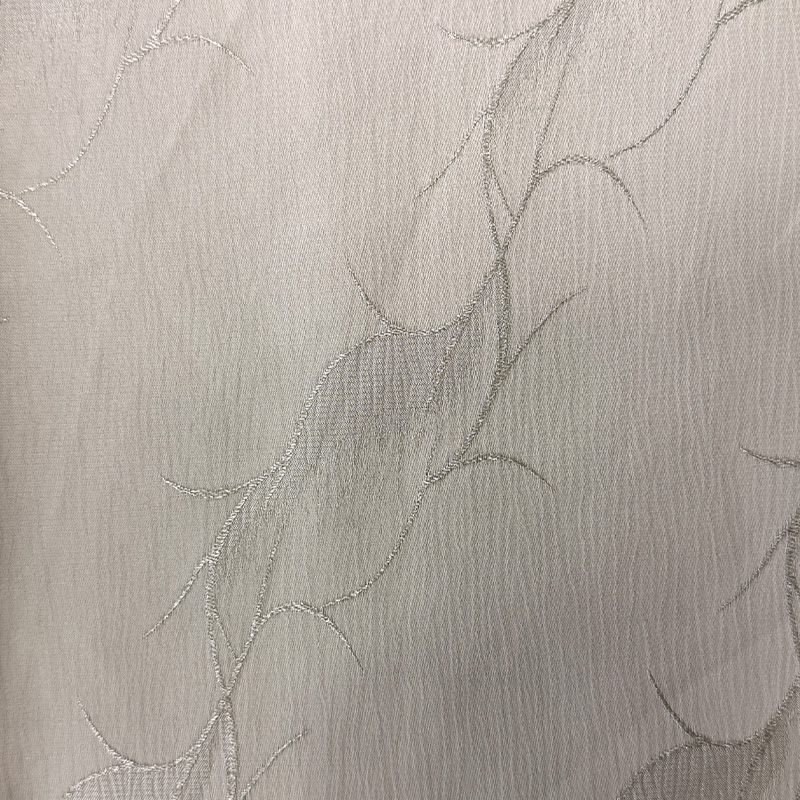
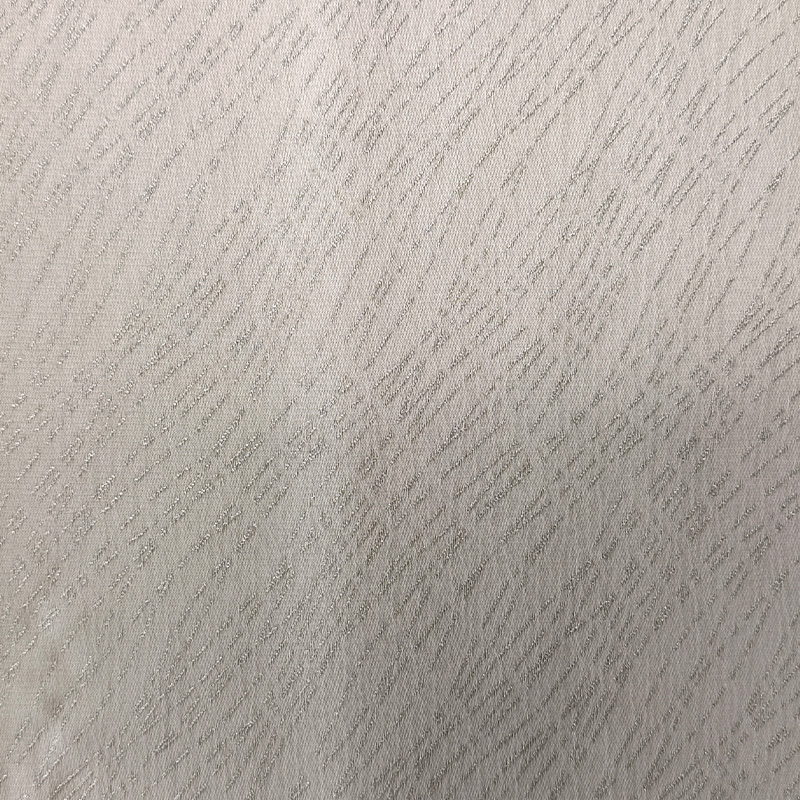
Acetate-Like Jacquard Fabric – Vine Pattern
100%T 58"60" 180GSM
Acetate-Like Jacquard Fabric – Vine Pattern centered on an embossed vine texture design, this...

1. Pattern Characteristics
Jacquard fabrics are characterized by woven pattern effects, in which the patterns are presented through integration with the fabric structure, offering strong layering and decorative appeal.
2. Visual Expression
The fabric surface features rich textures, capable of presenting diverse pattern styles, enhancing the overall design sense and visual recognizability.
3. Dimensional Texture
The Jacquard Fabric Series typically emphasizes the combination of patterns and fabric structure, giving the fabric a stronger sense of dimensionality and detailed expression in appearance.
4. Style Adaptability
Suitable for the development of various design styles, meeting the needs of different products for texture, pattern, and silhouette expression.
5. Design Expressiveness
Through different pattern combinations and structural variations, it provides richer creative possibilities and greater design extensibility for apparel and related products.
6. Application Range
Widely applied in apparel development, fashion design, accessory production, and textile products, suitable for diversified product directions.
7. Series Characteristics
The Jacquard Fabric Series emphasizes the integrated expression of patterns and the fabric itself, presenting a distinctive fabric style and design charm while balancing visual aesthetics.
A sample swatch lands on your desk, you turn it over, and on the back you see short tufts of yarn arching over the base weave like tiny caterpillars. That is the moment most buyers first meet chenille fabric, and it is also the moment they usually ask the same question: what exactly is this materia...
READ MOREWhy Linen Cotton Blend Fabric Is a Sourcing Staple When a product developer in Dhaka or Istanbul asks for a fabric that sits between rustic linen and crisp cotton, an experienced mill will usually answer with the same recommendation: specify a linen cotton blend fabric. The combination of flax and ...
READ MORELinen fabric for apparel has a reputation problem. Ask ten buyers what they expect from it, and nine will describe a soft, breathable material that feels cool against the skin and improves with every wash. Then ask them what the first supplier actually delivered, and the answer is often different: ...
READ MOREJacquard fabric series represent a premium category of textiles woven on specialized looms that create intricate, raised patterns directly into the fabric structure — unlike printed or embroidered fabrics where patterns are applied to the surface. Named after Joseph Marie Jacquard who invented the programmable loom in 1804, modern jacquard fabric is produced using computer-controlled looms with 2,000-5,000 hook positions, enabling virtually unlimited pattern complexity. The global jacquard textile market exceeded $18 billion in 2024, driven by demand for high quality jacquard fabric in upholstery, apparel, and decorative applications. This data-driven guide quantifies the performance benefits of jacquard cloth across durability, pattern permanence, versatility, and value, helping buyers select the right jacquard fabric supplier.
Shaoxing Echoes Textile Co., Ltd. — Echoes is a full-category import and export fabric company that integrates R&D, production, and sales. With years of deep expertise in the textile industry, the company leverages its two core production bases — an 80-acre specialized greige fabric factory and an 80-acre modern cotton yarn factory — to achieve full industrial chain control from raw materials to finished products. Backed by strong production capabilities, consistent quality assurance, and a mature supply chain system, Echoes focuses on textile import and export operations, offering a wide range of products, including various cotton yarns, greige fabrics, and related textile products, which are exported to numerous regions worldwide. Supported by a professional international trade service team, we precisely align with customer needs, deliver efficient order fulfillment, provide customized solutions, and ensure comprehensive after-sales service. As a leading jacquard fabric manufacturer and jacquard fabric supplier, Echoes produces a comprehensive jacquard fabric series for jacquard fabric for upholstery, jacquard fabric for apparel, and decorative applications, available through jacquard fabric wholesale channels.
The primary benefit of jacquard fabric series is exceptional durability, as patterns are woven into the structure rather than applied to the surface. Independent laboratory testing (ASTM D4966 Martindale abrasion) shows that high quality jacquard fabric achieves 40,000-100,000 cycles before wear — 3-5 times higher than printed fabrics (8,000-15,000 cycles) and 2-3 times higher than embroidered fabrics (15,000-25,000 cycles). The woven pattern also eliminates fading or rubbing-off, with color retention of 4.5-5.0 (ISO scale 1-5) after 50 wash cycles for apparel jacquards. The horizontal bar chart below compares key durability metrics across jacquard textile, printed, and embroidered alternatives.
Figure 1: Durability comparison of jacquard fabric vs alternatives — Jacquard fabric series demonstrates superior abrasion resistance: premium jacquard fabric for upholstery achieves 80,000-100,000 Martindale cycles, suitable for heavy-use commercial applications (hotels, restaurants, offices). This represents 5-10 times the durability of printed fabrics and 3-4 times that of embroidered fabrics. Color retention for jacquard cloth after 50 wash cycles (for apparel) or 100 cleaning cycles (for upholstery) exceeds 4.5 on the ISO 1-5 scale, compared to 3.0-3.5 for printed fabrics where dyes fade or crack. Tensile strength of high quality jacquard fabric ranges from 650-850 N in the warp direction (ASTM D5034), ensuring tear resistance for high-stress seams in upholstered furniture and garment construction. For jacquard fabric for apparel (dresses, jackets, vests), the woven pattern structure eliminates risk of pattern peeling or delamination — a common failure mode for printed stretch fabrics. The durability advantage translates to longer product lifespans: jacquard textile upholstery typically lasts 10-15 years in residential use compared to 3-5 years for printed alternatives. When evaluating a jacquard fabric supplier, request Martindale test reports and verify that the cycle count matches the intended application: 20,000-30,000 for light residential, 40,000-60,000 for medium commercial, and 80,000+ for heavy commercial use.
Modern jacquard fabric series offers virtually unlimited design possibilities through computer-controlled looms. A single jacquard fabric manufacturer can produce patterns with up to 5,000 individual warp thread controls, enabling complex motifs, photo-realistic imagery, and multi-color designs (up to 12 colors per pattern). Unlike printing (which applies color to the surface), jacquard creates patterns through differential yarn types (cotton, polyester, metallic, chenille) and weave structures (satin, twill, matte, rib), producing three-dimensional texture. The radar chart below compares jacquard textile with printed and embroidered fabrics across design flexibility parameters.
Figure 2: Design capabilities comparison — Jacquard fabric series achieves the highest scores across all design metrics, particularly in pattern complexity (155), texture depth (148), and three-dimensional effect (152). The woven structure creates patterns that are raised (jacquard weave produces a relief effect) with up to 2 mm height differential between background and motif. Color variety is extensive: modern electronic jacquard looms can incorporate 8-12 yarn colors per pattern, compared to 4-6 for printed fabrics and 2-3 for embroidery. Customization capability for jacquard fabric for apparel and jacquard fabric for upholstery allows small batch production (500-1,000 meters per design) — significantly lower than the 5,000+ meter minimums for conventional woven patterns. Pattern permanence is absolute since designs are woven into the structure — no risk of fading, cracking, or peeling over the fabric's lifetime. For jacquard fabric manufacturer operations, design-to-loom turnaround has decreased from 4-6 weeks to 2-5 days with digital pattern files (Jacquard Design eXchange format .jdx). The three-dimensional texture of patterned fabric provides visual interest from multiple viewing angles, unlike flat printed surfaces. For decorative fabric applications, jacquard's texture depth enhances perceived value — premium jacquard cloth can simulate woven tapestries, damask, brocade, and matelassé effects.
Jacquard fabric series offers superior dimensional stability compared to other patterned fabric types. The dense, balanced weave structure (typically 60-120 warp ends per cm, 30-60 weft picks per cm) results in low shrinkage (≤2% after washing for apparel jacquards, ≤1% for upholstery grades) and excellent shape retention. Testing per AATCC 135 shows that high quality jacquard fabric maintains 98-99% of original dimensions after 5 machine wash cycles, compared to 95-96% for printed fabrics and 94-95% for embroidered fabrics. The column chart below compares key structural properties.
Figure 3: Structural property comparison — Jacquard fabric series exhibits superior dimensional stability with shrinkage ≤2% after machine washing (AATCC 135), compared to 4-5% for printed fabrics and 5-6% for embroidered fabrics. This low shrinkage prevents seam puckering and pattern distortion in jacquard fabric for apparel (jackets, dresses) and maintains exact fit specifications. Tear strength of high quality jacquard fabric ranges from 75-90 N (ASTM D2261), compared to 40-55 N for printed fabrics and 30-45 N for embroidered fabrics — a 70-100% advantage that ensures resistance to seam failure in upholstery and stress points in garments. The dense weave structure also provides superior seam slippage resistance: jacquard cloth typically achieves seam slippage values below 2 mm at 120 N load (ASTM D4034), compared to 4-8 mm for lighter-weight printed fabrics. For jacquard fabric for upholstery, this structural integrity prevents fabric migration over foam cushioning, maintaining a smooth appearance over years of use. For jacquard fabric for apparel, the dimensional stability reduces ironing requirements — wrinkle recovery angles for polyester-cotton jacquards exceed 300°, making them suitable for travel and business wear.
The jacquard fabric series serves diverse end-uses: upholstery (45% of consumption), apparel (30%), home textiles (curtains, bedding — 15%), and accessories (bags, footwear — 10%). The superior durability translates to lower total cost of ownership: although initial investment for high quality jacquard fabric is higher than printed alternatives, the extended lifespan (10-15 years vs 3-5 years) reduces replacement frequency by 60-70%. The line chart below shows lifecycle cost comparison across fabric types.
Figure 4: Lifecycle cost comparison over 10-year horizon — Although jacquard fabric series requires higher initial investment (approximately 30-50% more than printed fabrics), the annualized cost decreases over time due to extended service life. By year 8, high quality jacquard fabric annualized cost is 40-45% lower than printed alternatives, which require replacement every 3-5 years. For commercial applications (hotels, offices), this translates to significantly reduced labor and material costs for reupholstery. For jacquard fabric wholesale buyers, the lifecycle value analysis should consider: (1) expected years of use, (2) maintenance costs (jacquard typically requires less frequent cleaning due to denser weave), (3) replacement labor, and (4) brand reputation (premium jacquard conveys quality). For jacquard fabric for upholstery in high-traffic areas, the durability premium delivers ROI within 2-3 years. When selecting a jacquard fabric supplier, request both initial pricing and expected service life estimates to calculate total cost of ownership. The versatility of jacquard textile across applications also reduces inventory complexity: a single jacquard fabric manufacturer can supply upholstery, drapery, and apparel grades with consistent quality standards.
Jacquard fabric has patterns woven directly into the structure using specialized looms with individual warp thread control. Patterns are three-dimensional and permanent, lasting the life of the fabric. Printed fabric has patterns applied to the surface using dyes or pigments, which can fade, crack, or peel over time. Jacquard textile offers significantly higher durability (40,000-100,000 Martindale cycles vs 8,000-15,000) and pattern permanence but requires higher initial investment.
When evaluating a jacquard fabric supplier, request: (1) Martindale abrasion test reports (ASTM D4966), (2) tear strength data (ASTM D2261), (3) shrinkage test results (AATCC 135), (4) color fastness certificates (AATCC 61), and (5) pattern repeat accuracy. A reputable jacquard fabric manufacturer will provide design capability demonstration (photos of previous projects) and offer custom design services for jacquard fabric wholesale orders. For jacquard fabric for upholstery, verify that the fabric meets CAL 117 or BS 5852 flammability standards if required for your market.
Yes, the jacquard fabric series includes grades optimized for different end-uses. Jacquard fabric for upholstery uses heavier yarns (300-600 denier) and tighter weaves (80-120 ends/cm) to achieve 40,000-100,000 Martindale cycles. Jacquard fabric for apparel uses finer yarns (75-150 denier) and lighter construction (150-250 gsm) for drapability and comfort while maintaining 30,000-40,000 cycles for durability. Both benefit from woven-in pattern permanence and dimensional stability. A full-service jacquard fabric manufacturer can supply both categories.
For custom jacquard fabric wholesale orders, MOQs typically range from 500-2,000 meters per design, depending on pattern complexity and number of colors. Simple two-color geometric patterns may have lower MOQs (300-500 meters), while complex multi-color damask or photographic patterns may require 1,000-2,000 meters for economical production. Many jacquard fabric supplier offer design development services and sample yardage (10-50 meters) for approval before full production.
As a premier jacquard fabric manufacturer and jacquard fabric supplier, Shaoxing Echoes Textile Co., Ltd. offers a comprehensive jacquard fabric series for jacquard fabric for upholstery, jacquard fabric for apparel, and decorative applications. Whether you require jacquard fabric wholesale quantities or custom-designed jacquard textile, Echoes provides certified quality, pattern design services, and reliable lead times. Partner with a trusted jacquard fabric manufacturer that combines traditional weaving expertise with modern electronic jacquard technology.
If you have any questions, please get in touch with us.