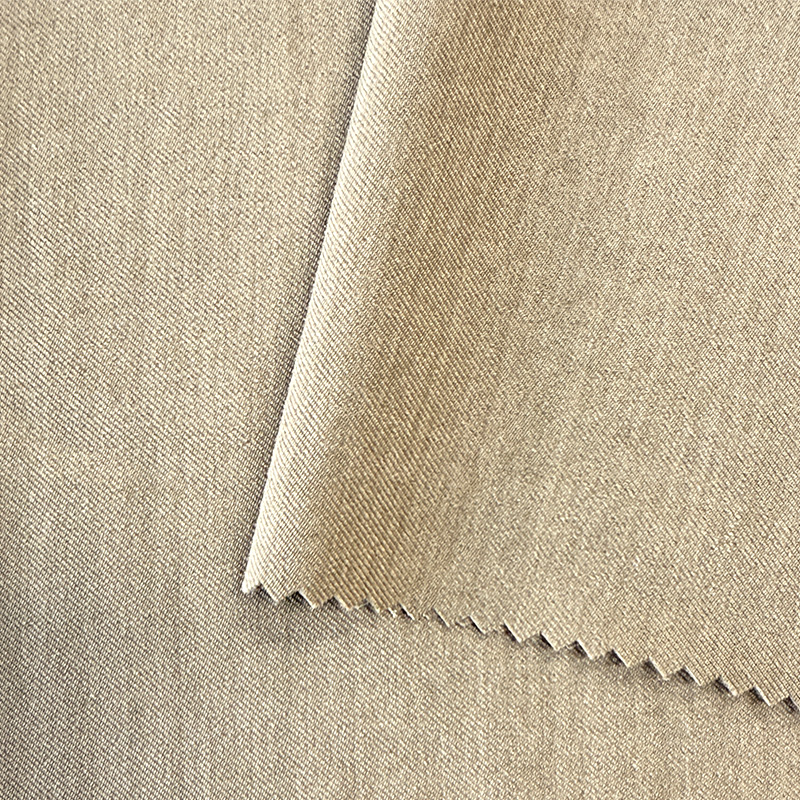
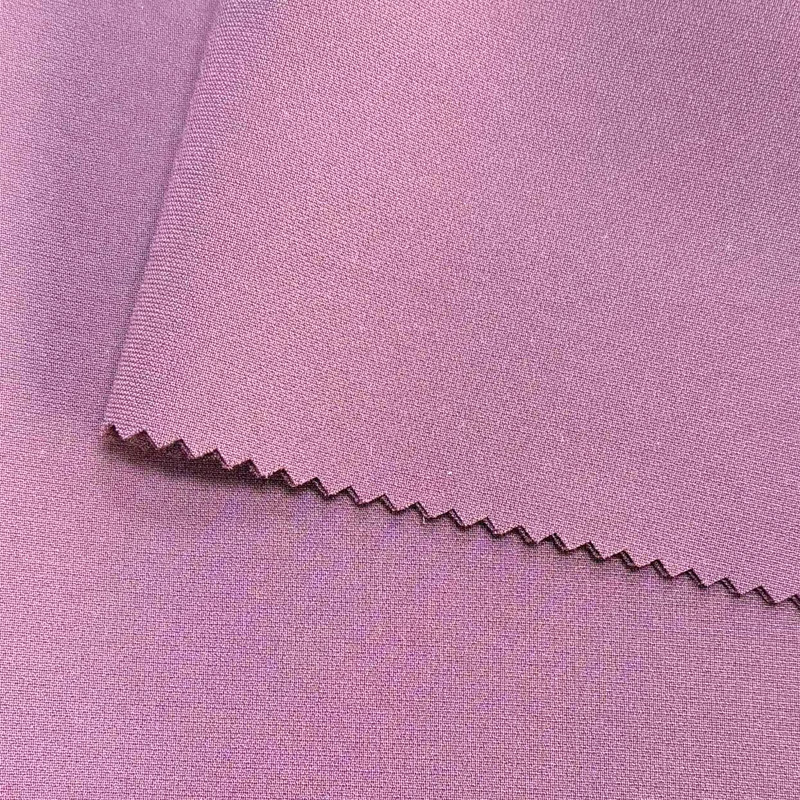
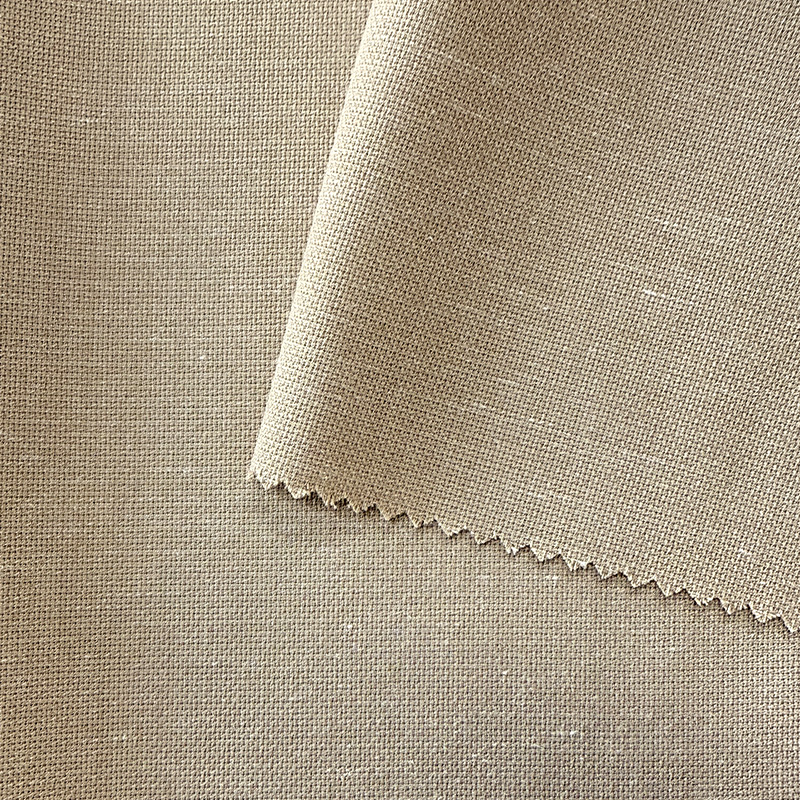
Echoes is a full-category import and export fabric company that integrates R&D, production, and sales. With years of deep expertise in the textile industry, the company leverages its two core production bases — an 80-acre specialized greige fabric factory and an 80-acre modern cotton yarn factory — to achieve full industrial chain control from raw materials to finished products.
Shaoxing Echoes Textile Co., Ltd. is a China Custom Raw Material Yarn Supplier and Raw Material Yarn Manufacturer, building upon a steadfast dedication to integrity and a quality-first philosophy, Echoes strives to position itself as a globally trusted and dependable partner across the textile supply chain, consistently delivering value and fostering long-term collaboration with clients worldwide.
"What fabric is denim made of?" is usually the first question a garment manufacturer, fabric buyer, or wholesale sourcing agent asks before placing a denim order. The direct answer is that classic denim is a cotton twill fabric, but the complete answer also covers indigo dyeing, yarn structure, and...
You have finally settled on the window treatment style, measured every window twice, and started comparing samples. Then the question that decides everything appears: what curtain cloth fabric should you actually order? The answer is never just about color or pattern. Drape, light transmission, was...
What Is Mosquito Net Mesh Fabric and Why It Matters
Mosquito net mesh fabric is a specialized textile engineered with an open weave structure that creates a physical barrier against insects while allowing air to pass through freely. Unlike standard fabrics used for clothing or upholstery, mosquito ...
The global textile industry consumes over 110 million metric tons of fiber annually, with raw material yarnforming the foundational building block for countless products — from everyday apparel to industrial textiles. Unlike finished fabrics, raw material yarn represents the intermediate stage where fibers (natural, synthetic, or blended) are spun into continuous strands suitable for weaving, knitting, or specialized technical applications. According to the Textile Exchange 2024 report, cotton yarn and polyester yarn together account for approximately 78% of global yarn production. This data-driven guide explores the diverse end-uses of textile yarn, quantifying performance characteristics across different spinning methods and material compositions. For manufacturers and designers, understanding the relationship between yarn properties and final fabric behavior is essential for product development success.
Shaoxing Echoes Textile Co., Ltd. — Echoes is a full-category import and export fabric company that integrates R&D, production, and sales. With years of deep expertise in the textile industry, the company leverages its two core production bases — an 80-acre specialized greige fabric factory and an 80-acre modern cotton yarn factory — to achieve full industrial chain control from raw materials to finished products. Backed by strong production capabilities, consistent quality assurance, and a mature supply chain system, Echoes focuses on textile import and export operations, offering a wide range of products, including various cotton yarns, greige fabrics, and related textile products, which are exported to numerous regions worldwide. Supported by a professional international trade service team, we precisely align with customer needs, deliver efficient order fulfillment, provide customized solutions, and ensure comprehensive after-sales service. As a leading raw material yarn supplier and cotton yarn supplier, Echoes provides ring spun yarn supplier solutions, compact siro spun yarn manufacturer capabilities, and polyester yarn manufacturer services for global fabric production.
1. Major Categories of Raw Material Yarn and Their Production Volume
Raw material yarn is broadly classified by fiber origin: natural (cotton, linen, wool), synthetic (polyester, nylon, polypropylene), and regenerated (viscose, lyocell). According to the International Textile Manufacturers Federation (ITMF), global yarn production reached 98 million metric tons in 2023, with polyester yarn leading at 54% share, followed by cotton yarn at 26%, and blended yarn (polyester-cotton, polyester-viscose) at 15%. The horizontal bar chart below visualizes the production volume distribution and typical applications for each yarn category.
Figure 1: Global raw material yarn production by fiber type — Polyester yarn dominates global production with 53 million metric tons annually, driven by its durability, low cost, and moisture-wicking properties for sportswear and industrial applications. Cotton yarn remains the second-largest category at 25.5 million tons, preferred for comfort and breathability in everyday apparel. Blended yarn (typically polyester-cotton in 65/35 or 50/50 ratios) accounts for 14.7 million tons, offering a balance of wrinkle resistance and softness for workwear and uniforms. For specialized applications, nylon monofilament supplier networks provide high-tenacity yarns for technical textiles, while monofilament yarn manufacturer outputs serve industrial filtration and 3D printing applications. Wholesale textile yarn markets increasingly favor compact siro spun yarn manufacturer products due to their reduced hairiness (30-40% lower than conventional ring-spun) and improved tensile strength. Ring spun yarn supplier offerings remain standard for high-quality apparel where softness and surface smoothness are priorities. The continued growth of textile yarn wholesale channels reflects consolidation in the upstream textile sector, with larger yarn manufacturer facilities achieving economies of scale.
Table 1: Raw material yarn categories and their typical end-uses in fabric production
Yarn Type
Spinning Method
Primary Applications
100% Cotton Yarn
Ring Spun / Open End
Casual wear, denim, bedding, knitwear
100% Polyester Yarn
Draw Textured Yarn (DTY)
Sportswear, outerwear, home textiles
Polyester-Cotton Blended Yarn
Compact Siro Spun
Uniforms, workwear, shirting fabrics
Nylon Monofilament
Extrusion / Drawing
Fishing lines, mesh, industrial belts
2. Yarn Technical Parameters That Determine Fabric Quality
The performance of finished fabric — whether woven or knitted — depends critically on raw material yarn characteristics: count (fineness), twist per inch (TPI), evenness (CVm%), and tensile strength (cN/tex). For example, a compact siro spun yarn manufacturer typically achieves yarn evenness of 12-14% CVm (versus 16-18% for conventional ring-spun), resulting in 25% fewer fabric defects per 100 linear meters. The radar chart below compares four common yarn spinning technologies across six quality indicators relevant to yarn for fabric production.
Figure 2: Spinning technology comparison for raw material yarn quality — Compact siro spun yarn manufacturer products demonstrate superior performance across all six quality indicators, particularly in hairiness reduction (138 vs 125 for ring-spun) and tensile strength (145 vs 125). This translates to 30% fewer warp breaks during weaving and improved fabric surface appearance. Ring spun yarn supplier outputs remain preferred for high-end apparel where softness (score 125) and fabric drape are critical, though with higher hairiness (30-40% more than compact siro). Open-end (rotor) yarns offer economic advantages for heavy fabrics (denim, workwear) but show lower tensile strength and uniformity scores. For textile yarn destined for shirting or high-thread-count bedding, compact siro spinning reduces slub imperfections by 50-60% compared to conventional ring-spun. Polyester yarn manufacturer data indicates that compact siro technology improves inter-fiber cohesion, resulting in 15-20% higher yarn tenacity. Raw material yarn supplier selection should align with end-use requirements: compact siro for smooth, defect-free surfaces; ring-spun for natural aesthetics; open-end for cost-sensitive, heavier constructions.
3. End-Use Applications: From Apparel to Technical Textiles
The versatility of raw material yarn enables thousands of end-products across apparel, home textiles, and industrial sectors. According to industry estimates, 62% of global yarn production feeds into apparel manufacturing, 28% into home textiles (bedding, upholstery, towels), and 10% into technical textiles (automotive, medical, geotextiles). The column chart below illustrates yarn consumption by downstream sector with projected growth rates.
Figure 3: Yarn consumption by end-use sector with growth projections — The apparel sector remains the largest consumer of raw material yarn, utilizing 60.8 million metric tons annually (2023), projected to reach 73.2 million tons by 2030 (3.1% CAGR). Home textiles account for 27.4 million tons, driven by increasing demand for cotton yarn supplier products for bedding and towels. Technical textiles, though smaller at 9.8 million tons, show the fastest growth at 4.2% CAGR, fueled by automotive composites, medical nonwovens, and geotextiles. For yarn manufacturer operations, this sectoral distribution guides capacity planning: ring spun yarn supplier lines typically serve premium apparel; polyester yarn manufacturer facilities prioritize sportswear and industrial applications; blended yarn production serves both uniform and workwear segments. Wholesale textile yarn distribution channels have evolved to serve smaller batch sizes, with digital platforms enabling sample orders of 50-100 kg for yarn for fabric production trials. Nylon monofilament supplier and monofilament yarn manufacturer outputs, while representing a niche segment, command higher margins due to technical specifications in 3D printing support structures, fishing lines, and industrial conveyor belts.
4. Innovation Drivers: Sustainable and High-Performance Yarns
The raw material yarn industry is undergoing significant transformation driven by circular economy principles and performance engineering. Recycled polyester yarn (rPET) now accounts for 14% of global polyester yarn production, up from 8% in 2020, according to Textile Exchange. Similarly, organic cotton yarn has reached 6% of total cotton yarn output. The line chart below shows adoption trends for sustainable yarn categories and their projected market share by 2030.
Figure 4: Adoption trends for sustainable raw material yarn categories — Recycled polyester yarn market share has increased from 8% in 2020 to an estimated 14% in 2024, with projections reaching 22% by 2030. This growth is driven by brand commitments to circularity and improved mechanical recycling technologies that maintain fiber tenacity above 4.5 cN/tex. Cotton yarn from organic sources has grown from 3% to 6% over the same period, projected to reach 12% by 2030, supported by regenerative agriculture initiatives. For blended yarn products, recycled polyester blended with organic cotton is emerging as a preferred combination for sustainable workwear and casual apparel. Raw material yarn supplier networks are increasingly offering GRS (Global Recycle Standard) and OCS (Organic Content Standard) certified products with full chain-of-custody documentation. Yarn manufacturer investments in air-jet and vortex spinning technologies have reduced energy consumption per kg of yarn by 25-30%, further improving environmental profiles. Textile yarn wholesale purchasers now routinely request environmental product declarations (EPDs) alongside traditional quality certificates.
Ne (English cotton count): Higher count indicates finer yarn; common apparel yarns range from Ne 20 to Ne 60
Tex (grams per 1000 meters): Standard metric for industrial yarns; 30 tex = Ne 20
Twist multiplier (TM): 3.5-4.5 for knitting yarns; 4.5-5.5 for weaving yarns
5. Common Questions About Raw Material Yarn
Q1: What is the difference between raw material yarn and finished fabric?
Raw material yarn refers to the spun or extruded strand before it undergoes weaving, knitting, or finishing. Textile yarn is the intermediate product: fibers aligned and twisted into a continuous strand suitable for fabric formation. Fabrics are created by interlacing (weaving) or interlooping (knitting) multiple yarns. Yarn for fabric production can be sold as single ply, two-ply, or multi-ply depending on end-use strength requirements.
Q2: How do I select a reliable raw material yarn supplier?
When evaluating a raw material yarn supplier, request yarn test reports including: count strength product (CSP), evenness (CVm%), hairiness (H value), and twist consistency. A reputable cotton yarn supplier or polyester yarn manufacturer will provide ISO 2060 (count) and ASTM D2256 (tensile) test results. For specialty applications, nylon monofilament supplier relationships should include diameter tolerance and tensile modulus data. Additionally, inquire about wholesale textile yarn minimum order quantities and lead times for custom counts.
Q3: Can raw material yarn be customized for specific fabric properties?
Yes, experienced yarn manufacturer partners offer customization across several parameters: count (fineness), twist level (affects fabric hand and strength), ply (single, two-ply, or multi-ply), and blending ratios for blended yarn. Compact siro spun yarn manufacturer services can produce yarns with reduced hairiness (30-40% lower than conventional) for shirting fabrics requiring smooth surfaces. Ring spun yarn supplier customization often focuses on softness and comfort for next-to-skin applications. For technical uses, monofilament yarn manufacturer outputs can be engineered with specific tensile strength (up to 8 g/denier) and elongation profiles (15-25%).
As a vertically integrated raw material yarn supplier with an 80-acre cotton yarn factory, Shaoxing Echoes Textile Co., Ltd. offers comprehensive textile yarn wholesale services, including ring spun yarn supplier capabilities, compact siro spun yarn manufacturer expertise, and polyester yarn manufacturer solutions. Whether you require cotton yarn, polyester yarn, or specialized blended yarn for fabric production, Echoes provides consistent quality and full chain-of-custody documentation. Partner with a yarn manufacturer that controls the process from raw fiber to finished yarn.


 English
 Español
 italiano