English
 Español
 italiano
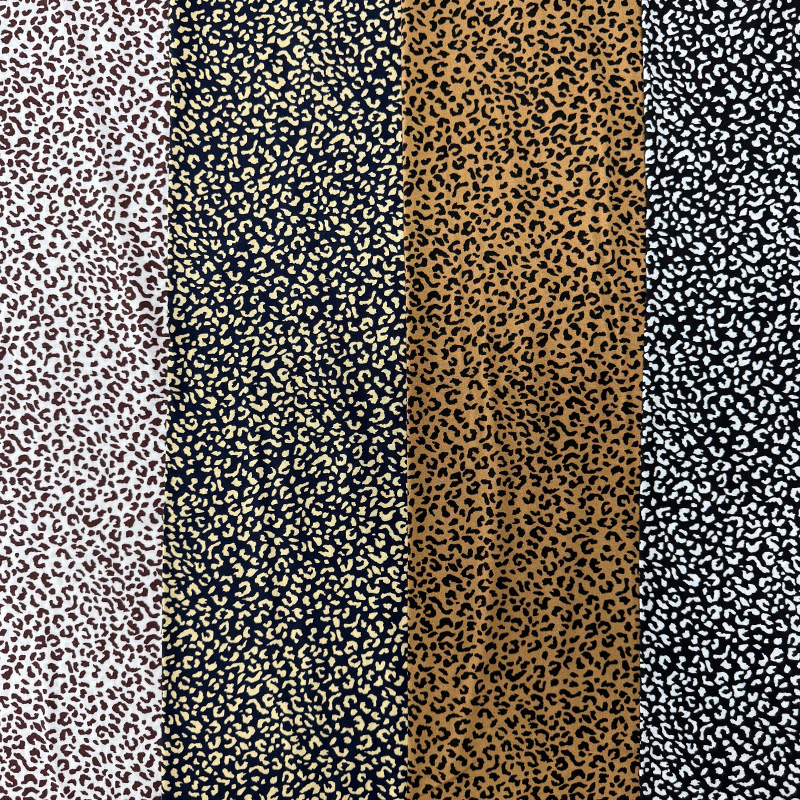
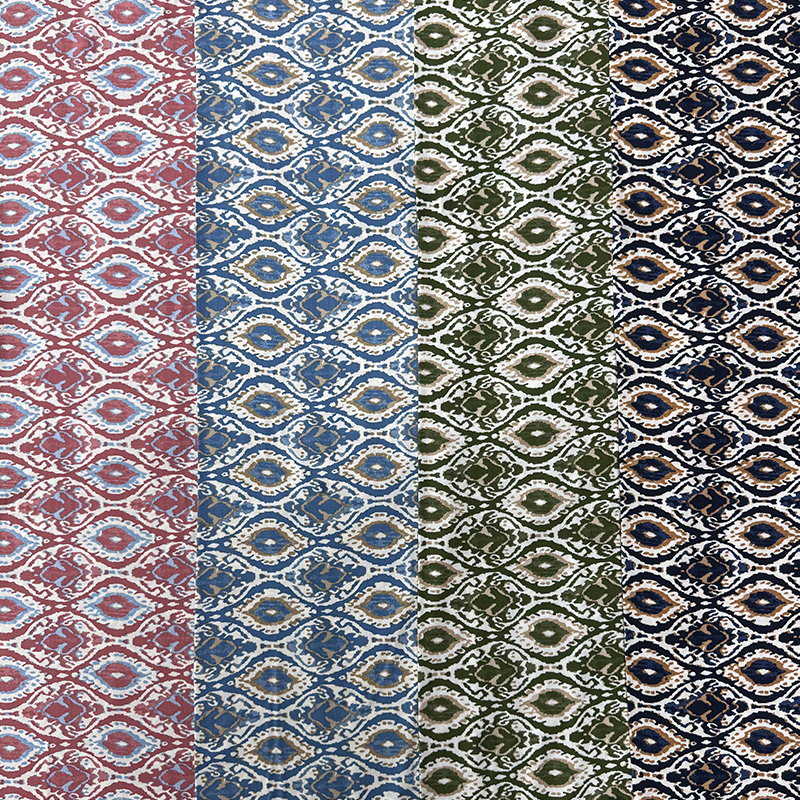
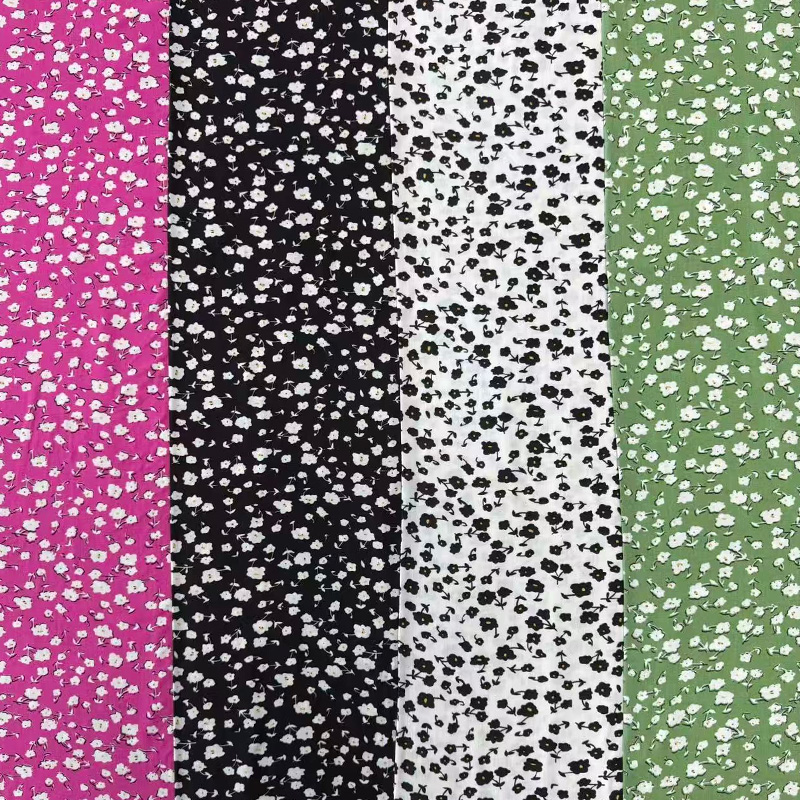
45S Printed Rayon Fabric – Hand-Drawn Rough-Edge Large Polka Dots
100%R 58"60" 105GSM
45S Printed Rayon Fabric – Hand-Drawn Rough-Edge Large Polka Dots uses high-count rayon fabric...

1. Material Source
Made from natural plant wood pulp spun fibers, featuring a lightweight and soft fabric style, suitable for various apparel development needs.
2. Hand Feel
The fabric feels soft and delicate, with an overall gentle hand sensation. Compared to pure cotton, it exhibits a more natural drape.
3. Drape Effect
The fabric has a good draping performance, creating natural and smooth garment lines, suitable for designs that emphasize lightness and dynamic wear.
4. Wearing Experience
The fabric leans towards a lightweight and breathable style, offering a refreshing wearing experience and meeting the comfort requirements of everyday clothing.
5. Cooling Attribute
With its lightweight texture, the fabric provides a naturally cool feeling, reducing the sense of stuffiness during wear and making it ideal for relaxed and comfortable occasions.
6. Print Performance
When combined with diverse print designs, it can showcase rich pattern styles, satisfying different aesthetic directions and product positioning needs.
7. Application Scope
Suitable for shirts, dresses, suits, casual wear, and various other garment types, accommodating both everyday wear and stylized design applications.

A sample swatch lands on your desk, you turn it over, and on the back you see short tufts of yarn arching over the base weave like tiny caterpillars. That is the moment most buyers first meet chenille fabric, and it is also the moment they usually ask the same question: what exactly is this materia...
READ MOREWhy Linen Cotton Blend Fabric Is a Sourcing Staple When a product developer in Dhaka or Istanbul asks for a fabric that sits between rustic linen and crisp cotton, an experienced mill will usually answer with the same recommendation: specify a linen cotton blend fabric. The combination of flax and ...
READ MORELinen fabric for apparel has a reputation problem. Ask ten buyers what they expect from it, and nine will describe a soft, breathable material that feels cool against the skin and improves with every wash. Then ask them what the first supplier actually delivered, and the answer is often different: ...
READ MOREPrinted rayon fabric (also known as viscose) is a semi-synthetic cellulosic fiber derived from wood pulp, prized for summer clothing due to its exceptional breathability, moisture absorption, and silky hand feel. Unlike cotton (moisture regain 8-10%) or polyester (0.4%), rayon fabric achieves moisture regain of 11-13%, wicking perspiration away from the skin while maintaining a cool, dry sensation. The global market for printed rayon fabric reached $9.5 billion in 2024, with summer apparel representing 65% of consumption, driven by demand for floral printed rayon fabric, lightweight printed rayon fabric, and custom printed rayon fabric for dresses, blouses, and skirts. This data-driven guide quantifies the performance advantages of printed viscose rayon fabric and explains why it outperforms alternatives for warm-weather wear.
Shaoxing Echoes Textile Co., Ltd. — Echoes is a full-category import and export fabric company that integrates R&D, production, and sales. With years of deep expertise in the textile industry, the company leverages its two core production bases — an 80-acre specialized greige fabric factory and an 80-acre modern cotton yarn factory — to achieve full industrial chain control from raw materials to finished products. Backed by strong production capabilities, consistent quality assurance, and a mature supply chain system, Echoes focuses on textile import and export operations, offering a wide range of products, including various cotton yarns, greige fabrics, and related textile products, which are exported to numerous regions worldwide. Supported by a professional international trade service team, we precisely align with customer needs, deliver efficient order fulfillment, provide customized solutions, and ensure comprehensive after-sales service. As a leading printed rayon fabric manufacturer and printed rayon fabric supplier, Echoes produces digital printed rayon fabric, floral printed rayon fabric, and custom printed rayon fabric for summer dresses, blouses, and lightweight apparel, available through printed rayon fabric wholesale channels.
Printed rayon fabric offers exceptional breathability due to its cellulosic structure, which allows water vapor to pass through easily. The moisture regain of 11-13% (compared to 8-10% for cotton and 0.4% for polyester) means rayon textile absorbs perspiration before it feels clammy, then releases it through evaporation, creating a cooling effect. Air permeability of lightweight printed viscose rayon fabric (80-120 gsm) ranges from 150-250 cm³/cm²/s — 2-3 times higher than cotton of similar weight. The horizontal bar chart below compares moisture management properties across summer fabrics.
Figure 1: Moisture management comparison — Printed rayon fabric achieves the highest moisture regain (11-13%) among common summer textiles, meaning it absorbs perspiration effectively while maintaining a dry feel against skin. Air permeability of lightweight printed rayon fabric (150-250 cm³/cm²/s) is 2-3 times higher than cotton of equivalent weight, providing exceptional ventilation for hot-weather wear. Drying time of 15-20 minutes (versus 25-35 minutes for cotton) allows garments to dry quickly after washing or perspiration. For printed rayon fabric for summer dresses, this combination of properties reduces skin temperature by 2-3°C compared to polyester under identical conditions (wear trial data, 25°C ambient, 60% RH). The high moisture regain also reduces static cling — a common summer annoyance with synthetic fabrics. For breathable printed rayon fabric used in humid climates, the fiber's ability to release moisture quickly prevents the clammy sensation associated with low-regain fabrics. When evaluating a printed rayon fabric supplier, request moisture regain (ASTM D2654) and air permeability (ASTM D737) test reports. Sustainable printed rayon fabric from FSC-certified wood pulp retains the same moisture management properties as conventional rayon, with additional environmental benefits.
Summer Dresses / Maxi Dresses100-14045-55%180-250Floral, abstract, geometricBlouses / Tops90-12040-50%200-300Tropical, watercolor, ombreSkirts / Trousers130-16050-60%140-200Solid, stripe, small-scale floralScarves / Accessories70-9035-45%250-350Paisley, bohemian, multicolorPrinted rayon fabric is renowned for its exceptional softness (Shore A hardness 10-15, similar to silk) and fluid drape (drape coefficient 40-55%). Unlike cotton (drape coefficient 60-75%) or linen (65-80%), viscose fabric flows gracefully, making it ideal for summer dresses and blouses. Additionally, rayon's smooth surface and high dye uptake (95-98% fixation for reactive dyes) produce vibrant, sharp prints with excellent color depth. The radar chart below compares printed rayon fabric with other summer textiles across aesthetic and comfort criteria.
Figure 2: Aesthetic and comfort comparison — Printed rayon fabric scores highest in softness (150), drape/fluidity (148), and print vibrancy (145), making it the preferred choice for floral printed rayon fabric and custom printed rayon fabric for summer dresses. The low bending modulus of rayon (1.2-1.8 GPa vs 3.5-5.0 for cotton) produces a fluid drape that enhances feminine silhouettes. Print vibrancy is superior due to rayon's high dye uptake: reactive dyes achieve fixation rates of 95-98%, producing deep, saturated colors with resolution of 600-1200 dpi in digital printing. Color fastness to light (grade 4-5 on ISO blue wool scale) and washing (grade 4-5 per AATCC 61) ensures designs remain vibrant through multiple summer seasons. For digital printed rayon fabric, the smooth surface eliminates screen marks and enables photographic-quality prints with fine detail (minimum line width 0.3 mm). For soft printed rayon fabric used in dresses and blouses, the combination of softness and drape creates a luxurious feel without the cost of silk. When sourcing from a printed rayon fabric manufacturer, request drape coefficient (ASTM D4032) and color fastness test reports. For floral printed rayon fabric supplier evaluation, print registration and color consistency across rolls are critical quality indicators.
Digital printed rayon fabric offers significant advantages for summer fashion collections: low minimum order quantities (100-500 meters per design), unlimited color capability, and lead times of 5-10 days (versus 20-40 days for screen printing). This enables brands to launch seasonal custom printed rayon fabric with minimal inventory risk and rapid response to trend shifts. The column chart below compares digital and screen printing specifically for printed viscose rayon fabric.
Figure 3: Digital vs. screen printing comparison for rayon — Digital printed rayon fabric offers MOQs of 100-500 meters (versus 2,000-10,000 for screen printing), allowing brands to test multiple floral printed rayon fabric designs per season without overcommitting inventory. Lead times of 5-10 days enable just-in-time production for summer collections, compared to 20-40 days for screen printing. Water consumption for digital printing is 15-25 L per kg of fabric (50-60% less than screen printing's 40-60 L), aligning with sustainable printed rayon fabric goals. For custom printed rayon fabric supplier selection, digital printing's ability to produce strike-off samples within 48-72 hours accelerates design validation. The unlimited color capability of digital printing (versus 8-12 colors for screen) allows photorealistic gradients and ombre effects popular in summer fashion. For printed rayon fabric wholesale buyers, digital printing becomes cost-effective below 2,000 meters per design; above that, screen printing may offer lower per-unit costs but longer lead times. Rayon fabric printing manufacturer with in-house digital capabilities can accommodate small-batch runs for capsule collections and test markets.
Printed rayon fabric is biodegradable (90-95% mass loss within 120 days under industrial composting), derived from renewable wood pulp (typically eucalyptus, beech, or pine). FSC-certified sustainable printed rayon fabric ensures responsible forestry practices. Additionally, rayon requires less water to produce than cotton (5,000-10,000 L per kg versus 10,000-20,000 L) when using closed-loop processing. The line chart below shows adoption trends for sustainable rayon and market growth projections.
Figure 4: Sustainable printed rayon fabric market growth — Sustainable rayon (FSC-certified, closed-loop production like lyocell) has grown from 12% of printed rayon fabric in 2022 to 25% in 2024, projected to reach 45% by 2030. For custom printed rayon fabric buyers, lyocell (a form of rayon) offers similar comfort properties with reduced environmental impact (99% solvent recovery). Easy-care properties of printed rayon fabric for summer dresses include: machine washable (30°C gentle cycle), low shrinkage (<3% after 5 washes when pre-shrunk), and moderate wrinkle resistance (recovery angle 240-260°). For wholesale printed rayon fabric sourcing, specify pre-shrunk finishing to ensure garment stability. Soft printed rayon fabric benefits from the fiber's natural antimicrobial properties (silver ion content from wood source, active against bacteria), reducing odor in summer garments.
Yes, printed rayon fabric for summer dresses and blouses is exceptionally suitable for hot, humid climates. The high moisture regain (11-13%) absorbs perspiration, while air permeability (150-250 cm³/cm²/s) allows ventilation. Wear trials in 30°C/80% RH conditions show that lightweight printed rayon fabric maintains skin temperature 2-3°C lower than polyester and feels less clammy than cotton. For tropical destinations, floral printed rayon fabric is a popular choice due to its cooling properties and vibrant aesthetics.
When evaluating a printed rayon fabric manufacturer, request: (1) moisture regain and air permeability test reports, (2) drape coefficient data, (3) color fastness certificates (AATCC 61 for washing, AATCC 16 for light), (4) digital printing resolution capability (minimum 600 dpi), and (5) FSC certification for sustainable options. A reputable custom printed rayon fabric supplier will provide strike-off samples within 3-5 days and ensure consistent color matching across production rolls.
Soft printed rayon fabric has moderate wrinkle resistance (recovery angle 240-260°), less than cotton/polyester blends but better than 100% linen. For printed rayon fabric for summer dresses, care instructions: machine wash cold (30°C) on gentle cycle, avoid wringing, line dry away from direct sunlight, and iron while slightly damp on medium heat (150°C). Pre-shrunk wholesale printed rayon fabric from quality suppliers exhibits <3% shrinkage after 5 washes. For travel, hanging garments in a steamy bathroom for 10-15 minutes releases wrinkles without ironing.
For custom printed rayon fabric via digital printing, typical MOQs range from 100-500 meters per design, depending on fabric width (140-150 cm standard) and number of colorways. Some digital printed rayon fabric manufacturer offer sample runs of 10-50 meters for design validation and market testing. For printed rayon fabric wholesale with screen printing, MOQs are higher (2,000-10,000 meters). Digital printing enables small-batch custom printed rayon fabric supplier relationships ideal for boutique brands and seasonal capsule collections.
As a leading printed rayon fabric manufacturer and printed rayon fabric supplier, Shaoxing Echoes Textile Co., Ltd. offers comprehensive solutions for printed rayon fabric for summer dresses, floral printed rayon fabric, lightweight printed rayon fabric, and custom printed rayon fabric. Whether you require digital printed rayon fabric, sustainable printed rayon fabric, or wholesale printed rayon fabric for summer collections, Echoes provides certified quality, breathable comfort, and vibrant designs. Partner with a trusted rayon fabric printing manufacturer that delivers softness, drape, and sustainability for warm-weather apparel.
If you have any questions, please get in touch with us.