English
 Español
 italiano
Content
- 1 What Crinkle Fabric Is - And What It Is Not
- 2 How a Mill Sets the Crinkle Into Fabric
- 3 Fiber Choice: How It Changes Hand, Drape and Price
- 4 Where Crinkle Fabric Actually Sells
- 5 The Spec Sheet: Numbers to Lock Before a Bulk Order
- 6 Inspection: What to Check on a Crinkle Fabric Lot
- 7 Cutting, Sewing and Care: Where Crinkle Orders Go Wrong
- 8 Working With a Crinkle Fabric Manufacturer or Wholesaler
- 9 Related Reading and Next Steps
- 10 Crinkle Fabric FAQ
- 10.1 Is crinkle fabric the same as seersucker?
- 10.2 Does crinkle fabric shrink after washing?
- 10.3 Can crinkle fabric be printed?
- 10.4 Is crinkle fabric good for summer and travel?
- 10.5 Can you iron crinkle fabric flat?
- 10.6 What is a realistic minimum order for a custom crinkle fabric?
- 10.7 Are there more sustainable crinkle options?
Most crinkle fabric complaints we see are not defects. They start as a misunderstanding. A buyer approves a heat-set crinkle swatch in a showroom, signs off 3,000 meters, and then finds the bulk rolls feel flatter in the middle, or that a 50 cm test square has pulled in 4 cm after a home wash. Nothing went wrong in the dyehouse. The texture that looked decorative on a hand sample was produced by a mechanical and thermal process with real tolerances, and nobody wrote those tolerances into the purchase order.
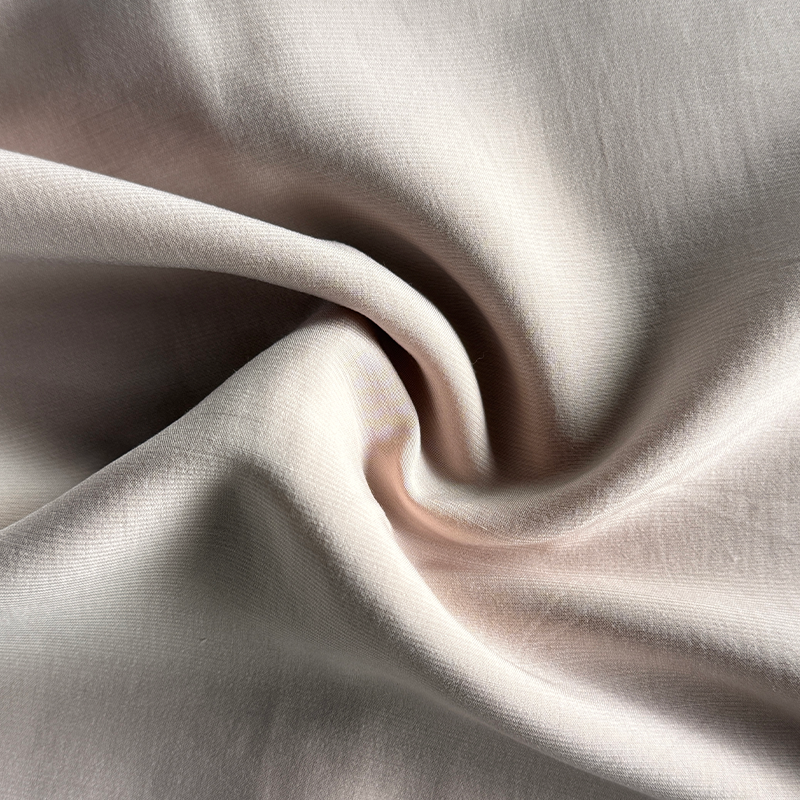
Here is the short version before we go further. Crinkle fabric is a fabric whose surface texture - irregular puckers, fine ridges, soft folds - has been permanently set into the material, so it survives washing, folding and wearing. On polyester and nylon that memory comes from heat. On cotton, rayon and their blends it usually comes from yarn twist, weave geometry or a chemical shrinking treatment. Once you treat crinkle as a specification instead of a style name, sourcing becomes much calmer: you define depth, repeat, shrinkage, hand feel and colorfastness, and then you test them.
This guide covers how the texture is made in a mill, how fiber choice changes the outcome, the numbers worth fixing before a bulk order, what to inspect on incoming rolls, how garment factories should cut and sew it, and what to ask a crinkle fabric manufacturer or wholesaler before you commit.
What Crinkle Fabric Is - And What It Is Not
A crinkled surface is the opposite of a wrinkled one. A wrinkle is what happens when a fabric is folded and has no memory of shape; it disappears with steam. Crinkle is stored shape. The fiber or yarn has been deformed on purpose and then fixed, so the surface wants to return to its intended texture no matter how the roll was packed or how the garment was folded in a suitcase.
The trouble is that "crinkle" is used loosely in the trade. Suppliers quote crinkle chiffon, crinkle crepe, crinkle nylon and seersucker as if the words were interchangeable. They are not. The production route behind each one is different, the durability is different, and so is the price. When a quotation looks unusually cheap, the first question to ask is which route produced the texture.
| Family | How the effect is made | How long it lasts | Typical fabrics |
|---|---|---|---|
| Crinkle, heat set | Fabric is mechanically deformed in rope form, then heat set to freeze the shape | Permanent under normal care; softens under high heat or hard pressing | Polyester and nylon crinkle, crinkle chiffon, crinkle georgette |
| Crepe, high-twist yarn | High-twist yarns relax after weaving or dyeing and pull the surface | Permanent and stable, but reads as a finer, quieter grain than a true crinkle | Crepe de chine, moss crepe, SPH and CEY crepe fabrics |
| Seersucker | Two warp systems woven at different tension create alternating slack and tight stripes | Permanent in the structure, but flattens quickly under a hot iron | Cotton and polyester seersucker for shirts and childrenswear |
| Plisse and caustic crinkle | Caustic soda or a printed shrinking paste makes chosen areas contract | Durable, though tension and pressing reduce the contrast over time | Cotton plisse, crinkle rayon, embossed effects |
| Plain wrinkles | Handling, folding, storage, no memory built in | Temporary; relaxes with washing or steaming | Any fabric |
For sourcing, the practical question is simple: ask how the texture was fixed. A heat-set answer means you are dealing with a thermoplastic fabric that holds texture extremely well, but can lose definition if a garment factory presses a seam at 180 degrees Celsius without a pressing cloth. A high-twist answer means the texture lives inside the yarn, so it survives pressing but will always look more like a grain than a wave. A chemical answer means you are in cotton plisse territory, where the effect is durable but depends heavily on fiber purity and pre-treatment consistency.
How a Mill Sets the Crinkle Into Fabric
Four levers decide the final look: the yarn, the construction, the mechanical deformation, and the step that fixes the shape. Change any one of them and the texture depth, the drape and the price all move.
Yarn and construction set the ceiling
A flat, densely sett fabric cannot be crinkled convincingly. Mills start from constructions with room to move: crepe twists, slub yarns, overfed knits, looser plain weaves and twills with enough space between ends and picks. The tighter the sett, the harder the texture has to fight the structure. That is why a lightweight chiffon crinkles into fine, even waves while a 200 gsm twill tends to fold into larger, less regular creases. If a buyer wants small waves on a heavy fabric, the mill usually has to trade weight for definition.
Mechanical crinkling
The fabric passes through a machine in rope form, where it is twisted, compressed and kneaded, or it is overfed into a stenter so the surface has no choice but to buckle. Rope tension, running speed, dwell time and the number of passes decide whether you get a fine sand texture or broad, irregular folds. This is also where consistency is won or lost: a rope that is packed unevenly produces a roll with dense edges and a flatter center.
Heat setting: where polyester and nylon get their memory
Once deformed, the fabric goes through a stenter or a pressure vessel at a temperature high enough to relax the molecular structure and freeze the new shape. For polyester the working window is typically in the 170 to 200 degrees Celsius range depending on substrate, weight and the hand feel the buyer wants. After cooling, the texture stays put. It also stays sensitive: any later process at similar temperatures - overdyeing, resin finishing, heat transfer printing, a hot iron - can soften or partially erase the effect. Sequence matters, which is why the dyeing and crinkle steps are planned together rather than one after the other.
Chemical routes for cotton, rayon and blends
Cellulosic fibers have no thermoplastic memory, so mills use chemistry instead. Caustic soda treatments shrink the fiber locally and pull the surface into puckers; printed shrinking pastes do the same job in selected areas to create pattern and contrast. The result can be beautiful and very soft, but the process is less predictable than heat setting. Lot-to-lot variation and residual shrinkage both need more attention, and the care label has to be honest about it.
A good example of how we approach this at Echoes is the SSY crinkle quality in our SPH and CEY high-stretch series, where the texture is planned around the yarn's elasticity rather than applied on top of a flat fabric. That sequence gives a springier, more three-dimensional surface than a simple mechanical crush on a standard greige.
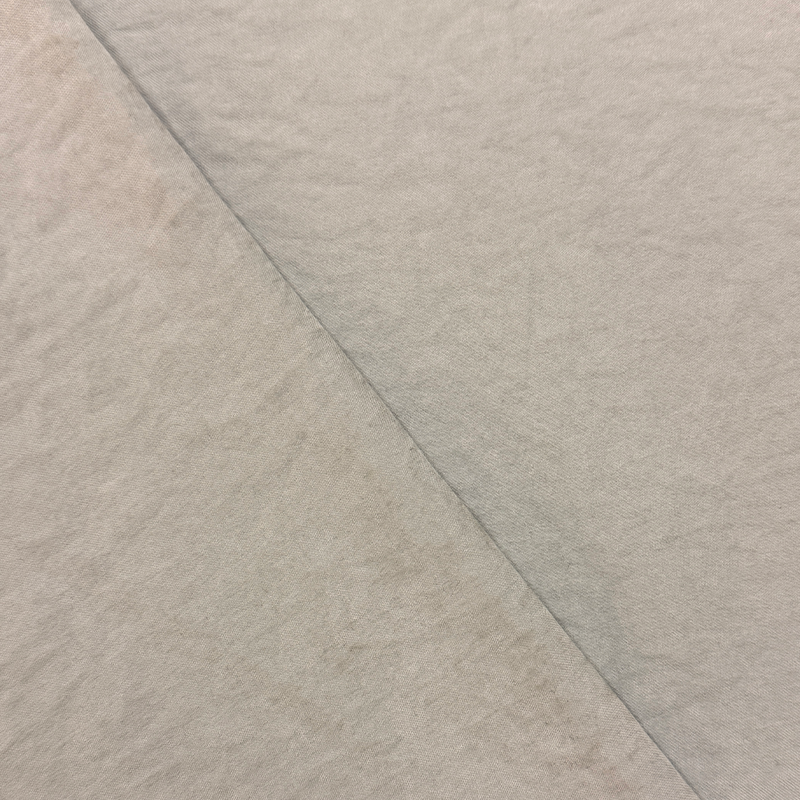
 SSY Crinkle Fabric in SPH/CEY High-Stretch SeriesImported HUVIS SSY yarn and 100% polyester construction support a springy crinkle surface, wrinkle resistance, and easy-care performance for buyers comparing fiber-driven texture.View Product →
Fiber Choice: How It Changes Hand, Drape and Price
The same nominal crinkle depth on two substrates can look like two different products. Fiber decides how well the texture holds, how the fabric falls on the body, how the garment behaves after three washes, and what the meter costs. This is why experienced buyers rarely start from "give me a crinkle fabric" and instead start from the end use and work backwards.
| Substrate | Texture memory | Hand and drape | Typical use | Risk to manage |
|---|---|---|---|---|
| 100 percent polyester | Strong, the benchmark for permanence | Dry to soft, holds folds, resists creasing | Dresses, blouses, travelwear, linings | Bright luster can look synthetic if not controlled |
| Recycled polyester | Strong, same chemistry as virgin | Very close to virgin, slight hand variation between lots | Eco ranges, capsule collections | Ask for traceability documents before promising a claim |
| Nylon | Strong and slightly firmer | Cool, smooth, compact | Light outerwear, bags, active styles | Higher cost, more heat sensitive than polyester |
| Polyester and rayon, TR style | Medium | Softer, more fluid, better drape | Skirts, wide-leg trousers, co-ords | Rayon adds shrinkage and relaxes the texture over time |
| Rayon and viscose | Medium to low | Very fluid, cool touch | Summer dresses, blouses, printed crinkle | Loses definition with repeated washing and heat |
| Cotton | Depends entirely on the finish | Crisp to soft, breathable | Shirts, childrenswear, home textiles | Higher shrinkage, needs the chemical route |
| Linen and linen-like blends | Medium and irregular | Dry, slubby, textured before crinkling even starts | Summer separates, relaxed tailoring | Slub variation is part of the look, not a defect |
| Tencel and lyocell blends | Medium | Soft, drapey, cool against skin | Dresses, soft separates, airy summer styles | More sensitive to mechanical abrasion when wet |
Most commercial crinkle fabrics are blends, because no single fiber wins everything. Tencel adds drape and a cooler hand, nylon adds strength and a drier touch, rayon softens the surface, and slub yarns add interest so the fabric does not rely on crinkle alone. That last point matters commercially: a fabric with visible slub or a fine crepe grain still looks intentional when the crinkle relaxes slightly after a few washes. A pure mechanical crush on a plain flat ground does not have that safety net.
Our blended series is built around exactly this idea. A linen-like slub filament crepe, for instance, carries surface interest in the yarn itself, so the texture reads as designed rather than applied, and the fabric still looks right after the crinkle softens with wear.
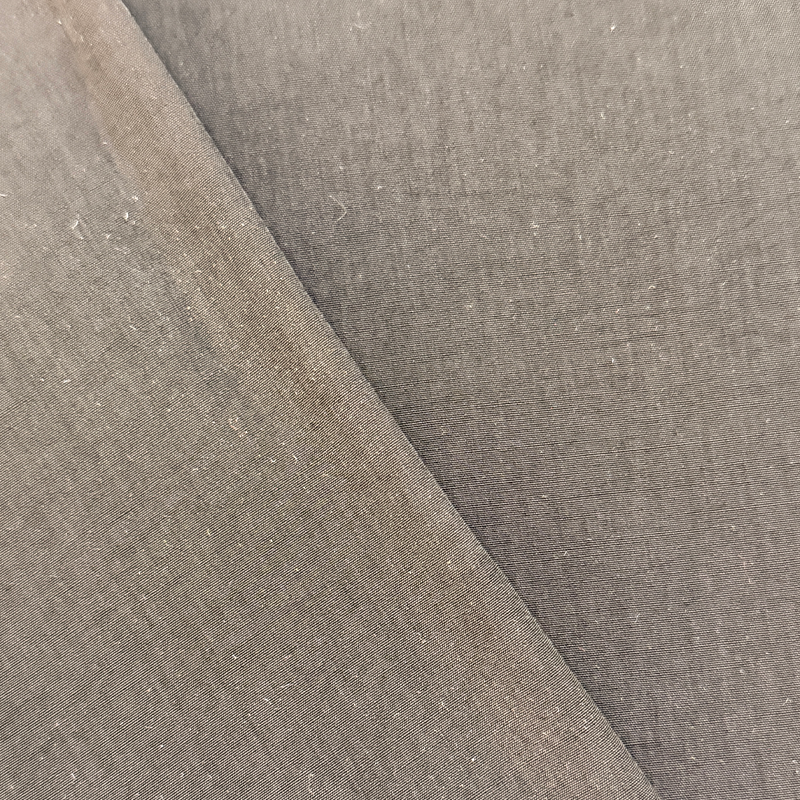
 Linen-Like Slub Filament Crepe Blend FabricRayon-nylon-linen blend with filament crepe and slub texture offers natural linen-like surface, good drape, and strength for garments where yarn-built texture must soften gracefully.View Product →
Where Crinkle Fabric Actually Sells
Crinkle rarely sells as a category on its own; it sells inside a garment type, and the garment type dictates weight, fiber and texture scale. The chart below shows how crinkle enquiries reach our sales team across end uses, which is a practical picture of what buyers are developing rather than a market survey.
Dresses and blouses dominate because a crinkled surface hides transport creasing and gives a soft, forgiving drape that photographs well and needs little ironing at retail. Resort and travelwear follows closely, and for an obvious reason: a fabric that still looks intentionally textured after fourteen hours folded in a suitcase is a merchandising advantage, not just a hand-feel preference. Skirts, trousers and co-ords take a smaller share, usually in TR-style blends where the drape matters more than the texture depth.
Childrenswear uses lighter crinkle constructions where easy care and freedom of movement matter more than drape, and the texture helps hide the small creases that come from play. Light jackets and overshirts move toward nylon and composite filament qualities, where the crinkle reads as a technical surface rather than a decorative one. Home textiles and accessories take the smallest share but the heaviest weights, often with a larger fold pattern that survives cushion filling and handling.
When a buyer asks us for a recommendation, we start from the end use and only then go to weight and fiber. A crinkle for a slip dress and a crinkle for a cushion cover can look similar in a photo and behave nothing alike in production.
The Spec Sheet: Numbers to Lock Before a Bulk Order
Crinkle fabric has more variables than a flat fabric, and most of them are dimensional. Six fields are worth agreeing in writing before a purchase order is confirmed, because every one of them can later become an argument.
Residual shrinkage and dimensional stability
Crinkle fabric contains stored length, so it moves more than a flat equivalent. A heat-set polyester crinkle commonly falls in a 2 to 5 percent residual shrinkage band after one wash at 30 degrees Celsius; cotton and rayon crinkle can exceed that, sometimes noticeably. The number on its own is not enough. Ask which test method was used, how many wash cycles, and at what temperature. "Pre-shrunk" is a marketing word, not a measurement.
Texture depth, repeat and direction
Define wave height and repeat distance in millimeters, and agree a reference sample sealed by both sides. Direction matters too: crinkle usually has a machine direction and a cross direction that look different, which affects cutting layout and how the finished garment reads under store lighting. A texture that looks even on the roll can show bands once it is cut into panels at different angles.
Width, weight and stretch
Widths are often quoted on the greige roll, but heat setting and washing both change the finished width, so specify usable finished width. Weight tolerance of plus or minus 5 percent on grams per square meter is a workable agreement for most constructions. For four-way stretch crinkle qualities, ask for stretch percentage and recovery, because recovery is what stops knees and seats from bagging out after a season.
Color, and the heat-step interaction
Texture and shade are linked. Some colors are dyed before the crinkle step, some after, and the order changes both the final shade and the texture depth. Deep shades and brights also show texture more strongly than pale shades, so the same finish can look like two different fabrics across a color card. If a buyer is building a color story, insist that the whole story comes from one greige lot and one finishing line.
| Field | Example target to agree | Why it matters |
|---|---|---|
| Texture depth and repeat | Wave height 1.5 to 2.5 mm, repeat 8 to 12 mm, sealed reference sample | Defines the look; without it, every lot is "close enough" |
| Residual shrinkage | 3 percent maximum after 3 washes at 30 degrees Celsius | Drives finished garment size and returns rate |
| Usable width | 150 cm, minus 2 to plus 2 cm | Marker planning and consumption per garment |
| Weight | 120 gsm, plus or minus 5 percent | Drape, cover factor and price per meter |
| Stretch and recovery | 15 to 25 percent stretch, 90 percent recovery | Fit and long-term shape retention |
| Colorfastness | Grade 4 or better on wash and crock | Deep shades, denim looks, prints on crinkle |
| Hand feel | Blind panel comparison against a sealed sample | The one specification almost nobody writes down |
Inspection: What to Check on a Crinkle Fabric Lot
Because crinkle is dimensional, incoming inspection is less about finding a single bad spot and more about consistency across the roll. The checks below catch most of the problems that later turn into cutting room surprises or customer returns.
- Texture uniformity edge to edge and end to end. Lay three meters flat under even light and compare the two edges with the center. Small variation is normal in a mechanical process; visible bands or a flatter center are not.
- Bowing and skewing. A crinkle weave can pull weft lines during finishing. Measure at one meter intervals and record the maximum deviation, since a bowed panel will twist in the garment.
- Relaxation test. Cut a 50 cm square, mark it, leave it flat for 24 hours, then remeasure. This tells you how much the fabric will move on the cutting table.
- Wash test. Run three cycles at the temperature printed on the planned care label, dry the way the label says, and measure again. Include a seam puckering check on a stitched sample, not just on loose fabric.
- Colorfastness. Crocking and wash fastness matter most on deep shades, denim-look crinkle and printed crinkle, where texture can hold dye unevenly.
- Hand feel panel. Three people, blind comparison against the sealed reference, recorded as pass or fail rather than a discussion.
- Seam trial. Sew a 40 cm seam using the factory's actual settings, press it the way the factory would, and check whether the texture recovered or flattened permanently.
All of this works better when the results are written into a simple report with numbers and photographs. A supplier who documents its own inspection is also a supplier you can hold to a specification, which is worth more than a slightly lower price per meter.
Cutting, Sewing and Care: Where Crinkle Orders Go Wrong
Cutting room practice
Relax the roll for at least 24 hours in the cutting room before spreading, and cut single layer or in carefully matched pairs rather than deep stacks, because the texture makes layers slide. Respect the direction of the crinkle and keep all panels of one garment running the same way. Consumption is usually higher than for a flat fabric of the same width, often by 5 to 10 percent, so plan the marker with that in mind instead of discovering it in the cost sheet.
Sewing and pressing
Use a fine, sharp needle and a slightly longer stitch length, keep presser foot pressure low, and fit a walking foot on any fabric with noticeable stretch. Do not press seams flat with a hot iron. Press over a curved ham or a light cloth at low temperature, or use steam from a short distance and let the fabric recover. If the factory presses a crinkle seam the way it presses a cotton poplin seam, the texture will flatten along every seam line and the garment will look patched together.
Care labels and consumer expectation
Written care instructions protect both the brand and the texture. Cool hand or gentle machine wash, no high heat tumble drying, dry flat or hang, and no direct ironing. Cotton and rayon crinkle often tightens when wetted and needs re-shaping by hand while damp, which is worth stating on the label rather than leaving to the customer to discover. A short, honest care paragraph prevents a surprising number of returns.
Working With a Crinkle Fabric Manufacturer or Wholesaler
The difference between a supplier who can run your program and one who can sell you a roll usually shows up in the questions they answer without hesitating. These are the ones we think every buyer should ask before the first purchase order.
- Which route fixes the texture here: heat setting, high-twist yarn, or a chemical treatment?
- What is the measured residual shrinkage after three washes, and by which method?
- Can you send 30 to 50 meters of production sample yardage rather than a laboratory piece?
- What is the minimum order per color and per construction, and how does it change if we need a custom texture depth?
- What consumption figure do you assume per garment, and does your price include the crinkle finishing step?
- Which test reports ship with the goods: shrinkage, colorfastness, weight, width, pH?
- How do you handle repeats - same greige lot, same finishing line, same reference sample?
- Can you match a hand-feel target, or only a construction and a weight?
Scale matters here, because crinkle is a process rather than a single pass through a dye machine. Shaoxing Echoes Textile Co., Ltd. has been in textiles for more than 20 years and runs two production bases, an 80 mu greige weaving mill and an 80 mu modern cotton yarn mill, with a stated daily capacity in the region of 200,000 meters. That vertical setup from yarn to greige to finished fabric is useful for crinkle work specifically, because the construction can be adjusted at the source rather than negotiated with a third-party weaver after the texture fails.
The finished range covers more ground than crinkle alone, which helps when a collection needs several textures from one supplier. Polyester series including acetate-like, composite filament, lurex, filament, SPH and CEY high stretch, polyester staple, jacquard, TR and blended qualities sit alongside natural fiber fabrics, warp and weft knits, velvets, chenilles, printed nylon, printed polyester and printed rayon, plus recycled, organic and ECO ranges for buyers with sustainability briefs. An international trade team handles sampling, order execution and after-sales follow-up, so a texture question does not have to travel through three intermediaries.
Sometimes crinkle is not the right answer at all, and a buyer wants surface interest without the dimensional risk. In those cases an embossed or crepe-structured knit can deliver the visual depth with far less shrinkage to manage, which is often the better route for close-fitting knit dresses.
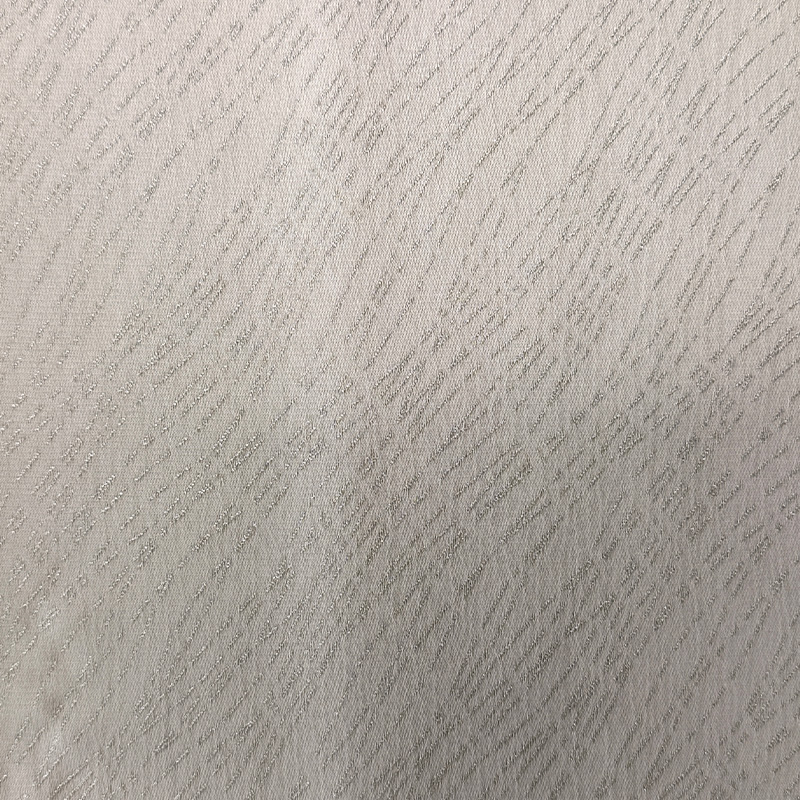
 Diamond Flower Embossed Warp-Knit Crepe FabricWarp-knitted diamond embossed crepe in 97% polyester/3% spandex offers dimensional surface interest with less shrinkage risk for fitted knit dresses and refined separates.View Product →
Related Reading and Next Steps
If you are still at the development stage, the most useful thing you can send a mill is not a picture. It is a reference sample plus four numbers: finished weight, usable width, maximum acceptable shrinkage, and the wash temperature on your care label. With those in hand, a construction can be proposed in days rather than weeks, and the crinkle depth can be adjusted before any bulk greige is woven.
Crinkle Fabric FAQ
Is crinkle fabric the same as seersucker?
No. Seersucker gets its alternating puckered and flat stripes from two warp systems woven at different tension, which is a structural effect. Crinkle fabric usually gets its texture from mechanical deformation followed by heat setting, or from a chemical shrinking treatment. Seersucker tends to be more regular and stripe-like, while crinkle is random or semi-random across the whole surface.
Does crinkle fabric shrink after washing?
It can, and the amount depends on fiber and finish. Heat-set polyester crinkle generally holds shape well and often lands in a low single-digit shrinkage range after one wash, while cotton and rayon crinkle can move considerably more. Always ask for a shrinkage figure with the test method and the number of wash cycles, then run your own test before cutting bulk.
Can crinkle fabric be printed?
Yes, but printing a textured surface is different from printing a flat one. The texture can cause slight pattern distortion, and ink pickup varies across the peaks and valleys of the surface, which is why small, dense motifs usually read more cleanly than large geometric repeats. Printed rayon crinkle qualities are popular for summer dresses precisely because small florals and dots work with the texture instead of fighting it.
Is crinkle fabric good for summer and travel?
It is one of the more practical choices for both. The texture keeps the fabric off the skin, which improves airflow, and it hides the creases that come from packing. Lightweight polyester, rayon and Tencel blends are the usual picks, with the caveat that very fluid rayon crinkle will relax over time and should be described honestly in the product copy.
Can you iron crinkle fabric flat?
You can, and that is exactly why care labels matter. Direct high-temperature ironing will flatten a heat-set texture permanently in that area. Light steam from a distance is usually enough to release transit creases without destroying the surface, and garments are best stored rolled or loosely folded rather than pressed.
What is a realistic minimum order for a custom crinkle fabric?
It depends on whether you are choosing from an existing construction or asking for a new texture depth, a new weight or a new fiber blend. Choosing an existing quality with a custom color is far lighter than developing a construction, because the latter involves trial weaving, finishing trials and a reference sample both sides can sign. Ask for the minimum quoted separately per construction and per color, since the two are often different numbers.
Are there more sustainable crinkle options?
Yes. Recycled polyester, organic cotton and lower-impact cellulosic blends can all be crinkled, and the finishing route does not change fundamentally. What does change is the documentation burden. If a sustainability claim will appear on a hangtag, ask for traceability paperwork at the sampling stage rather than at shipment, because retrofitting certificates onto a completed order rarely works.
Crinkle fabric rewards buyers who treat texture as engineering. The surface is not a happy accident of finishing; it is the visible result of a yarn choice, a construction, a mechanical action and a fixing step, each with tolerances that can be measured and agreed. Get those four elements right and the fabric becomes one of the easiest materials in the range to sell, because it hides creasing, travels well and needs almost no pressing at retail.
Get them wrong, or leave them undocumented, and the same fabric generates shrinkage claims, flattened seams and lots that look nothing like the sample. The middle path is straightforward: seal a reference sample, agree the six spec fields, inspect in three dimensions, and train the sewing line not to press the life out of the surface. Everything else, from fiber selection to minimum order quantities, is a conversation you can have with a manufacturer who is willing to show you the numbers.