English
 Español
 italiano
Content
- 1 What Kind of Fabric Is Modal, Exactly?
- 2 How Modal Goes from Beech Pulp to Yarn
- 3 What Modal Feels Like and How It Behaves in Production
- 4 Modal vs Cotton, Viscose, Lyocell and Polyester
- 5 Moisture Behaviour: Why Modal Drinks Water and Still Feels Dry
- 6 Dresses, Skirts and Shirting: Where Drape Sells
- 7 Next-to-Skin: Underwear, Loungewear and T-Shirts
- 8 Blends: Where Modal Meets Cotton, Polyester and Linen
- 9 Micro Modal and the Imitation Question
- 10 What to Fix in the Spec Sheet Before You Order
- 11 Care Label Reality: Washing, Drying and Ironing
- 12 Cost, Minimum Order and Lead Time
- 13 Sustainability Claims Worth Verifying
- 14 FAQ: Modal Fabric Questions Buyers Ask Most
- 14.1 What kind of fabric is modal, natural or synthetic?
- 14.2 Is modal the same as rayon or viscose?
- 14.3 Is modal better than cotton?
- 14.4 Does modal shrink?
- 14.5 Is modal warm or cool to wear?
- 14.6 Can modal be machine washed and tumble dried?
- 14.7 Why does cheap modal-like fabric feel different after a few washes?
- 14.8 How should a buyer source modal fabric from a manufacturer or wholesaler?
- 15 Where to Take This Next
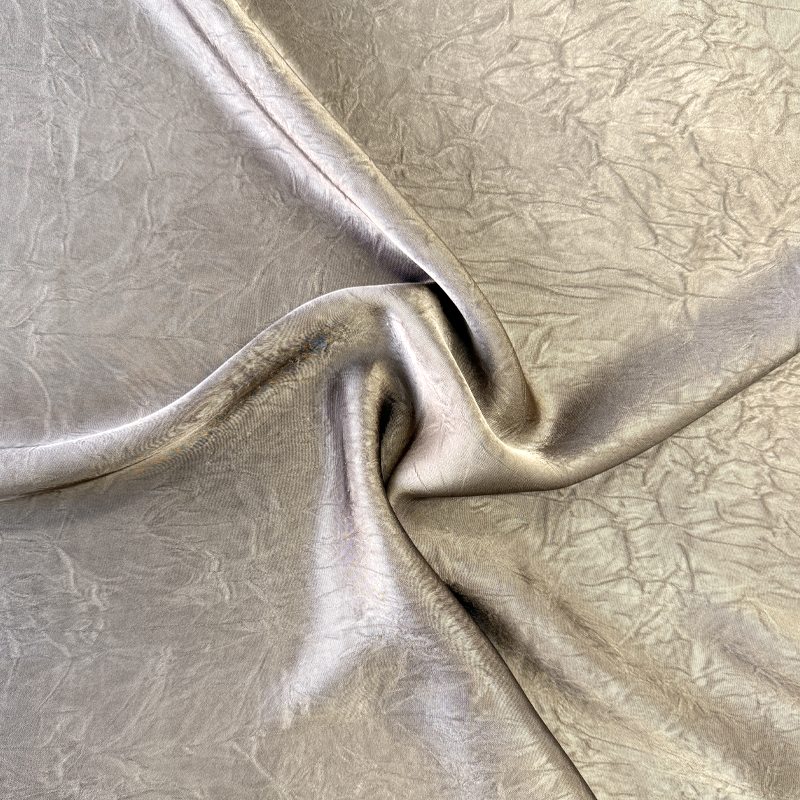
Two jersey swatches, both 160 gsm, both undyed, sitting side by side on a cutting table. The cotton one holds a soft fold and stays put. The modal one slides toward the edge before anyone can pin it down. Buyers who handle fabric every day read that slide instantly, because it tells them more about drape than most lab reports do.
So, what kind of fabric is modal? It is a semi-synthetic cellulosic fiber: cellulose from beech wood pulp, chemically dissolved and re-spun, then cut into staple for spinning. That puts modal in the same family as viscose rayon and lyocell, with its own balance of softness, wet strength and dimensional stability. Modal is not a weave structure, not a finishing effect, and certainly not a polyester.
This guide looks at modal the way a sourcing team does: what it is at fiber level, how it behaves on knitting and weaving machines, where it earns its price in real garments, how it compares with the fibers it usually replaces, and which specifications should be fixed before a bulk order leaves the mill.
What Kind of Fabric Is Modal, Exactly?
Modal belongs to the regenerated cellulose family. The raw material is wood, most commonly beech, and the cellulose is extracted, converted into a spinnable solution, then re-formed into continuous filament that is later cut into staple. Nothing about that route is new. It follows the same broad logic as viscose rayon, which has been produced commercially since the late nineteenth century. What separates modal from ordinary viscose is how tightly the spinning and drawing steps are controlled.
The most accurate label: high wet modulus rayon
In fiber classification, modal sits under the viscose umbrella but meets a higher bar. It is spun with a higher draw ratio, which aligns the polymer chains along the fiber axis and raises what the industry calls the wet modulus. In plain terms, the fiber swells less when it gets wet, keeps a larger share of its strength in water, and moves less during washing. Standard viscose can lose more than half of its tenacity when soaked. Modal typically holds up noticeably better, which is why it survives domestic laundry while cheaper viscose often does not.
Why semi-synthetic is the honest description
Modal is neither fully natural nor fully synthetic. The cellulose chain itself is natural and comes straight from wood. The conversion into a spinnable pulp is industrial chemistry. Compare that with polyester, where the entire molecule is built from petrochemical monomers, and the difference in behavior becomes obvious. Modal absorbs moisture, takes dye deeply, feels cool against skin and will biodegrade over time. Polyester does none of those things by nature.
For sourcing purposes, three phrases describe modal well enough to brief a supplier: regenerated cellulose, high wet modulus, beech pulp origin. Anything vaguer than that usually means the seller has not confirmed what is actually in the bale.
How Modal Goes from Beech Pulp to Yarn
Understanding the process explains the price gap between modal and viscose. The steps below are the standard commercial sequence used by the mills that supply the fiber trade.
- Wood chips from beech or comparable hardwood are cooked to release cellulose pulp, which is then bleached and dried into sheets.
- The sheets are steeped in sodium hydroxide to open the fiber structure and activate the cellulose.
- Carbon disulphide is introduced, converting the cellulose into cellulose xanthate, a soluble derivative.
- The xanthate is dissolved in dilute caustic soda to form a viscous spinning dope, then filtered and ripened for a controlled period.
- The dope is extruded through spinnerets into a coagulation bath, where the cellulose regenerates into filament.
- The filament is drawn under tension, washed, finished, crimped and cut into staple for spinning into yarn.
The drawing step in point six is the commercial heart of modal. Pulling the filament harder and more evenly forces the cellulose chains into a more ordered arrangement. That ordered structure resists water penetration, which translates into less swelling in the wash, less distortion in the garment, and better seam stability on the sewing floor.
Where the environmental story starts
Modern pulp mills recover a large share of their process chemicals, and recovery rates above 90 percent are routinely quoted for the pulp side of the chain. The weak point is carbon disulphide handling, which is why fiber buyers increasingly ask for mill names, closed-loop documentation and third-party certification rather than accepting a general green claim. A supplier who cannot name the pulp mill is a supplier who cannot answer the question.
What Modal Feels Like and How It Behaves in Production
Hand feel is the reason most buyers start a modal conversation, but line behavior is the reason they finish it. The two need to be assessed together.
Softness, drape and surface friction
Modal has a smooth, low-friction surface and a soft, slightly cool touch that reads closer to fine silk than to cotton. In a plain jersey at 150 to 170 gsm, the fabric falls into narrow folds and recovers slowly, which is exactly what dress and blouse design teams want. The same quality becomes a problem for structured shapes: modal does not hold a crisp edge, and tailors usually pair it with a fusible or a blended partner when a garment needs body.
Moisture handling and drying
Cellulose is full of hydroxyl groups that attract water, and modal keeps that chemistry intact. It takes up moisture quickly, moves it along the fiber, and releases it to the air. That is why modal underwear feels dry on a humid day while polyester feels clammy. The trade-off is drying time: modal garments hold moisture longer than synthetic performance knits and should not be left bunched in a laundry basket.
Shrinkage, distortion and stability
Modal knit jersey commonly shows 2 to 5 percent length shrinkage after the first domestic wash unless the finisher has compacted or pre-shrunk it. Woven modal blends usually sit lower, often within 3 percent. Buyers who specify the shrinkage window and the test method before bulk production avoid the classic complaint cycle in the first reorder. Width stability matters just as much for cut-and-sew plants, because a fabric that grows 3 percent in width after washing breaks the marker.
Pilling and abrasion
Fine cellulosic fibers pill when short fibers work loose and tangle on the surface. Modal is finer than cotton, which makes it more vulnerable in loose knits and in blends with weak fiber anchoring. A pilling grade of 3-4 on the Martindale scale is often accepted for casual jersey, while next-to-skin ranges should target 4. Brushing the surface, over-softening during dyeing, or using very low twist yarn all increase the risk.
Modal vs Cotton, Viscose, Lyocell and Polyester
Most sourcing decisions come down to a straight comparison, so the table below puts the five fibers that buyers most often weigh against each other into one view. Values are typical ranges published by fiber producers and testing laboratories rather than fixed limits.
| Fiber | Raw material | Hand and drape | Moisture regain | Shrinkage tendency | Common garment use |
|---|---|---|---|---|---|
| Modal | Beech wood pulp | Fluid, cool, low friction, close to silk | About 12.5 percent | Low to moderate, 2 to 5 percent on first wash in knits | Underwear, T-shirts, dresses, bedding |
| Viscose rayon | Wood pulp, wider species range | Soft but heavier, wet hand changes | About 13 percent | Higher, 5 to 8 percent without pre-shrinking | Linings, blouses, printed fashion |
| Lyocell | Wood pulp, solvent-spun | Smooth, slightly crisper dry hand | About 11 percent | Low, good dimensional control | Shirting, denim-look, activewear |
| Cotton | Cotton lint | Dry, matte, holds shape | About 8.5 percent | Low after pre-shrinking, 3 to 5 percent in untreated knits | Broad apparel and home textile use |
| Polyester | Petrochemical monomers | Slippery, resilient, thermoplastic | About 0.4 percent | Very low once heat-set | Outerwear, performance knits, blends |
The practical takeaway is that modal sits between cotton and viscose on softness and above both on wet stability. It does not replace polyester for quick-dry performance, and it does not replace cotton where a dry, matte, structured surface is the design intent. Where modal wins is in the narrow band between comfort and appearance: garments that must feel good against skin and still fall beautifully in a photograph.
Moisture Behaviour: Why Modal Drinks Water and Still Feels Dry
Moisture regain is the single number that best predicts how a fiber will feel on a warm day and how it will behave in a garment wash. The chart below compares typical published regain values, which measure how much water a fiber absorbs from the air at standard conditions.
What this spread means in a garment is straightforward. Modal takes up moisture fast enough to keep the microclimate next to skin from turning sticky, then releases it steadily, which is why it works so well in underwear, sleepwear and summer tops. It also explains why a 100 percent modal jersey and a 100 percent polyester jersey of identical weight feel completely different within two minutes of wearing.
For mills and converters, regain also drives process control. A modal yarn that has absorbed moisture from a humid weaving shed behaves differently from a dry one: tension changes, yarn strength changes, and shade uptake during dyeing shifts slightly. That is why spinning and weaving operations keep conditioned storage and why the cellulosic blends we run, such as rayon and nylon airy constructions, are scheduled with humidity in mind rather than treated as an afterthought.
The practical point for buyers is that high regain is a performance feature, not a defect, and it should not be traded away for a marginally lower price per meter. If a supplier offers a modal jersey at a suspiciously low quote, checking the fiber content and the blend ratio is usually more revealing than checking the price list.
Dresses, Skirts and Shirting: Where Drape Sells
In womenswear, modal shows up first in garments that need movement. A bias-cut skirt, a wrap dress, a softly gathered blouse and a relaxed shirt all depend on fabric that falls rather than stands. Modal jersey and modal-poplin blends deliver that look without the weight of a viscose crepe.
Design teams usually pair modal with one of three partners. With a small percentage of elastane, it recovers shape and holds a cleaner fit through the seat and thigh. With polyester, it gains wrinkle resistance for travel-friendly pieces. With linen or a linen-look yarn, it keeps the dry, slubby surface that summer buyers expect while softening the hand enough to stop the fabric feeling like sackcloth.
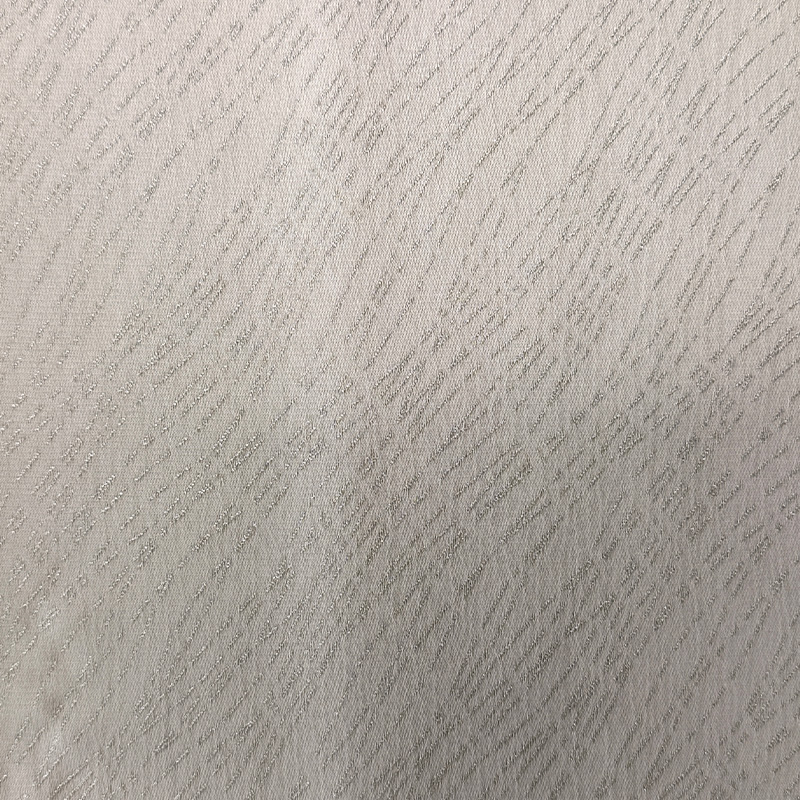
 NO 6004 TN Polyester-Nylon Skirt Fabric with DrapeA 160 GSM polyester-nylon woven skirt fabric offering smooth drape and shape support for pencil skirts and dresses.View Product →
One caution applies across all these constructions. Modal adds drape but subtracts body, so a skirt pattern drafted for a firmer twill will hang differently in a soft modal blend. Confirming weight, elongation and recovery on a test garment before cutting bulk is cheaper than discovering the issue at the fit session.
Next-to-Skin: Underwear, Loungewear and T-Shirts
The strongest commercial case for modal is the layer closest to the body. Underwear, camisoles, boxer briefs, sleep sets and premium T-shirts all benefit from the same three traits: a smooth surface that does not drag, high moisture uptake, and enough softness that the fabric disappears when worn.
Typical construction choices reflect that. Modal jersey runs from about 130 to 180 gsm for underwear and lightweight tops. Interlock from 180 to 240 gsm gives a denser, more opaque surface for premium T-shirts. Rib knits at the heavier end hold shape at cuffs and necklines. Micro modal, discussed later, goes finer still and is common in underwear waistbands and lightweight inner layers.
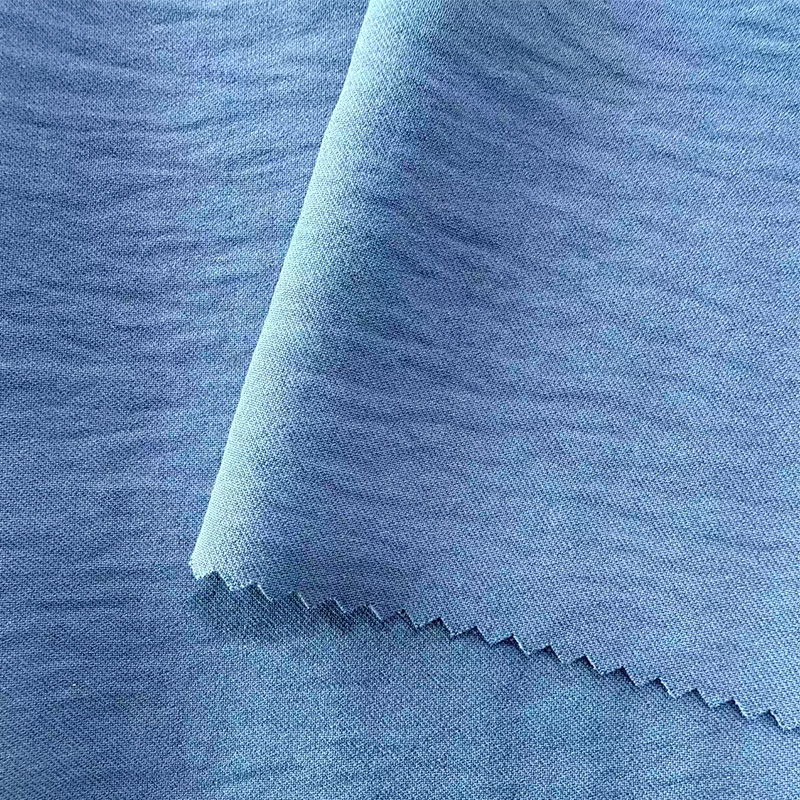
 NO 6027 RN Cloud Soft Rayon-Nylon Woven FabricA 165 GSM rayon-nylon woven with cloud-like softness, natural sheen and drape for shirts, wide-leg pants and dresses.View Product →
Comfort programs live or die on consistency. A buyer ordering 20,000 pieces of a modal-blend tee across two dye lots needs the hand feel, the weight and the shade to match from the first roll to the last. That argues for sealing a sample and specifying a tolerance for weight, shrinkage and pilling rather than relying on a verbal description of softness.
Blends: Where Modal Meets Cotton, Polyester and Linen
Pure modal is beautiful and also expensive, which is why most commercial fabric is a blend. Each partner changes the economics and the engineering in a predictable way.
- Modal with cotton, commonly 50/50 or 60/40, lowers cost, adds a drier surface and improves body while keeping softness. It is the workhorse of mid-market knitwear.
- Modal with polyester, often 65/35 in either direction, improves wrinkle recovery and drying speed at the expense of some breathability.
- Modal with elastane, usually 92/8 or 95/5, adds stretch and recovery for fitted garments and rib trims.
- Modal with linen or linen-look yarn gives a summer hand with a textured surface that photographs well and hides creasing.
- Modal with wool in small percentages appears in lightweight knits aimed at transitional seasons.
There is a real supply-side skill in these combinations. Cellulosic fibers absorb dye at different rates, so a modal-cotton blend requires careful shade matching to avoid the heather effect that appears when one component takes color faster than the other. Yarn blending versus fabric blending also changes the visual result, and the choice should be made with the final garment in mind rather than for convenience at the loom.
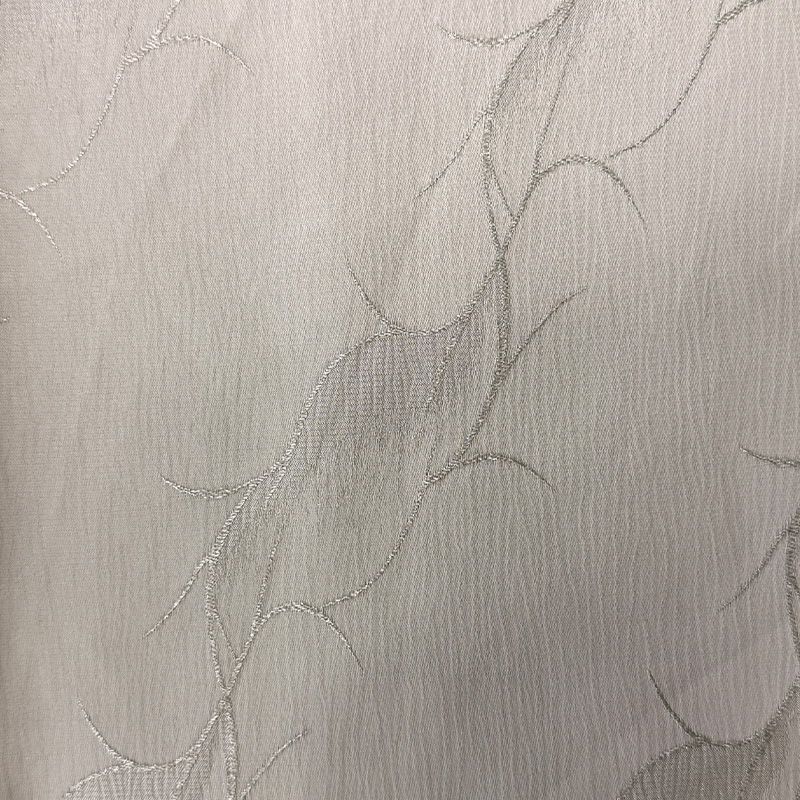
 NO 6040 Rayon-Nylon Airy Lightweight Woven FabricAn 85 GSM rayon-nylon woven with a soft, matte, translucent surface for breathable warm-weather garments and blended ranges.View Product →
For buyers building a cellulosic range, browsing a full blended fabric series is often faster than starting from a single fiber specification, because the blend ratios already reflect what the market is asking for in each weight band.
Micro Modal and the Imitation Question
Micro modal is the same fiber spun finer, typically around 0.8 to 1.0 dtex compared with roughly 1.3 to 1.5 dtex for standard modal. Finer filaments mean more fibers per yarn cross-section, a larger surface area and a softer, more uniform hand. The trade-off is that finer fibers pill more easily and cost more per kilo, so micro modal usually appears in premium underwear or in blends where a small percentage is enough to lift the hand.
The market also carries a large volume of "modal-like" fabric. These are usually viscose, polyester-viscose blends, or fine-gauge polyester knits finished to feel soft and to fall heavily. They can look convincing on a hanger and disappointing after five washes, mainly because they lack the wet modulus that defines real modal. Buyers can protect themselves with a simple step: request a fiber content test from a third-party laboratory on the bulk shipment, not just a certificate for the sample.
The same confusion appears across the cellulosic family. Our own technical team explains the distinction between real and imitation acetate in this note on how imitation acetate fabric differs from the real fiber, and the logic carries over to modal almost word for word.
What to Fix in the Spec Sheet Before You Order
A modal program fails for boring reasons: unclear tolerances, unsealed samples, inconsistent test methods. The list below covers the parameters that a manufacturer or wholesaler should be able to confirm in writing before a purchase order is issued.
- Fiber content with a tolerance, typically plus or minus 3 percent, and the fiber producer or pulp origin where the buyer needs traceability.
- Linear density of the staple, standard modal against micro modal, because the two are not interchangeable in a specification.
- Yarn count and spinning system, for example 30s single ring spun or 40s compact, since these change both hand and pilling behavior.
- Fabric weight with a tolerance of about plus or minus 5 percent, measured after finishing rather than on greige.
- Usable width and selvedge condition, especially for woven blends where a 2 percent width loss can ruin a marker.
- Shrinkage after three domestic washes at 40 degrees Celsius, with targets such as 5 percent maximum length and 3 percent maximum width for jersey.
- Pilling grade on a named method, with grade 4 as a sensible floor for next-to-skin and 3-4 acceptable for casual wear.
- Colorfastness to washing, rubbing and light, generally grade 4 or better, with wet rubbing often allowed to sit slightly lower.
- pH value within the skin-friendly window of roughly 4.0 to 7.5, plus formaldehyde limits if the buyer follows a restricted substances list.
- Certification documents where claims are made: chain of custody for the wood pulp, and a restricted substances certification for the finished fabric.
- A sealed hand-feel reference sample and agreed care label wording, both countersigned before bulk begins.
None of this is exotic. It is the standard discipline that separates a repeatable modal program from a one-off lucky shipment. Suppliers who resist naming test methods usually have a reason, and that reason is rarely in the buyer's interest.
Care Label Reality: Washing, Drying and Ironing
Modal is easy to wash and easy to ruin with careless washing. The fiber handles water well but dislikes heat shock and mechanical aggression when wet, because wet cellulose is weaker than dry cellulose.
A practical care routine that most brands can print on the label looks like this: machine wash at 30 degrees Celsius on a gentle cycle, use a mild liquid detergent, avoid chlorine bleach, and skip the high-spin wring that twists knit structures. Tumble drying on low heat is acceptable for many modal knits, but line drying in shade preserves both size and color longer. Ironing works best at low to medium temperature with a little moisture, and direct high heat on a dry surface can leave a shine.
Fabric finishers can improve the wash experience before the garment is even cut. Compacting, controlled relaxation after dyeing and a softener that does not build up on the surface all reduce the first-wash surprise. Buyers should ask whether the shrinkage figure quoted refers to the finished roll or to a laboratory sample that has been through a different relaxation route.
Cost, Minimum Order and Lead Time
Modal sits at a premium to cotton and well above standard viscose. As a rough planning guide, modal jersey commonly quotes 20 to 40 percent above a comparable cotton jersey of the same weight, with micro modal higher again. Finished woven blends move within a wide band depending on yarn count, dyeing method and finishing route, so a single headline price is rarely meaningful without a specification attached.
Order quantities follow the same pattern as other cellulosic programs. Stock greige supported by a mill's regular dyeing schedule can often start in the low hundreds of meters per color. Custom shades and special finishes usually push the minimum into the one to three thousand meter range per color, because the dyeing vessel and the finishing line have to be committed. Sampling typically takes one to two weeks, and bulk production for dyed modal knit often runs four to six weeks after lab dip approval.
Capacity matters here. Cellulosic programs are sensitive to humidity and to dyeing scheduling, and a mill that runs its own yarn and greige has more control over both. Our own operation is built that way: more than twenty years in textile export, a dedicated greige base with daily output in the region of 200,000 meters, and a separate cotton yarn plant feeding the front end of the chain.
Sustainability Claims Worth Verifying
Modal is often marketed as an eco fiber, and the reality is more nuanced. Beech forests in the main sourcing regions are generally managed and certified, which is a genuine advantage over raw materials linked to land conversion. Chemical recovery in modern pulp mills is efficient. But the xanthate route still uses carbon disulphide, and that is the part of the chain where responsible producers differentiate themselves.
Buyers who need defensible claims should ask for three things. First, chain of custody certification for the wood pulp, such as a forest certification scheme. Second, a restricted substances certification for the finished fabric, which covers dye residues and process chemistry. Third, the name of the fiber producer or pulp mill, because a general statement about eco-friendly material is not auditable.
It is also worth remembering that fiber choice is only one part of a garment's footprint. Dyeing method, water treatment, transport mode and garment lifetime often outweigh the difference between two cellulosic fibers. A realistic sustainability story says what is verified and what is still being improved, rather than implying that one fiber solves everything.
FAQ: Modal Fabric Questions Buyers Ask Most
What kind of fabric is modal, natural or synthetic?
It is semi-synthetic. The cellulose comes from wood, which is natural, but the fiber is regenerated through industrial chemistry, so it belongs to the regenerated cellulose family alongside viscose and lyocell rather than to either the natural or the fully synthetic group.
Is modal the same as rayon or viscose?
Modal is a type of rayon, but not the same as standard viscose. It is spun with a higher draw ratio, which raises wet strength and reduces swelling and shrinkage. On a specification sheet, a viscose fabric and a modal fabric should never be treated as interchangeable.
Is modal better than cotton?
Better for drape and next-to-skin softness, and better at absorbing moisture quickly. Cotton is better for structure, matte surface and price stability. Most commercial ranges use both rather than choosing one.
Does modal shrink?
Knitted modal jersey commonly loses 2 to 5 percent in length on the first domestic wash, and woven blends usually stay within about 3 percent. Pre-shrinking and compacting reduce this, and the shrinkage window should be written into the purchase specification.
Is modal warm or cool to wear?
It reads as cool in most constructions because it moves moisture away from skin quickly. Heavier interlock and brushed modal feel warmer, which is why the fiber appears in both summer tops and winter base layers.
Can modal be machine washed and tumble dried?
Yes, with care. A gentle cycle at 30 degrees Celsius and low-heat tumble drying are usually acceptable. High heat, chlorine bleach and hard spinning shorten the garment's life noticeably.
Why does cheap modal-like fabric feel different after a few washes?
Because it is often softened viscose or a polyester blend rather than true modal. Without the higher wet modulus, the fabric distorts, loses surface smoothness and pills sooner. A fiber content test on the bulk lot settles the question.
How should a buyer source modal fabric from a manufacturer or wholesaler?
Start with the end use and the garment silhouette, then fix fiber content, weight, shrinkage, pilling and colorfastness against named test methods. Seal a hand-feel sample, confirm minimums per color, and verify certifications before the order is placed rather than after the first shipment arrives.
Where to Take This Next
If you are building a cellulosic range and want to compare modal-style drape against rayon, lyocell and blended alternatives in the same weight band, the fastest route is a conversation with a team that controls its own yarn and greige. Send the garment sketch, the target weight and the wash standard, and the fabric option can be narrowed in a single exchange.
Talk to the trade team
Share your specification, target quantity and delivery window, and we will come back with a construction proposal and a sampling plan.
Contact Shaoxing Echoes TextileModal rewards buyers who understand both its chemistry and its commercial limits. Get the fiber content, shrinkage and pilling targets right at the sampling stage, and the drape that made the swatch attractive in the first place will still be there after the twentieth wash.