English
 Español
 italiano
Content
- 1 What Is Chenille Fabric? The Straight Answer
- 2 How Chenille Yarn Is Made and Why the Structure Matters
- 3 Chenille Fabric Compared with Cotton, Velvet, Microfiber and Polyester
- 4 Fiber Choices Inside Chenille Fabric: Cotton, Viscose, Polyester, Acrylic and Blends
- 5 Where Chenille Fabric Is Actually Used
- 6 Does Chenille Fabric Pill, Shed or Shrink? Performance and Care in Real Use
- 7 A B2B Buying Guide: How to Evaluate a Chenille Fabric Supplier
- 8 Is Chenille Fabric a Sustainable or Eco-Friendly Choice?
- 9 Frequently Asked Questions About Chenille Fabric
- 9.1 What is chenille fabric made of?
- 9.2 Is chenille fabric the same as cotton?
- 9.3 Does chenille fabric pill easily?
- 9.4 Is chenille fabric good for sofas and upholstery?
- 9.5 What does chenille fabric feel like?
- 9.6 Is chenille fabric warm or cool?
- 9.7 How should chenille fabric be washed?
- 9.8 Can chenille fabric be used for clothing?
- 9.9 Is chenille fabric expensive?
- 9.10 How do I choose a chenille fabric supplier?
- 10 Final Notes for Buyers Sourcing Chenille Fabric
A sample swatch lands on your desk, you turn it over, and on the back you see short tufts of yarn arching over the base weave like tiny caterpillars. That is the moment most buyers first meet chenille fabric, and it is also the moment they usually ask the same question: what exactly is this material, and why does it feel so different from an ordinary cotton or polyester weave?
Here is the short answer before anything else. Chenille fabric is any woven or knitted textile built from chenille yarn, a specialty yarn in which short lengths of pile fiber are gripped and twisted between two core threads so that the fiber ends stand out around the yarn's axis. Those protruding ends create the raised, velvety surface that people recognize on sofas, sweaters, throws and decorative cushions. The word comes from French, where it means caterpillar, and the name has been attached to this fabric since the eighteenth century because the pile really does look like a row of small fuzzy larvae under a magnifier.
The practical consequence is simple. When you evaluate chenille fabric, you are not only choosing a fiber such as cotton or polyester, you are choosing a yarn architecture, a pile height, a pile density and a backing structure. Two chenille fabrics that list the same fiber content on a spec sheet can behave completely differently in a Martindale abrasion test, a pilling test or a five-wash shrinkage check. That is why this guide walks through the construction first, the fiber options second, and the commercial selection criteria last.
What Is Chenille Fabric? The Straight Answer
Chenille fabric is a textile whose surface character comes from chenille yarn rather than from a finishing process such as brushing, sanding or flocking. The pile is engineered into the yarn at the spinning stage, then locked into the cloth during weaving, knitting or embroidery. A brushed polyester fleece can feel soft, and a sanded twill can feel peach-like, but neither of them is chenille, because neither has a true chenille yarn at its core.
Structurally, a chenille yarn has three jobs to do at once. Two core threads, usually plied and relatively strong, hold the structure together. Short pile fibers or pile yarns are fed between them and locked in by twist. The ends of those pile fibers are then cut or allowed to stand free, and it is this free-standing end that produces the fuzzy hand. In the industry, the length of that free end is called pile height, and the number of pile ends packed into a given area is called pile density.
Three characteristics tend to separate chenille from other pile fabrics:
- Directional pile. Chenille has a nap direction, so the fabric can look slightly lighter or darker depending on which way you view it. This is normal, not a defect, but it matters when you cut panels for upholstery or garments and need consistent shading.
- Soft but substantial hand. The fabric feels plush and warm, yet it usually carries more weight than a comparable flat weave, because the pile adds bulk without adding much raw material cost.
- Fiber-agnostic construction. Chenille yarn can be spun from cotton, viscose rayon, polyester, acrylic, wool, silk, linen blends or almost any combination, so the same pile look can deliver completely different performance.
That third point is where most sourcing mistakes begin. A buyer who specifies only "chenille, 300 gsm" without specifying fiber, pile height, backing and test requirements is effectively writing an open invitation to receive whatever interpretation of chenille the mill prefers to ship.
Chenille is defined by its yarn structure, not by its fiber content, so the fiber specification alone will never tell you how a chenille fabric will perform.
How Chenille Yarn Is Made and Why the Structure Matters
Understanding the spinning and forming route explains almost every quality complaint that reaches a supplier's inbox, from shedding and pilling to shade variation between dye lots.
Core threads, pile fibers and twist
Chenille spinning starts with core threads that are usually two plies of a fine yarn, tensioned in parallel. Pile fiber, either as staple fiber or as fine pile yarns, is fed into the nip between the cores. As the assembly twists, the pile fibers are trapped and forced outward, forming the characteristic ring of protruding ends. Twist level is the single most influential variable. Higher twist grips the pile more firmly and produces a leaner, more durable yarn; lower twist lets the pile bloom, which gives a fuller, softer hand but increases the risk of fiber shedding and surface pilling.
Because of this trade-off, two mills can both claim "cotton chenille" and deliver fabrics that behave like different products. A low-twist cotton chenille may feel wonderful in a showroom and look tired in a living room after a year. A tightly twisted version may feel a little flatter at first touch but will hold its appearance far longer.
Woven chenille, knitted chenille and embroidered chenille
The way the yarn is locked into the fabric decides where the material can be used:
- Woven chenille. The chenille yarn is inserted as weft or warp into a stable ground structure. The pile sits on a firm base, which makes the fabric dimensionally stable and suitable for upholstery, cushions and structured outerwear. Weight typically runs from about 280 gsm for light decorative cloth up to 600 gsm or more for heavy sofa fabric.
- Knitted chenille. The yarn is looped rather than interlaced, so the cloth is stretchier, softer and more drapey. This is the version used for sweaters, cardigans, baby blankets and leisure throws.
- Embroidered chenille. A fine chenille yarn is stitched onto a base fabric to create raised motifs or an all-over pile effect. This route allows pattern, texture and pile in the same panel, and it is common in cushion covers and statement textiles.
A useful way to think about it is that woven chenille is furniture-first and knitted chenille is body-first. Confusing the two is one of the most frequent specification errors in B2B purchasing, because a knitted chenille offered for sofa use will usually fail abrasion requirements regardless of how good the fiber is.
Pile height, yarn count and fabric weight
Pile height controls how the fabric feels and how it wears. Short pile, roughly one to two millimeters, reads as a tight, refined surface with better abrasion resistance. Long pile, three millimeters and above, reads as luxurious and deep but tends to flatten more quickly and trap more dust. Yarn count is usually expressed in the cotton count system for staple chenille, and finer counts give a smoother surface while coarser counts give a bolder, chunkier texture.
Fabric weight ties everything together. As a rough commercial guide, light knitted chenille for garments sits around 180 to 260 gsm, mid-weight knitted and light woven chenille for throws and cushions sits around 260 to 350 gsm, and heavy woven chenille for residential upholstery usually sits from 350 gsm upward. Weight alone is not a quality indicator, however, because a heavy fabric with low pile density can feel substantial in the hand yet shed badly in service.
Twist level, pile height and pile density decide how a chenille fabric ages, and those three numbers are the ones worth locking into a purchase specification.
Chenille Fabric Compared with Cotton, Velvet, Microfiber and Polyester
Buyers often arrive at chenille after comparing it against a flat cotton weave, a velvet, a microfiber or a plain polyester staple fabric. The comparison table below sets out the practical differences that usually decide the choice.
| Fabric type | Surface character | Pilling tendency | Durability in use | Typical application |
|---|---|---|---|---|
| Chenille | Deep, raised, velvety pile with a visible nap direction | Medium to high on low-twist yarns, low on tightly twisted yarns | Moderate to good, strongly dependent on fiber and backing | Upholstery, sweaters, throws, cushions, decorative panels |
| Flat cotton weave | Smooth and matte with no pile | Low | High when densely woven | Shirts, bedding, curtains, linings |
| Velvet | Short, dense, uniform pile with a directional sheen | Low | Good, but the pile can crush and mark | Evening wear, cushions, headboards, packaging |
| Microfiber | Very fine, suede-like and smooth | Low | Good abrasion resistance, weaker shape retention in heavy use | Sofas, cleaning cloths, budget upholstery |
| Polyester staple fabric | Slightly fuzzy, uniform, generally matte | Medium | Good, easy to care for | Budget upholstery, curtains, workwear, bags |
The table hides one important nuance, which is that chenille's performance range overlaps with all of the others. A tightly twisted viscose and polyester chenille on a stable woven ground can outperform a cheap velvet in abrasion testing. A loosely spun acrylic chenille used on a dining chair can look shabby within a year. The material is neither inherently premium nor inherently fragile; it is highly tunable, and that tunability is exactly why specifications matter more than generic descriptions.
From a comfort standpoint, chenille usually wins on warmth and tactile depth. From a maintenance standpoint, microfiber and flat cotton are typically easier to keep clean, because they have less exposed surface area for dust and oils to cling to. From a design standpoint, chenille offers texture that flat weaves cannot replicate without additional finishing steps, and that texture is often what sells a piece of furniture or a knitwear item.
Chenille competes on texture and warmth rather than on easy maintenance, so it should be chosen where hand feel and appearance matter more than wipe-clean convenience.
Fiber Choices Inside Chenille Fabric: Cotton, Viscose, Polyester, Acrylic and Blends
The same pile structure can be built on very different fibers, and the fiber decides most of the commercial behavior: price, color depth, moisture behavior, shrinkage and how the fabric reacts to heat and friction.
Cotton chenille is the classic version. It dyes well, feels natural against the skin and has good moisture absorption, which makes it comfortable for garments and baby blankets. Its weaknesses are shrinkage and slower drying, and cotton pile can flatten with heavy use unless the twist is high. Viscose rayon chenille, sometimes sold as rayon chenille, delivers a noticeably silkier sheen and a cooler, more fluid drape than cotton. It is a favorite for cushion covers and decorative throws where appearance leads. Viscose is weaker when wet, so it needs gentler washing and a stable backing for upholstery.
Polyester chenille is the workhorse. It resists abrasion, holds color, dries quickly and costs less, which makes it common in contract and mid-market residential furniture. Its limitation is a slightly synthetic hand and a tendency to look flatter as the pile compresses. Acrylic chenille mimics wool's softness at a lower cost and is frequently used in knitwear and craft yarn, but it pills more readily under friction than polyester or high-twist cotton. Wool and silk chenille sit at the top end, offering warmth, resilience and luster, with a price that limits them to premium collections.
Blends are where most production actually happens, and they exist for good reasons:
- Cotton and viscose blends balance natural hand feel with better drape and lower cost.
- Polyester and viscose blends improve abrasion resistance while keeping a soft surface.
- Acrylic and polyester blends reduce pilling compared with pure acrylic.
- Chenille combined with a filament ground yarn improves dimensional stability and reduces seam slippage.
For exporters and importers, the fiber choice also drives compliance questions. Recycled polyester chenille may be required for a brand with sustainability targets. Organic cotton chenille may be required for a nursery collection. Neither requirement can be satisfied by swapping fibers after the fabric has been woven, so the fiber decision has to be made at the yarn stage, which is one reason a supplier with its own spinning capacity can respond faster than a pure trading company.
Decide the fiber at the yarn stage and the construction at the fabric stage; reversing that order is what produces expensive re-sampling cycles.
Where Chenille Fabric Is Actually Used
Chenille is not a single-market fabric. It moves through home textiles, apparel and smaller decorative categories, and each of those markets asks for a different balance of pile height, weight and backing. The chart below sketches how the demand roughly divides across applications.
The split is indicative rather than statistical, but it matches what most mills see when they allocate chenille capacity across a season. Upholstery dominates because the pile holds up to visual expectations of comfort and because woven chenille can be engineered to pass abrasion requirements. Apparel takes the second position, largely through knitted chenille used in sweaters and cardigans where the soft, slightly fuzzy hand is the whole point of the garment. Throws and decorative textiles absorb a large share of surplus yardage and short runs, which makes them a useful testing ground for new colorways.
For a supplier working across both woven and knitted categories, that spread is an advantage, because the same yarn platform can be directed toward different end markets without rebuilding the entire production chain. A pile yarn that does not meet upholstery twist requirements can often be redirected into a throw or a craft application, and a finer count that is not suitable for heavy furniture may be ideal for a lightweight knit. Understanding the application split therefore helps buyers predict what a mill can realistically deliver inside a short delivery window.
Upholstery and knitwear account for the majority of chenille demand, so a supplier's ability to serve both woven and knitted routes is a genuine sourcing advantage.
Home textiles and furniture
Chenille remains a staple in sofas, armchairs, ottomans, cushions and headboards. The appeal is the combination of visual warmth and tactile depth, which photographs well and screens well in e-commerce listings. For residential use, a woven chenille with a stable ground and a tightly twisted pile usually performs well. For contract environments such as hotels and waiting areas, the specification needs to move toward higher twist, denser pile and heavier weight, and the buyer should expect abrasion testing to be requested explicitly.
Apparel and knitwear
Knitted chenille appears in sweaters, cardigans, dresses, scarves and loungewear. The fabric drapes softly, holds dye deeply and feels warm without heavy weight. The main production caution is stretch and recovery, so the knit structure and the elastane content need to be agreed up front if the garment has to hold its shape after repeated wear. For children's wear, tighter twist and shorter pile reduce the risk of loose fiber ingestion and are usually preferred.
Throws, crafts and decorative items
Throws, pet beds, toy fabric, cushion covers and seasonal decorations absorb a significant volume of chenille production. These categories tolerate shorter runs and more color variety, and they often use heavier, softer pile because hand feel matters more than abrasion resistance.
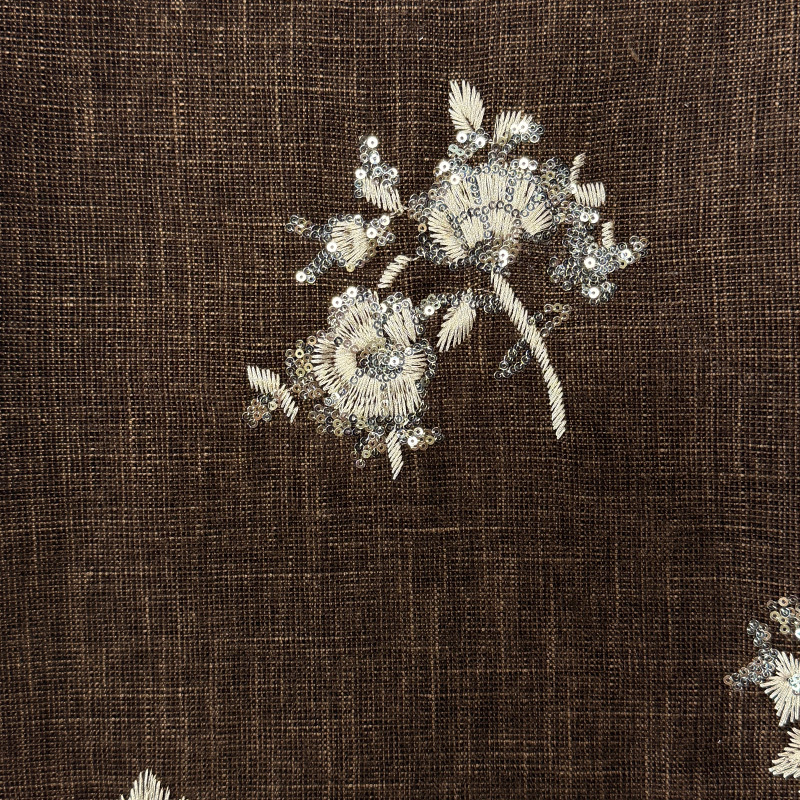 NO6111 Chenille Embroidery Fabric70%T 30%R 55"57" 460GSMView Product →
Does Chenille Fabric Pill, Shed or Shrink? Performance and Care in Real Use
Nearly every complaint about chenille traces back to one of three behaviors: pilling, shedding or shrinkage. None of them is inevitable, and each has a specific cause that can be controlled at the yarn or finishing stage.
Pilling
Pilling happens when loose fiber ends migrate to the surface and ball up under friction. In chenille, the exposed pile gives pilling more raw material to work with than a flat weave does, so low-twist yarns pill faster. Tightening the twist, increasing pile density, choosing fibers with higher flex life such as polyester, and applying a controlled singeing or cropping step all reduce the tendency. Testing is normally done with a random tumble pilling tester or a Martindale machine, with results graded on a standard scale.
Shedding
Shedding is different from pilling. It is the release of individual pile fibers, and it is driven by insufficient twist and by mechanical abrasion during cutting and sewing. Fabrics that shed heavily in the cutting room will usually continue to shed in the customer's home. Asking a mill for a simple tape-lift test on a cut edge is a quick way to screen for this before committing to bulk.
Shrinkage and dimensional stability
Cellulosic fibers such as cotton and viscose relax and shrink when they first meet water, particularly in a tumble dryer. This is why relaxation shrinkage and washing shrinkage should be tested on a finished, laundered sample rather than on greige fabric. Pre-shrunk and compacted chenille is available, and for upholstery a stable ground structure reduces movement. In garments, shrinkage is usually managed by a combination of yarn choice, knit tightness and a controlled washing or compacting step.
Care recommendations that actually hold up
- Vacuum upholstery chenille with a soft brush attachment rather than a beater bar, which pulls the pile.
- Rotate cushions regularly so that pile compression and shading stay even across the piece.
- Wash knitted chenille on a gentle cycle in cool water, then dry flat; heat is what damages the pile most.
- For viscose-rich chenille, avoid prolonged soaking, because wet strength is lower than dry strength.
- Deal with spills by blotting from the outside in, not by rubbing, to avoid flattening the pile.
Pilling, shedding and shrinkage are all twist and finishing problems before they are fiber problems, so they belong in the specification, not in the after-sales complaint file.
A B2B Buying Guide: How to Evaluate a Chenille Fabric Supplier
Once the technical picture is clear, the commercial question becomes practical. How do you compare a mill that spins its own yarn against a trading company that sources finished fabric, and what should actually appear on a purchase order?
Technical values to confirm in writing
- Fiber composition with a tolerance, for example 60 percent cotton and 40 percent viscose, plus or minus three percent.
- Yarn construction, including pile fiber type, core yarn, and the twist direction if shading matters.
- Fabric weight in grams per square meter, with an acceptable range rather than a single number.
- Usable width in centimeters, measured after finishing rather than on greige.
- Pile height and pile density, or an equivalent description such as tight-pile or deep-pile.
- Colorfastness ratings for washing, rubbing, light and perspiration, depending on the end use.
- Shrinkage limits after a defined wash cycle.
- Formaldehyde, azo dye and pH compliance for the destination market.
Test standards worth requesting
International buyers typically reference Martindale or Wyzenbeek abrasion for upholstery, pilling box or random tumble for knitwear, and standard lightfastness and crocking tests for color. Requesting the specific test method instead of a generic phrase such as good colorfastness prevents misunderstandings, because acceptance thresholds vary widely between markets and between brands within the same market.
A sample evaluation checklist
- Cut two swatches, one with the pile and one against it, and compare shade under daylight and under store lighting.
- Rub the surface twenty times with a white cloth to check for loose fiber transfer.
- Fold the fabric sharply and press to see how quickly the pile recovers.
- Wash a 20 by 20 centimeter square and re-measure for shrinkage and surface change.
- Check whether the pile pulls out at a cut seam edge under light tension.
- Compare the back side for coating, backing or bonding, which affects drape and breathability.
Common procurement risks
The most frequent risk is a fiber substitution between the approved sample and bulk, for example replacing part of the viscose with polyester to reduce cost. The fabric may look identical in a photograph and feel close in the hand, but the drape, the dye depth and the pilling behavior will drift. A second risk is dye lot variation, particularly in deep shades and in viscose-rich chenille, where the pile reflects light differently batch to batch. The third is pile direction inconsistency, which only becomes obvious after the panels are sewn together on a sofa.
Working with a manufacturer that controls both yarn spinning and fabric weaving shortens the feedback loop considerably. When the pile yarn is spun in-house, a buyer's twist requirement can be adjusted at the spinning frame rather than renegotiated through three intermediaries, and color and shrinkage issues can be traced to a specific batch of yarn rather than to a general supplier network. This is the practical reason experienced wholesalers and importers gravitate toward vertically integrated mills for chenille programs, especially when the order involves custom shades or a tight delivery calendar.
Write twist, pile density, shrinkage and shrinkage test method into the specification; leaving any of them open is the fastest route to a bulk shipment that passes inspection on paper and fails in the market.
 Chenille Upholstery Fabric Manufacturer1. Series Style Centered on the chenille material style, emphasizing the texture and visual layers of the fabric itself, while balancing decorative appeal and fabric t...View Product →
Is Chenille Fabric a Sustainable or Eco-Friendly Choice?
There is no simple yes or no. Chenille's sustainability profile depends on the fiber selected, the dyeing route, the finishing chemistry and the expected service life of the finished product.
On the positive side, chenille is durable when properly specified, and durability is one of the most effective sustainability levers in textiles, because a sofa that lasts twelve years consumes far fewer resources than three sofas that last four years each. Chenille can also be produced from recycled polyester, recycled cotton, organic cotton, lyocell and other lower-impact inputs without abandoning the pile aesthetic, although each of these fibers behaves a little differently on the spinning frame.
On the caution side, chenille dyeing and washing are water-intensive, the pile surface can require additional finishing steps to control shedding, and viscose production carries its own supply chain questions around wood sourcing and solvent recovery. Buyers with formal sustainability targets should therefore ask for fiber certification, dyeing chemistry declarations and wastewater documentation rather than relying on a general green claim.
For brands building a responsible collection, the practical route is usually a recycled or organic chenille for the core colorways, combined with a specification that prioritizes long service life: tighter twist, denser pile, a stable ground and a tested shrinkage limit. Those choices reduce returns, extend the product's useful life and give the marketing claim something real behind it.
Chenille is as sustainable as its fiber source and its service life allow, so recycled inputs and tighter construction should be specified together rather than traded off against each other.
Frequently Asked Questions About Chenille Fabric
What is chenille fabric made of?
Chenille fabric is made from chenille yarn, which consists of pile fibers or pile yarns locked between two core threads. The pile fiber can be cotton, viscose rayon, polyester, acrylic, wool, silk or almost any blend. The pile structure, not the fiber list, is what makes the fabric chenille.
Is chenille fabric the same as cotton?
No. Cotton is a fiber; chenille is a yarn and fabric structure. Cotton chenille is a chenille fabric made from cotton pile, but polyester chenille and viscose chenille exist as well and behave quite differently in wear and care.
Does chenille fabric pill easily?
It depends on twist and fiber. Loosely twisted chenille with long pile pills more readily, while tightly twisted chenille with shorter pile and higher pile density resists pilling well. Polyester and high-twist cotton blends generally perform better than low-twist acrylic.
Is chenille fabric good for sofas and upholstery?
Yes, when it is woven on a stable ground with adequate weight and twist. Chenille has been a standard upholstery choice for decades because of its warmth and texture. For heavy-use residential or contract settings, confirm abrasion test results rather than relying on the fiber name alone.
What does chenille fabric feel like?
It feels plush, warm and slightly fuzzy, with a soft directional nap. Running a hand along the pile in one direction feels smoother than the opposite direction, and the fabric may appear lighter or darker depending on the viewing angle. That is normal for any pile fabric.
Is chenille fabric warm or cool?
Chenille tends to feel warm because the raised pile traps air against the skin. Lightweight knitted chenille can still be comfortable in mild weather, but for hot and humid climates a flat cotton or linen blend is usually the cooler option.
How should chenille fabric be washed?
Knitted chenille garments are best washed on a gentle cool cycle and dried flat, away from direct heat. Upholstery chenille should not be machine washed; vacuum it with a soft brush and treat spills by blotting. Viscose-rich chenille should not be soaked for long periods.
Can chenille fabric be used for clothing?
Yes. Knitted chenille is widely used in sweaters, cardigans, dresses and loungewear because it drapes softly and holds dye well. Woven chenille is less common in clothing because it is heavier and stiffer, though it appears in structured jackets and coats.
Is chenille fabric expensive?
It covers a wide price range. Polyester and acrylic chenille sit at the entry level, cotton and viscose blends in the middle, and wool, silk and specialty blends at the top. Price differences usually reflect the fiber, the twist level, the finishing steps and the order quantity rather than the chenille structure itself.
How do I choose a chenille fabric supplier?
Look for a manufacturer or wholesaler that can state fiber tolerance, twist direction, pile height, weight range, shrinkage limits and test methods in writing, and that can provide a laundered sample rather than only a presentation swatch. Vertically integrated mills that spin their own pile yarn usually offer more flexibility on custom twist and color, and they can trace problems back to a specific yarn batch.
Most chenille questions come down to three variables: the fiber, the twist and the intended end use, and once those are agreed the rest of the specification follows naturally.
Final Notes for Buyers Sourcing Chenille Fabric
Chenille has survived two centuries of fashion cycles because it does something few other fabrics do: it delivers visible texture and genuine warmth from a yarn structure rather than from a chemical finish. That same structure is what makes it sensitive to specification. Fiber, twist, pile height, pile density, backing and finishing determine whether a chenille sofa still looks good after five years and whether a chenille sweater survives a winter of wear.
For importers, wholesalers and brand sourcing teams, the practical sequence is straightforward. Define the end use first, then the fiber, then the yarn construction, then the fabric weight and width, then the test package. Ask for a laundered sample rather than a pristine swatch. Confirm that the mill can reproduce the twist level in bulk, and check whether the yarn is spun in-house or bought in, because that single fact often explains the difference between a supplier that can adjust and one that can only apologize.
A mill with its own spinning capacity, weaving capacity and export service team can move the specification conversation upstream, where the real cost and quality decisions are made. That is the difference between buying a chenille fabric and buying a chenille result.