English
 Español
 italiano
Content
- 1 Why Linen Cotton Blend Fabric Is a Sourcing Staple
- 2 What Is Linen Cotton Blend Fabric?
- 3 Why Combine Linen and Cotton? The Performance Logic
- 4 Common Blend Ratios and How to Read Them
- 5 Weave Structures That Change the Hand and Look
- 6 Linen-Look and Linen-Mix Alternatives: What a Supplier Can Offer
- 7 Applications: Matching the Blend to the Garment
- 8 Tri-Blends and Functional Upgrades
- 9 A Practical Sourcing and Quality Control Checklist
- 10 Care and Maintenance of Linen Cotton Blend Fabric
- 11 Frequently Asked Questions About Linen Cotton Blend Fabric
Why Linen Cotton Blend Fabric Is a Sourcing Staple
When a product developer in Dhaka or Istanbul asks for a fabric that sits between rustic linen and crisp cotton, an experienced mill will usually answer with the same recommendation: specify a linen cotton blend fabric. The combination of flax and cotton fibres delivers the natural slub-rich surface and cool initial touch of pure linen, while cotton controls the material cost, softens the hand and makes the cloth noticeably more predictable in cutting and sewing. For a summer dress programme running ten thousand metres per style, that predictability is worth as much as the fibre itself.
This guide explains what linen cotton blend fabric is, why it has become a core item in woven garment collections, and how to choose the right blend ratio and weave for your end use. It also covers the sourcing checks that prevent shrinkage and hand-feel surprises, and it introduces the linen-content and linen-look alternatives developed by Shaoxing Echoes Textile Co., Ltd., a China-based woven fabric manufacturer with more than twenty years of production experience and its own grey fabric mill and cotton yarn mill. If you are planning a new season of womenswear, menswear or loungewear, this guide will give you a practical framework for talking to suppliers with confidence.
The structure of a linen blend is simpler than most buyers expect. Two natural fibres are opened, mixed and spun into a single yarn, so every thread in the finished cloth carries both linen and cotton at every crossing point. That single decision has a large influence on comfort, appearance, washing behaviour and price. Once you understand how the blend behaves at the yarn stage, you can specify with confidence for dresses, shirts, trousers, jackets and loungewear without overpaying for a premium fibre you do not actually need.
Throughout the article you will find a comparison of common blend ratios, guidance on weave selection, a detailed sourcing checklist, care recommendations and answers to the questions buyers ask most often when they source cotton linen blend fabric wholesale. The sections are written from the manufacturer side, so the advice reflects what happens in a real spinning and weaving operation rather than what looks good on a merchandising swatch card.
What Is Linen Cotton Blend Fabric?
Linen cotton blend fabric is a woven or knitted textile made from a mixture of flax staple fibres and cotton fibres. The two materials are combined in the spinning process, which produces a blended yarn containing both fibres along its entire length. Textile mills call this an intimate blend, and it is fundamentally different from a construction in which a cotton warp is combined with a linen weft. An intimate blend distributes both fibres evenly through the fabric, so every crossing point presents the same mixture of properties.
Flax contributes strength, a crisp hand and excellent thermal conductivity, which is why linen feels cool against the skin in warm weather. Cotton contributes suppleness, absorbency and a smoother surface that takes dye well. When the two fibres are blended in one yarn, the finished fabric inherits a combination of these traits. It breathes like linen, but it is softer on the shoulder and less prone to the loud creases that pure linen develops at the elbows and knees of a shirt or the seat of a trouser.
The production route begins with fibre selection. Linen fibre is shorter and less uniform than cotton, so the mill needs good cleaning and drafting equipment to avoid neps and thick-thin faults in the yarn. At Shaoxing Echoes Textile, blending is carried out in the spinning stage using ring spun or compact siro-spun technology. These systems align the fibres well, reduce hairiness and create a cleaner surface for weaving, which in turn improves the final appearance of the fabric. Because the company operates its own cotton yarn mill and grey fabric mill, it can control the blend ratio from the bale stage through to the finished roll, and it can adjust the ratio quickly when a buyer wants a softer hand or a stronger linen statement.
| Property | 100% Linen | 55/45 Cotton Linen Blend | 100% Cotton |
|---|---|---|---|
| Breathability | Excellent | Very good | Good |
| Wrinkle recovery | Poor to moderate | Moderate, improved by cotton | Moderate |
| Initial hand feel | Crisp, slightly coarse | Soft with linen texture | Soft |
| Tensile strength | High | High | Moderate |
| Dimensional stability | Lower, noticeable shrinkage | Improved with pre-shrinking | Good |
| Dye affinity | Moderate | Good | Excellent |
| Relative cost | High | Medium | Low to medium |
Buyers often assume that pure linen is the strongest option, and in dry tensile strength that is true. But garment life is determined by dimensional stability and abrasion resistance as well as fibre strength. A cotton linen blend that has been pre-shrunk and finished on modern stenter equipment will hold its shape better through repeated washes, which reduces the number of customer returns and chargebacks at the retail level. For a cut-and-sew factory, the blend is also easier to lay up and cut because it has fewer slubs and a more uniform surface than a pure linen cloth of the same weight.
One point worth repeating in every sourcing conversation is the difference between an intimate blend and a mixed construction. If a supplier shows you a fabric with a cotton warp and a linen weft, it will behave differently in washing and tailoring from a true 55/45 cotton linen blend yarn fabric. Always confirm the blend type in writing before you commit to a bulk order.
Why Combine Linen and Cotton? The Performance Logic
The commercial logic of combining linen and cotton rests on four practical advantages that matter to both the factory and the brand.
Cost control. Flax is a lower-yield crop than cotton, and pure linen fabric carries a significant price premium in the market. A 55/45 or 60/40 cotton linen blend reduces the flax content per square metre while keeping the distinctive linen surface, which allows a brand to place a linen-textured garment at a retail price point that a wider customer base can accept.
Softer hand and easier tailoring. Cotton fibres are naturally softer and more flexible than flax fibres. When cotton is present in the same yarn, it cushions the stiffness of linen and reduces the prickling sensation that some wearers feel against the neck and wrists. The fabric also sews and finishes more cleanly, with fewer needle holes and less fraying at the seams.
Better wrinkle and washing behaviour. Pure linen is notorious for creasing sharply and for shrinking during the first few washes. Cotton provides a more stable base, improving the blend's wrinkle recovery and reducing the total shrinkage from around six percent in pure linen down to two to four percent in a balanced blend, especially after a pre-shrink finishing stage.
Production reliability. Cotton fibres spin cleaner and faster than flax on modern mill equipment. Blending a meaningful percentage of cotton raises the spinning efficiency, reduces yarn breaks and gives the weaver a steadier cloth structure. For a supplier like Echoes Textile, this translates into more consistent deliveries, shorter lead times and fewer quality rejections across large order volumes.
To visualise how the blend performs against its single-fibre alternatives, we created a compact composite model from typical mill results and garment factory feedback. Four fabric options were scored across five criteria: breathability, wrinkle recovery, softness, tensile strength and dimensional stability. Each criterion was rated on a five-point scale, and the values were averaged into a single composite score. The scores are a decision reference, not a replacement for lab testing. The horizontal bar chart below shows the resulting ranking.
A 55/45 cotton-linen blend takes the lead with a composite score of 4.2, because it preserves most of linen's airflow while cotton lifts the wrinkle recovery and dimensional stability. Pure linen trails at 3.6, pulled down by poor crease recovery and higher shrinkage despite excellent strength and breathability. Pure cotton reaches 3.8 with the best softness and stability in the group, but its breathability drops noticeably at medium and heavy weights. The linen-rayon-nylon slub, one of Echoes' linen-mix constructions, lands at 4.0, offering a dry touch and a slub texture with slightly better durability than a two-fibre cotton linen blend. The ranking explains why woven-shirt programs so often default to a cotton-linen blend rather than a pure natural fibre. It also shows that a well-engineered linen-mix alternative can sit surprisingly close to the genuine blend in overall performance. If your design brief demands a strong linen statement, a linen-dominant ratio above 60 percent will read more clearly on the surface. If easy care is the priority, a cotton-rich ratio with a twill or oxford weave will wash better while still showing a subtle flax grain. The composite scores do not count surface aesthetics, which is where swatch evaluation becomes essential. Two fabrics with the same score can look and feel completely different on the body. That is why we always advise buyers to combine this type of scoring with a physical wash test. In a production context, the most useful information from the chart is the narrow gap between the genuine blend and the linen-mix alternative. That gap gives procurement teams room to negotiate on price without sacrificing the finished garment's story.
Common Blend Ratios and How to Read Them
Blend ratios are expressed as two numbers in a fixed order, and the convention can confuse first-time buyers. A 70/30 linen cotton blend means seventy percent linen and thirty percent cotton, while a 70/30 cotton linen blend means the reverse. The leading number always represents the larger share of the fibre named first on the label. Because the two ratios produce very different fabrics, clarifying the percentage order is the simplest way to avoid an expensive specification mistake.
| Blend ratio | Character | Best suited for | Price level |
|---|---|---|---|
| 55% cotton / 45% linen | Balanced hand, moderate slub | Dresses, shirts, blouses | Medium |
| 50% cotton / 50% linen | Classic equal blend, true linen voice | Shirts, lightweight trousers | Medium |
| 60-70% cotton / 30-40% linen | Smooth, subtle linen accent | Loungewear, kids wear, easy-care shirts | Lower medium |
| 30-40% cotton / 60-70% linen | Linen-dominant, marked slub | Summer jackets, tailored dresses | Higher |
| 85% cotton / 15% linen | Soft canvas-like, faint texture | Workwear, casual jackets | Low |
The 55/45 cotton-linen ratio is the default workhorse of the market. It keeps the fabric affordable, spins reliably and accepts a wide range of garment washes. Design teams usually choose it when they want the visual identity of linen without the full handling challenges of a pure flax cloth.
The 50/50 ratio is preferred for premium shirt programs, because it gives an even split in hand and appearance and is easy to communicate on care labels. A 60/40 or 70/30 cotton-rich blend is smoother and more durable, which suits childrenswear and relaxed loungewear where parents prioritise easy washing over a strong linen aesthetic.
On the other side of the scale, a 60 to 70 percent linen blend delivers a pronounced slub surface and a crisper drape. It is often reserved for statement summer garments and tailoring, where the higher shrinkage risk is accepted because the garments are typically dry-cleaned or line-dried.
The 85/15 construction is a hybrid that behaves almost like cotton but preserves a faint irregularity in the surface. It is useful for budget-conscious programs that want a textured story label without paying for significant flax content.
Weave Structures That Change the Hand and Look
The same blend ratio can produce very different cloth depending on the weave and finishing line. Weave structure controls how tightly or loosely the yarns are interlaced, which affects drape, strength, breathability and surface texture. When a buyer asks for a linen cotton blend fabric, the supplier should always ask a follow-up question: what garment category and what weight?
| Weave structure | Construction notes | Typical applications |
|---|---|---|
| Plain weave | Balanced, compact, crisp | Shirts, voile, light dresses |
| Twill and cavalry twill | Diagonal line, softer drape, durable | Trousers, chinos, blazers |
| Slub plain or oxford | Irregular yarn thickness, linen texture | Overshirts, dresses, decor |
| Canvas and duck | Heavy, tight, flat | Work jackets, utility wear |
| Crepe | Twisted yarns, pebbled surface | Summer dresses, blouses |
| Oxford | Basket-like interlacing, soft | Casual shirts, resort wear |
A plain weave in a 120 to 160 gsm range gives the crispness that shirt buyers expect, while a twill weave at 180 to 220 gsm drapes more gently over the body and resists abrasion on the thigh and elbow. The slub effect is created either by using a specially spun slub yarn or by feeding irregular yarns into a plain loom set-up. Slub fabrics are the closest reproduction of the classic linen texture and are widely used in relaxed dresses and overshirts.
For heavier end uses such as workwear-inspired jackets, a canvas or duck construction in a cotton-rich blend provides the sturdiness needed for pockets, collars and topstitching. Crepe weaves use highly twisted yarns to create a pebbled surface that masks wrinkles and adds visual depth, which makes them a favourite for fitted summer dresses where body-hugging drape is required.
The weight of the fabric matters as much as the weave itself. We have grouped the most common use cases by weight so that garment developers can shortlist quickly.
Lightweight 120-160 gsm
Best for summer dresses, blouses, shirts and scarves. Use plain weave or crepe to keep the cloth airy and light.
Mid-weight 160-200 gsm
Best for overshirts, relaxed trousers, tunics and casual jackets. Oxford or twill constructions add body without stiffness.
Heavyweight 200-260 gsm
Best for workwear, blazers, skirts and outerwear. Canvas or heavy twill weaves provide structure and long service life.
Linen-Look and Linen-Mix Alternatives: What a Supplier Can Offer
Pure linen supply is constrained by the size of the flax harvest and by regional growing conditions, which keeps prices volatile from season to season. Many global brands now ask their suppliers for linen-content blends that still deliver the dry touch, slub surface and relaxed drape of linen but with a more stable price and easier care. Other brands go one step further and request linen-look fabrics with little or no linen at all, in order to hit a mass-market price point while maintaining a natural story on the hangtag.
At Shaoxing Echoes Textile, the blended fabric series is where most linen-related developments happen. The collection includes genuine linen blends with rayon, Tencel, nylon and other fibres, as well as linen-look constructions built on polyester or TR bases that imitate the surface vocabulary of linen without the fibre cost. Because the company weaves these fabrics on its own looms, the blend ratio, yarn count, finish and minimum order quantity can all be adjusted around a buyer's target garment program.
The product category page for the blended fabric series is a useful starting point when you want to compare how linen-content and linen-look fabrics are structured. Three references in particular cover the range that most buyers evaluate.
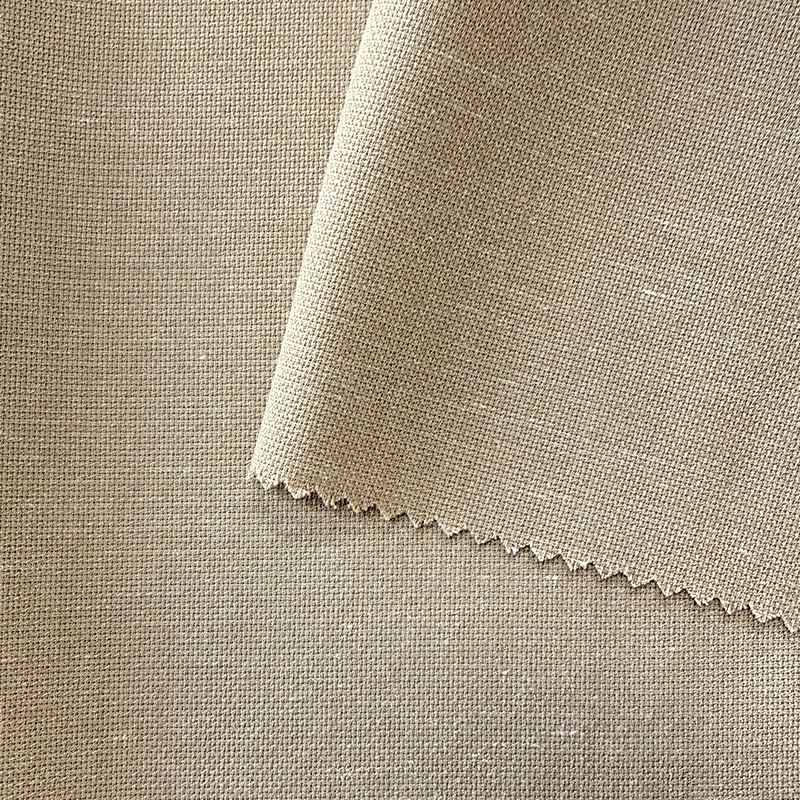
One popular option is the Rayon Linen Cavalry Twill. This construction combines the soft drape of rayon with the crispness of linen in a steep twill line that reads as a premium tailoring cloth. It is well suited to structured trousers, tapered pants and skirts where the fabric needs to hold a crease while still breathing in warm conditions.
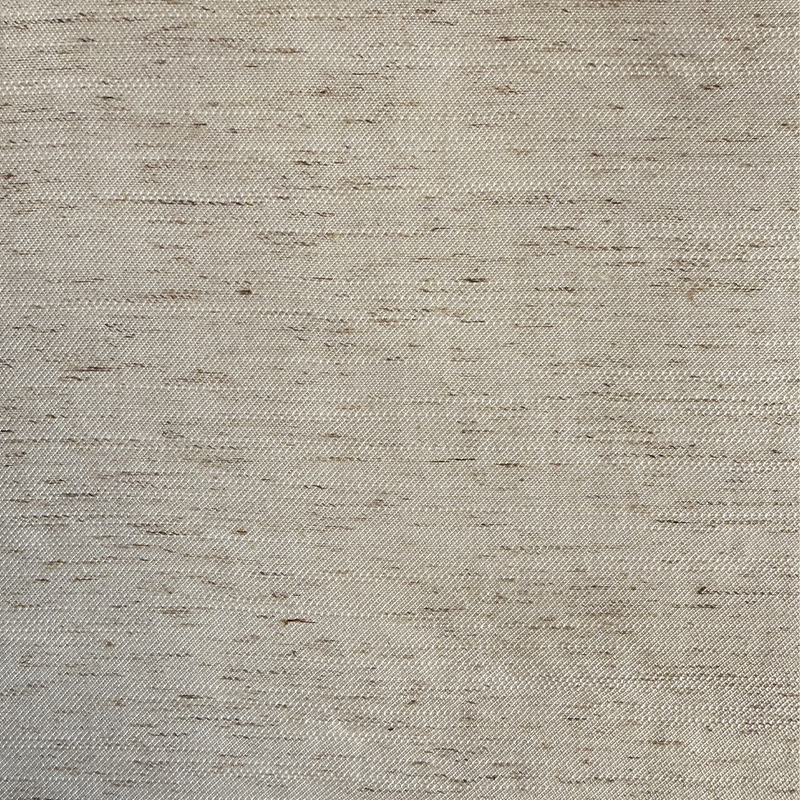 Rayon Linen Cavalry Twill Fabric with Structured Diagonal WeaveThis cavalry twill blend pairs soft rayon drape with crisp linen texture, offering a structured finish that holds creases well. It is ideal for tailored trousers and skirts requiring breathability, making it a popular sampling choice for developers seeking premium alternatives.View Product →
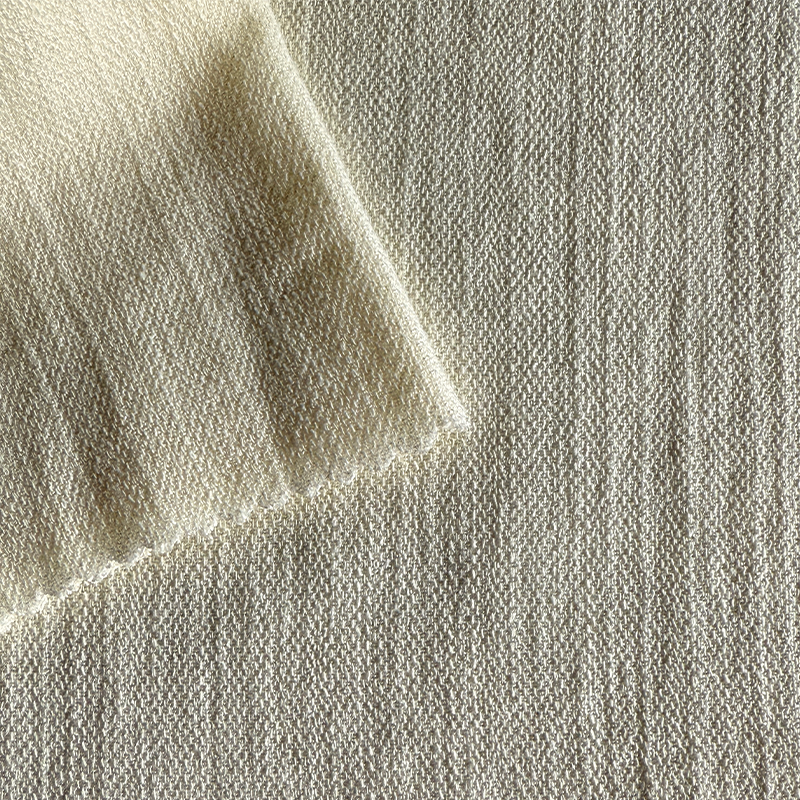
Another frequently sampled option is the Rayon Nylon Slub Linen. Here a slub yarn creates the irregular surface that designers associate with flax, while the nylon content adds abrasion resistance and shape retention. The result is a soft, slightly textural fabric that suits overshirts, relaxed blazers and travel-friendly separates, and it washes more forgivingly than a standard linen cloth.
 Rayon Nylon Slub Linen Fabric for Relaxed GarmentsFeaturing slub yarns that mimic natural linen irregularity, this rayon-nylon blend adds abrasion resistance and shape retention. Its soft, textured surface suits overshirts and casual blazers, offering an easy-care option designers frequently sample for relaxed styles.View Product →
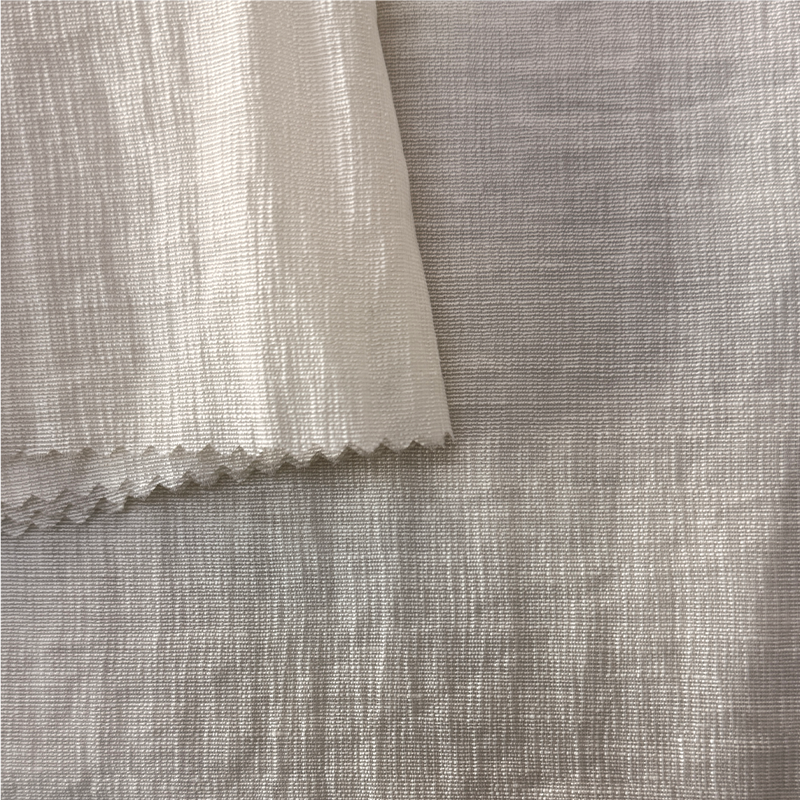
For programs that need an entirely linen-free construction, the Linen-like Slub Filament Crepe reproduces the visual texture of linen in a polyester-based cloth. It offers excellent dimensional stability, easy-care washing and a consistent price across large volumes, making it a common choice for uniform programs and high-volume fast-fashion styles.
 Linen-like Slub Filament Crepe Fabric for Linen-Free ProgramsThis polyester-based crepe reproduces linen's visual texture while providing dimensional stability and simple washing. Suitable for uniform programs and high-volume fast fashion, it balances cost and performance when a true linen blend is not required.View Product →
None of these options replaces a true cotton linen blend in every respect. But they expand the toolbox for a garment developer who needs a specific price point, a certain weight or a care label that reads machine wash cold and tumble dry low. A professional supplier will present both the genuine blend and the alternative constructions side by side so that the brand can make an economic decision with all the facts on the table.
Applications: Matching the Blend to the Garment
Every garment category uses the fabric differently, so the ideal blend ratio changes with the cut, the expected wash routine and the season. The following table summarises the application guidance we use internally when a buyer sends us a sketch and a target price.
| Garment category | Recommended ratio | Recommended weave | Why it works |
|---|---|---|---|
| Summer dresses | 55/45 or 50/50 | Plain, crepe, slub | Airy, light, drapes well |
| Shirts and blouses | 55/45 or 60/40 | Poplin, oxford | Easy care, comfortable |
| Trousers and chinos | 50/50 or linen-dominant | Twill, cavalry twill | Structure, breathability |
| Light jackets and blazers | Linen-dominant 60-70% | Canvas, twill | Statement texture, strength |
| Loungewear | Cotton-rich 70/30 | Plain, soft twill | Soft, cosy, convenient |
| Kids wear | Cotton-rich 70/30 to 85/15 | Plain, oxford | Durable, washable, soft |
For summer dresses, the fabric weight is just as important as the blend. A 130 to 160 gsm plain weave or crepe in a 55/45 blend gives the airy movement that makes a tiered dress feel light on the body. Heavier slub fabrics in the 170 to 200 gsm range work better for shirt dresses and utility dresses that need to hold their shape.
Shirts and blouses are the largest category for cotton linen blend fabrics, because the material combines the relaxed look of linen with the crispness of cotton poplin. A 60/40 cotton-rich blend with an oxford weave is a favourite for casual button-downs, while a 55/45 plain weave reads more formally for summer office wear.
Trousers and chinos need a fabric with structure and a clean crease line. A 50/50 blend in a cavalry twill provides the diagonal weave that resists creasing at the crotch and knee, and it has enough body to support a tailored silhouette without feeling heavy.
Light jackets and blazers benefit from a linen-dominant ratio that delivers a pronounced slub and a slightly rougher surface, which gives the jacket an artisanal character. These pieces are usually dry-cleaned or gently laundered, so the higher shrinkage of a linen-rich cloth is easier to manage.
Loungewear and kids wear sit at the opposite end of the spectrum. A cotton-rich 70/30 or 85/15 blend produces a soft, comfortable cloth that tolerates frequent washing, which is exactly what parents and loungewear buyers require.
Tri-Blends and Functional Upgrades
Beyond the simple two-fibre blend, modern mills offer tri-blends that add a third fibre to solve a specific performance problem. Adding elastane to a cotton linen blend gives the fabric stretch and recovery, which is essential for fitted dresses, slim trousers and body-conscious tops. The elastane is usually introduced as a spandex core in the warp or weft, and the finished fabric carries a mechanical stretch of fifteen to twenty-five percent depending on the yarn construction.
Tencel is another popular partner in tri-blends. A cotton linen Tencel combination improves drape and surface smoothness, because Tencel fibres are fine and supple. The resulting fabric keeps the natural slub texture of flax while gaining a subtle sheen and a more fluid movement, which makes it ideal for wide-leg trousers and flowing dresses.
Nylon is added when the garment faces high abrasion, such as in workwear or travel apparel. A cotton linen nylon tri-blend delivers the dry touch of linen with the toughness of synthetic fibres, and it recovers its shape better after long flights or long warehouse shifts. The earlier example of the Rayon Nylon Slub Linen from the Echoes blended series is a practical demonstration of this principle.
Sustainability programs are also driving new combinations. Recycled cotton can be blended with linen to reduce the environmental footprint of a garment, and some mills now offer organic cotton paired with European flax under a certification chain. Echoes Textile maintains a dedicated sustainable fabric series with recycled, organic and ECO-labelled cloth, so a brand with a verified sustainability claim can develop a linen cotton blend fabric from certified raw materials while keeping the same weaving and finishing quality.
A Practical Sourcing and Quality Control Checklist
Sourcing linen cotton blend fabric is straightforward when you know which tests and documents to request. The checklist below is the one we ask our own production team to follow, and it works equally well when a buyer audits a new supplier or monitors an existing one.
- Confirm the exact fibre composition and blend ratio in writing on the purchase order and the test certificate.
- Request shrinkage data based on three home launderings, not a single wash, for both length and width.
- Verify colourfastness to light, perspiration and water for garments that will be worn in hot climates.
- Inspect slub consistency across at least three rolls from different production batches.
- Check skew and bow on twill fabrics, because a diagonal that runs out of alignment ruins the sewing of striped or checked garments.
- Request a lab dip and a separate hand-feel reference swatch that matches the final bulk finishing route.
- Confirm whether the fabric is pre-shrunk and what finishing process was used, such as sanforizing or compacting.
- Set the minimum order quantity, the lead time and the acceptable tolerance for shade variation between lots.
Supplier selection is the most important part of this process. A trading company can offer attractive prices, but it cannot adjust yarn counts or blend ratios when a problem appears. Buying directly from a vertical manufacturer gives you access to the spinning and weaving expertise that actually determines fabric quality.
Shaoxing Echoes Textile Co., Ltd. operates an 80-mu grey fabric mill and an 80-mu modern cotton yarn mill, and the company reports a daily output of 200,000 metres. With more than two decades of experience serving overseas buyers, Echoes offers customised development, consistent quality assurance and a professional international trade service team that handles order execution and after-sales support. The blended fabric series is a practical reference for seeing how linen-content and linen-look fabrics are constructed, and the team will normally respond to a swatch request with a technical data sheet that covers blend ratio, shrinkage, weight and finishing details.
If you need swatches, lab dips or technical documentation, you can contact the Echoes team directly with your target weight, blend ratio and yardage requirements. For a buyer who is sourcing from multiple countries, having a single vertical supplier that can manage yarn, weaving, dyeing and finishing in one facility reduces the risk of miscommunication and short deliveries.
Care and Maintenance of Linen Cotton Blend Fabric
The care routine for linen cotton blend fabric depends on the blend ratio and the finishing process, but a few general rules hold across most constructions. Washing in cold or warm water up to forty degrees Celsius protects the flax fibres from excessive stress and preserves the surface texture. A gentle machine cycle with a mild detergent is sufficient for most summer garments, while heavily soiled workwear can be washed at sixty degrees if the fabric has a cotton-rich ratio and colourfast dyes.
Drying should be done flat or on a low heat setting. High temperatures are the main cause of the harsh, board-like feel that some consumers associate with cheap linen garments, so avoiding hot tumble cycles is the simplest way to keep the cloth soft. Ironing is easier when the fabric is still slightly damp; a medium-hot iron along the warp direction will smooth most creases without leaving a shine.
Shrinkage is the one issue that causes the most customer complaints. A quality supplier will pre-shrink the fabric so that residual shrinkage stays below three percent, but a linen-dominant blend may still move slightly in the first two washes. Garment manufacturers should always test the finished garment through the same wash cycle that the end consumer will use before confirming a bulk order.
Stain removal requires a little more care because flax fibres are sensitive to strong alkaline bleaches. Treat stains immediately with a gentle stain remover, and avoid chlorine bleach unless the fabric is labelled as bleach-safe. For garments that combine linen with elastane or nylon, lower washing temperatures also protect the elasticity and extend the garment life.
Frequently Asked Questions About Linen Cotton Blend Fabric
The questions below are the ones we hear most often from product developers, sourcing managers and factory owners. They cover the practical points that determine whether a linen cotton blend program succeeds or ends in returns and markdowns.
Is linen cotton blend fabric breathable?Yes, and this is the main reason it is chosen for summer garments. Flax fibres have excellent thermal conductivity and moisture wicking, and cotton adds absorbency, so a 55/45 or 50/50 blend stays comfortable in warm and humid conditions. The breathability is slightly lower than pure linen but noticeably higher than a typical cotton poplin or polyester suiting cloth of the same weight. |
Does linen cotton blend fabric shrink?Pure linen can shrink four to six percent in the first wash, while a balanced cotton linen blend shrinks two to four percent depending on the finishing process. Most reputable suppliers pre-shrink the fabric, which brings residual shrinkage below three percent. Always ask for shrinkage data based on three launderings and include a wash test in your pre-production approval. |
Is linen cotton blend good for summer?Yes, it is one of the best summer fabrics when the weight is appropriate. A 120 to 160 gsm plain weave or crepe in a 55/45 blend gives the airflow and light drape that summer dresses and shirts need. Heavier constructions remain suitable for summer trousers and light jackets, where the fabric's structure matters more than the lowest possible weight. |
What is the best linen cotton ratio?For a first order or a default program, a 55% cotton and 45% linen blend is the safest choice because it balances cost, softness, wrinkle recovery and linen character. If you want a stronger linen texture, move to a linen-dominant 60% or 70% linen ratio. If easy care is the priority, a cotton-rich 60/40 or 70/30 blend will perform better in repeated machine washing. |
How do you wash linen cotton blend fabric?Machine wash on a cold or warm gentle cycle with a mild detergent, and dry flat or on a low heat tumble setting. Iron while damp at a medium temperature for the best result. Avoid chlorine bleach and very hot water, which can damage the flax fibres and cause the fabric to lose its soft touch. Garments with elastane or nylon in the blend should stay at cold temperatures to protect the stretch. |
Where can I source linen cotton blend fabric wholesale?Direct from a vertical mill is the best option because the supplier can control the fibre blend, yarn quality and finishing route in one facility. Shaoxing Echoes Textile Co., Ltd. produces blended fabrics in its own grey fabric mill and cotton yarn mill, with a daily output of 200,000 metres and a dedicated international trade team. Buyers can request swatches, lab dips and technical data from the Echoes contact page before placing a bulk order. |