English
 Español
 italiano
Content
- 1 Why Linen Fabric for Apparel Remains a Buyer Favourite
- 2 Key Quality Parameters to Judge Linen Fabric for Apparel
- 3 Types of Linen Fabric for Apparel and Their Best Uses
- 4 Linen Blends and Linen-Look Fabrics: Practical Alternatives for Apparel
- 5 How to Source Linen Fabric for Apparel Without Guesswork
- 6 Frequently Asked Questions about Linen Fabric for Apparel
- 6.1 Is linen fabric good for apparel?
- 6.2 Does 100 percent linen fabric shrink?
- 6.3 Is linen blend better than 100 percent linen for apparel?
- 6.4 What is linen-look fabric made of?
- 6.5 How do I choose the right GSM for linen garments?
- 6.6 How can a buyer reduce risk when ordering linen fabric for apparel from overseas?
- 7 Final Guidance for Apparel Brands, Wholesalers, and Manufacturers
Linen fabric for apparel has a reputation problem. Ask ten buyers what they expect from it, and nine will describe a soft, breathable material that feels cool against the skin and improves with every wash. Then ask them what the first supplier actually delivered, and the answer is often different: rough handles, uneven dyeing, excessive shrinkage, or a supply chain that cannot hold a delivery date. The cause is rarely the flax fiber itself. It is much more often a mismatch between weave construction, finishing methods, and the intended garment application. When the right parameters are selected from the start, linen fabric for apparel behaves as well as any premium natural material on the market. When they are ignored, even an expensive linen fabric can ruin a production run.
This guide is written from the standpoint of a textile export company with more than twenty years of experience in weaving, spinning, and global trade. It is not a generic fiber encyclopedia. It explains how to evaluate linen fabric for apparel the way an experienced weaver and merchandiser would: what to test before bulk production, how to compare pure linen with blends and linen-look alternatives, which specifications suit which garment types, and how to choose a supplier that will not leave your production line waiting for answers.
Before we go deeper, one rule should guide every decision: linen does not forgive vague specifications. A buyer who asks for “nice linen clothing fabric” will receive whatever the mill has in stock. A buyer who specifies yarn count, density, grams per square meter (GSM), shrinkage limit, colour fastness, and finishing method will receive a product that can be planned, costed, and reproduced in bulk. The difference between those two approaches is the difference between a fabric story and a fabric problem.
Why Linen Fabric for Apparel Remains a Buyer Favourite
Flax is not an ordinary plant fiber. Its long, smooth bast fibers give linen a measurable advantage in moisture management, strength, and surface texture. A well-constructed linen fabric for apparel can absorb moisture up to 20 percent of its own weight without feeling damp, which is why linen garments stay comfortable in humid summer conditions. The fiber structure also allows heat to escape more quickly than cotton, producing the “cool to the touch” sensation that designers value for spring and summer collections. Beyond comfort, linen has a natural irregularity that creates a relaxed, expensive-looking texture. That texture cannot be fully imitated by ordinary cotton or polyester.
From a production perspective, linen fabric for apparel has two attractive traits. First, it is strong. Linen is stronger than cotton in both dry and wet conditions, so garments can withstand repeated washing when the fabric has been constructed with enough yarn density. Second, it softens with wear. The pectins and natural coatings around the flax bundles gradually break down, which means a linen shirt or dress often feels substantially more supple after the garment's fifth wash. These qualities explain why linen appears again and again in premium casual wear, relaxed tailoring, and designer resort collections.
At the same time, a realistic buyer must respect the limitations. Pure linen has low elasticity and poor natural wrinkle recovery, so it creases more than cotton under static pressure. Unfinished linen can shrink heavily, sometimes more than eight percent in the warp direction. If the fabric is finished with strong resin to reduce wrinkles, the hand feel can become stiff and the strengths may suffer. The practical conclusion is that linen fabric for apparel delivers best when the supplier has controlled pre-shrinking, softening, and crease management during finishing.
Let us put the main performance differences into a visual comparison. These bars are normalized values for garment use, based on common test observations from fabric laboratories and mill experience. They are intended as a selection benchmark rather than an absolute physical claim. The chart compares six properties that directly affect how a linen garment looks, wears, and survives in a home laundry.
The clearest message from the chart is that linen wins where summer apparel is won: breathability and moisture wicking. A linen dress worn in public transport or an outdoor market will feel less clingy than an equivalent cotton dress, because the fibers move moisture away from the skin and release it into the air more quickly. This one advantage alone justifies the use of linen fabric for apparel in tropical and transitional seasons. The second message is that linen starts weaker in wrinkle and shrinkage performance, but that gap narrows when the mill applies a modern pre-shrinkage and soft-touch finishing route. Buyers often reject linen because of a previous bad experience with an unfinished fabric; they rarely reject linen when the finisher has done the job correctly.
The chart also reveals a less obvious point about strength. Linen’s high wet strength is not captured fully in a dry index, but it is the property that lets linen garments survive in commercial laundries without breaking down at the seams. For brands that serve hotels, hospitality uniforms, and rental garment programs, that durability is an underrated feature. Cotton may feel softer in the grey state, but it loses shape and fiber integrity faster under repeated industrial washing. Linen, by contrast, becomes more flexible while maintaining its original fibre strength.
One more observation matters for cut-and-sew teams. Because linen has a lower elasticity index, garment makers should not expect it to recover from stretching the way cotton jersey or synthetic blends do. Patterns should be engineered with less negative ease, and seams should be stabilized where necessary. When the designer and the pattern maker understand this behavior from the beginning, they can control the natural drape of linen instead of fighting against it.
The trend in the market is also visible in these numbers: linen is no longer reserved for shirts and napkins. Modern linen fabric for apparel appears in relaxed blazers, wide-leg trousers, jumpsuits, and even accessories such as caps and tote bags. Each of those end uses requires a different balance of strength, drape, and wrinkle management. The chart explains why the same supplier cannot offer one “standard” linen that works for every silhouette. The fabric specification must move with the garment type.
Key Quality Parameters to Judge Linen Fabric for Apparel
Once you understand why linen appeals to consumers, the next question is how to protect that appeal in bulk production. Experienced buyers do not rely on swatch charm alone. They check a set of quantifiable parameters that determine how the fabric will behave after cutting, sewing, washing, and wearing. Below are the parameters that we use when a customer asks us to evaluate or develop linen fabric for apparel.
Fiber length and yarn type
Flax fiber length is the first hidden variable. Long-staple flax produces smoother yarns with fewer protruding fiber ends, which means less pilling and a cleaner surface. Short-staple tow linen is often used for rustic home textiles, but it can feel scratchy against the skin in apparel. For garments that sit close to the body, ask whether the yarns are wet-spun long flax or dry-spun tow. Wet-spun yarns are finer and more uniform, while dry-spun yarns preserve a more pronounced slub character.
Yarn count and fabric density
Yarn count in linen is commonly expressed in English lea (NeL), which reflects how many 300-yard lengths of yarn weigh one pound. For apparel, typical counts range from NeL 14 to NeL 36. Fine counts above NeL 28 are used for lightweight shirting and flowing dresses; medium counts around NeL 16 to 24 appear in structured dresses and trousers. Fabric density is expressed in ends and picks per 10 centimeters. A deliberately imbalanced construction can produce drape or stiffness, but too low a density increases seam slippage risk.
| Parameter | What to inspect | Typical benchmark for apparel |
|---|---|---|
| Fiber length | Long-staple flax vs. tow fiber | Long-staple, wet-spun for close-to-skin garments |
| Yarn count | NeL value shown on technical sheet | NeL 14–36 depending on garment type |
| Fabric weight | GSM after finishing | Shirts 120–160 GSM; dresses 160–220 GSM; jackets/trousers 250–320 GSM |
| Density balance | Ends and picks per 10 cm | Balanced enough to prevent skew and open weave areas |
| Shrinkage | 3× domestic wash test | ≤ 3–5% warp, ≤ 3–4% weft for pre-treated linen |
| Colorfastness | Washing, light, perspiration | Washing ≥ 3–4; light ≥ 4; perspiration ≥ 3–4 |
| pH value | Textile pH test | 4.0–7.5 |
| Formaldehyde | Resin finishing check | ≤ 75 mg/kg for adult close-to-skin garments |
GSM and its role in garment behaviour
GSM is the most common shortcut for classifying linen fabric for apparel, but it should never be used alone. A 160 GSM linen with a loose plain weave drapes and wrinkles differently from a 160 GSM linen with a dense twill construction. Before choosing a weight, ask how the fabric will be cut. Wide-leg trousers need a heavier fabric to hold their silhouette; blouses with gathering or smocking require a lighter and softer construction. A fabric that works beautifully as a shirting sample may collapse when made into a double-layer skirt. The GSM must be matched to pattern volume and seam design.
Shrinkage and pre-treatment
Pre-shrinking is arguably the most important finishing step for linen. Without it, the first home wash can transform a perfectly cut shirt into a distorted garment. Mills control shrinkage through sanforizing, compressive shrinkage equipment, or careful washing and heat-setting processes. When a supplier publishes a shrinkage number, confirm the test method and the number of washes behind that number. Some mills test only one gentle wash; your customer may wash the garment every week. The difference between a 3 percent and a 7 percent shrinkage result is enormous in tailored products.
Colour fastness and chemical safety
Linen absorbs dye well, but the depth of shade influences fastness. Deep navy and black linen can release excess dye in the first wash if the reactive dyeing process is rushed. Check the rubbing fastness, especially for garment-dyed styles where fabric is dyed after cutting. For childrenswear and workwear, also review the formaldehyde level if the fabric has received anti-wrinkle resin. Many European and North American apparel brands now require OEKO-TEX or equivalent third-party testing, so a mill that cannot provide a valid test report becomes a supply risk.
Hand feel and drape evaluation
Hand feel is subjective, but it can be anchored with simple physical cues. Bend the fabric corner and observe how quickly it springs back; that indicates stiffness. Drape it over a rounded surface and watch how it falls; that indicates bending length. Rub two layers together and feel the surface friction; that indicates slipperiness in cutting. For linen apparel, the ideal hand feel usually combines a dry surface with a slightly full body, not a cardboard-like stiffness. If the swatch feels glassy or coated, ask the mill to identify the finish and whether it will survive the first wash.
Types of Linen Fabric for Apparel and Their Best Uses
Linen fabric for apparel is not a single product. Under the same flax fiber umbrella, different weaves create completely different garments. A buyer who treats all linen swatches as interchangeable will struggle with drape, stability, and cost. The following types appear most frequently in apparel programs.
Plain-woven linen
This is the classic linen shirting and dress fabric. It has a simple one-over-one-under structure, which gives it a visible balance and a slightly crisp handle. Plain-woven linen can be produced in light weights from 120 to 180 GSM, making it suitable for button-down shirts, blouses, A-line dresses, and summer skirts. The open weave allows excellent airflow, but seam slippage needs monitoring if the density is very low.
Twill linen
Twill linen has a diagonal line structure that gives the surface more texture and the fabric more durability. It drapes more softly than a plain weave at the same weight, and it resists abrasion better because the longer floats distribute stress across the yarns. Twill linen in the 220 to 320 GSM range works well for blazers, trousers, jumpsuits, and structured skirts. In lighter weights, it is also used for relaxed shirts with a more fluid feel.
Damask linen
Damask linen uses a jacquard or dobby mechanism to create woven patterns, often with a contrast between shiny and matte areas. It is traditionally associated with tabletop textiles, but lighter damask linen fabrics are now used for evening dresses, waistcoats, and decorative apparel accents. The garment application depends on the pattern scale and the yarn count used for the ground weave.
Loosely woven linen
This category includes fabrics with visible gaps between yarns, such as linen gauze, crinkled linen, and linen cheesecloth. Loosely woven linen is extremely breathable and lightweight, typically below 140 GSM. It suits beachwear, layering pieces, summer blouses, and scarves. Because the loose construction changes shape more easily, garments need generous seam allowances and careful grading.
Heavy linen canvas and suiting
Heavy linen canvas, usually above 280 GSM, is used for outerwear, workwear-inspired jackets, pants, and structured bags. It has a firm handle and excellent dimensional stability after pre-shrinking. This type is a favorite for brands that want a natural fiber story in tailored garments but still need reliable performance in machine washing.
Linen blends and linen-look fabrics
Because 100 percent linen is relatively expensive and difficult to finish, many manufacturers offer linen blends with cotton, Tencel, rayon, nylon, or wool, as well as linen-look fabrics made from polyester or viscose filament. Blends reduce the cost and improve wrinkle recovery, while linen-look fabrics reproduce the irregular slub texture at a lower price. These alternatives are covered in more depth in the next section.
| Linen type | Structure | Hand feel and weight | Best apparel use |
|---|---|---|---|
| Plain-woven linen | 1/1 weave | Light, crisp, 120–180 GSM | Shirts, blouses, summer dresses |
| Twill linen | 2/1 or 2/2 diagonal | Soft, draping, 220–320 GSM | Blazers, trousers, jumpsuits |
| Damask linen | Jacquard or dobby pattern | Patterned, light to medium | Evening dresses, waistcoats, decorative pieces |
| Loosely woven linen | Open weave, gauze or crinkle | Airy, very light, below 140 GSM | Beachwear, layering blouses, scarves |
| Heavy linen canvas | Dense plain or twill | Firm, above 280 GSM | Outerwear, tailored pants, workwear |
| Linen blend / linen-look | Varied, usually plain or twill | Cost-effective, stable, easy care | High-volume shirting, dresses, uniforms |
The table shows why a supplier catalogue should not be judged by the word “linen” alone. The same brand might need plain-woven linen for a shirt program, twill linen for a trouser program, and a linen blend for a fast-fashion dress line. If the mill only offers one weave, the buyer will have to split orders across multiple sources, increasing colour-matching and delivery complexity. A full-process supplier with a wider woven range can consolidate more of that production.
For early-stage brands, the safest route is to identify the primary garment silhouette first and then work backwards to the fabric structure. A blouse with a relaxed, oversized fit requires a lighter plain-weave linen with some drape; a tailored jacket requires a twill or canvas construction with higher density. Choosing the fabric before the pattern is finalized often leads to unwanted stiffness or excessive fall.
Linen Blends and Linen-Look Fabrics: Practical Alternatives for Apparel
Fashion brands often love the idea of linen but hate the unpredictability of 100 percent linen in bulk production. High shrinkage, strong creasing, and limited availability of fine counts are serious concerns for a merchandiser who must guarantee a certain garment cost and performance level. This is where linen blends and linen-look fabrics become strategic tools rather than cheap imitations.
Why 100 percent linen is not always the best answer
Pure linen has a natural, irregular character that consumers appreciate, but it also has a higher price point and a lower tolerance for production error. A garment made from pure linen that is not pre-shrunk can fail the first wash test. A pure linen shirt may also require more ironing than the average customer is willing to do. Blends answer these problems by adding a fiber with better wrinkle recovery, higher elasticity, or lower cost without abandoning linen’s visual identity.
- Cotton linen blend: The most common balance. Cotton softens the hand feel, improves color yield, and reduces shrink; linen adds texture and breathability. Usually 50/50 or 55/45 linen cotton.
- Tencel linen blend: Lyocell contributes fluid drape and a smooth surface, while linen retains the slub texture. Excellent for relaxed dresses and light jackets.
- Rayon linen blend: Viscose increases softness and dye brilliance. A rayon-linen fabric can take vivid colors that pure linen often cannot achieve as easily. Good for printed summer dresses.
- Nylon linen blend: Nylon adds strength, flexibility, and reshape recovery, making the fabric more suitable for fitted garments and bottom-weight pieces.
- Wool linen blend: Wool adds warmth, resilience, and a softer touch; linen keeps the fabric breathable. This blend suits transitional outerwear and tailored suiting.
In addition to these blends, the textile industry now produces linen-look fabrics that contain no flax at all. A polyester or viscose filament yarn with slubs and slubs is woven into plain or twill constructions to imitate the surface irregularity of linen. These fabrics are much easier to finish: they shrink less, wrinkle less, and are more predictable on the cutting table. Many mid-priced apparel programs rely on linen-look fabrics because consumers respond to the visual language of linen even when they cannot tell the exact fiber content.
From a sourcing point of view, blends and linen-look fabrics also reduce the dependence on flax harvest conditions in a single region. A mill that can switch between pure linen, linen blends, and linen-look construction offers a more stable supply because it is not locked into one raw material cycle. For a brand, this flexibility matters when tight deadlines arrive and the greige fabric must be available on a specific day.
What a full-process manufacturer can offer
Shaoxing Echoes Textile Co., Ltd. is a good example of a manufacturer that covers the entire chain from yarn to finished woven fabric. The company operates an 80-mu greige fabric plant and an 80-mu modern cotton-spinning plant, which gives its production team direct control over raw materials and weaving quality. With a daily output around 200,000 meters, Echoes can supply substantial orders and still keep the technical discipline that apparel brands need for colour and shrinkage management. The company exports to global markets through a dedicated international trade service team, which means overseas buyers receive the same level of communication, sampling, and after-sales support that they would expect from a local agent.
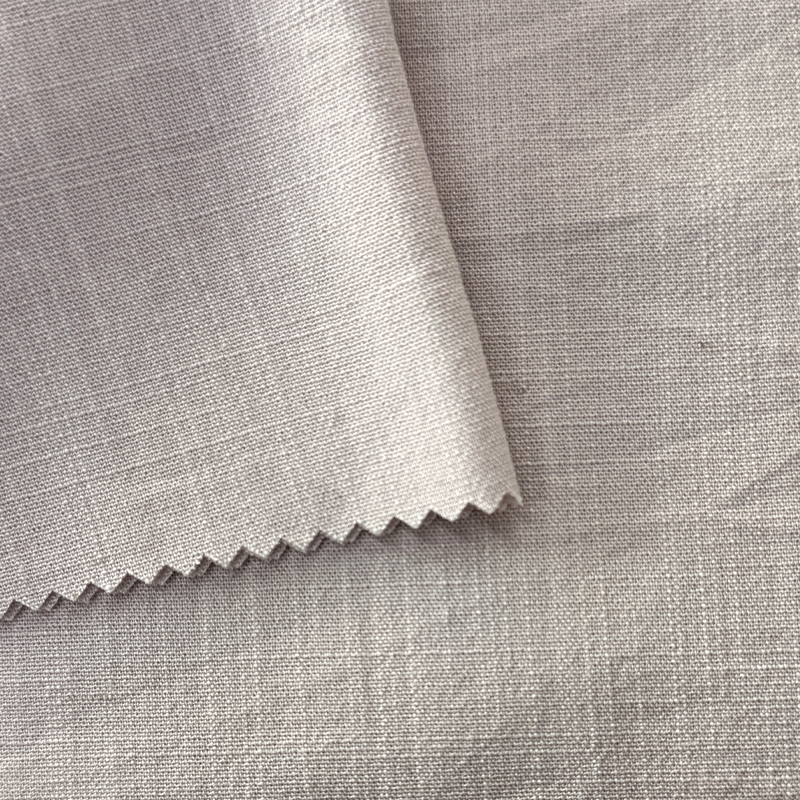
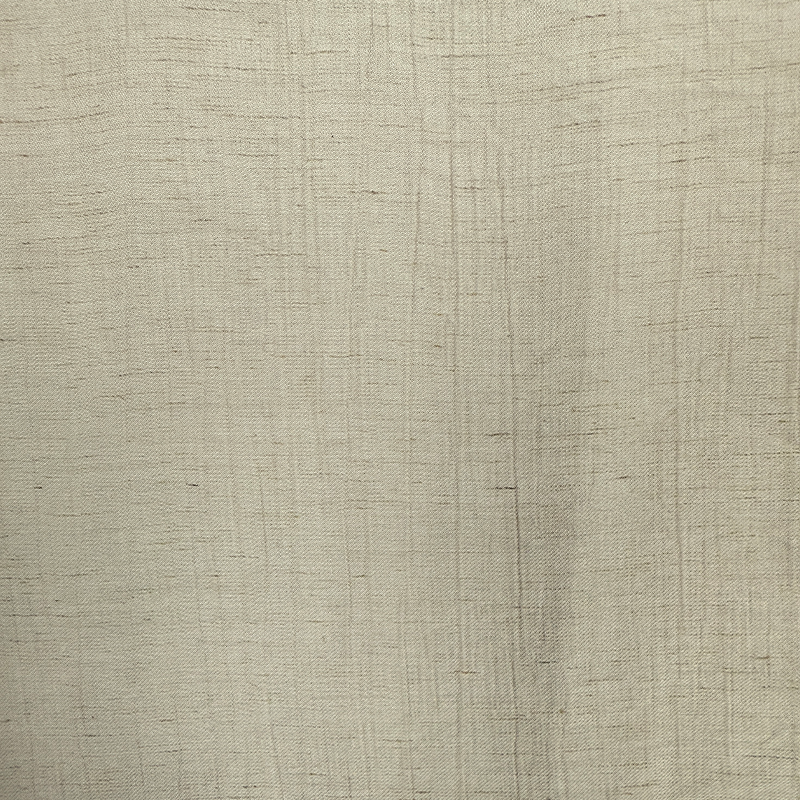
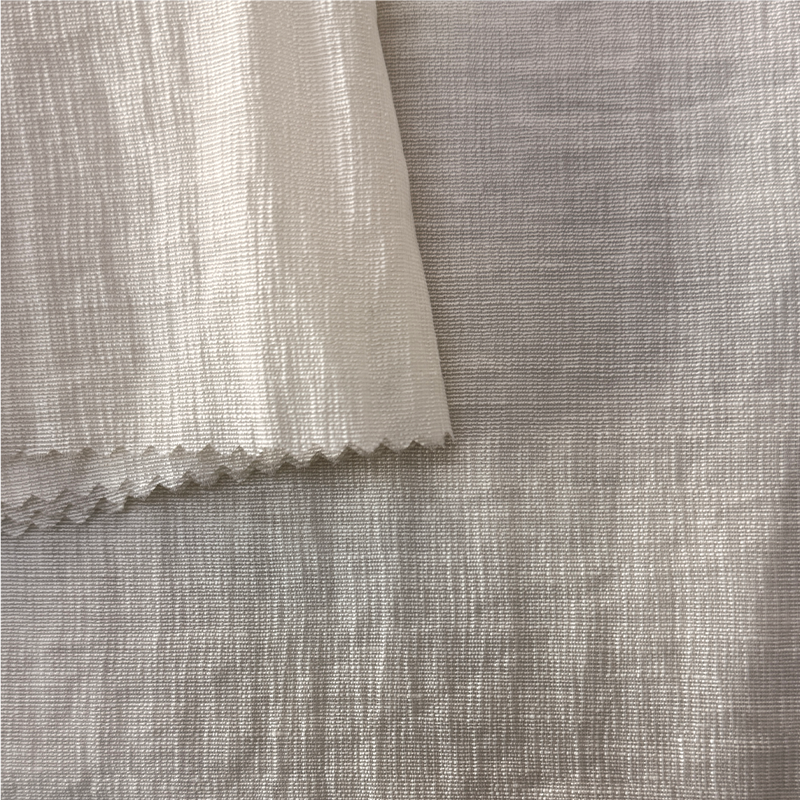
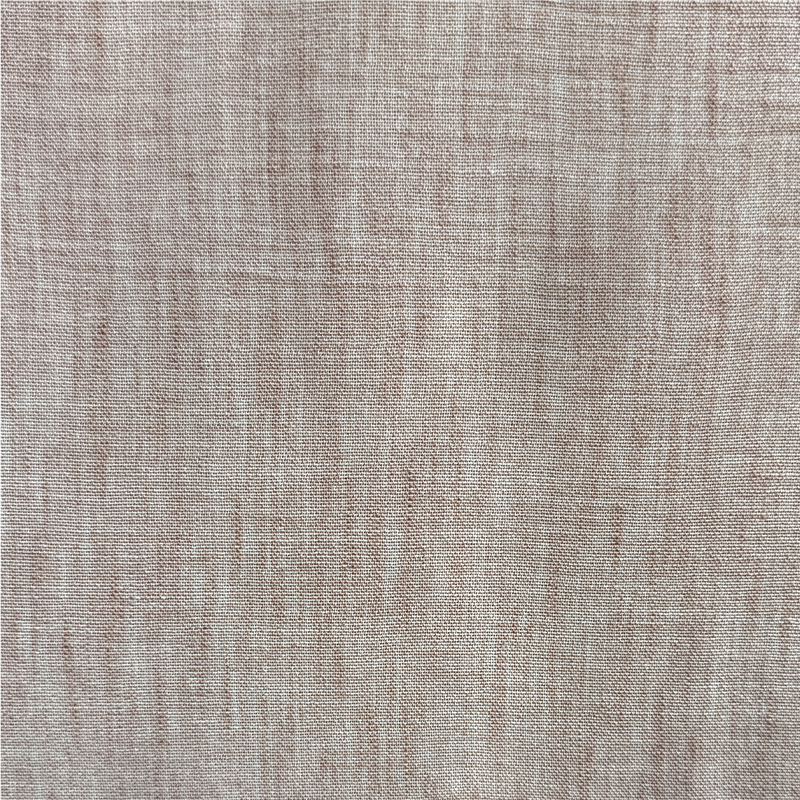
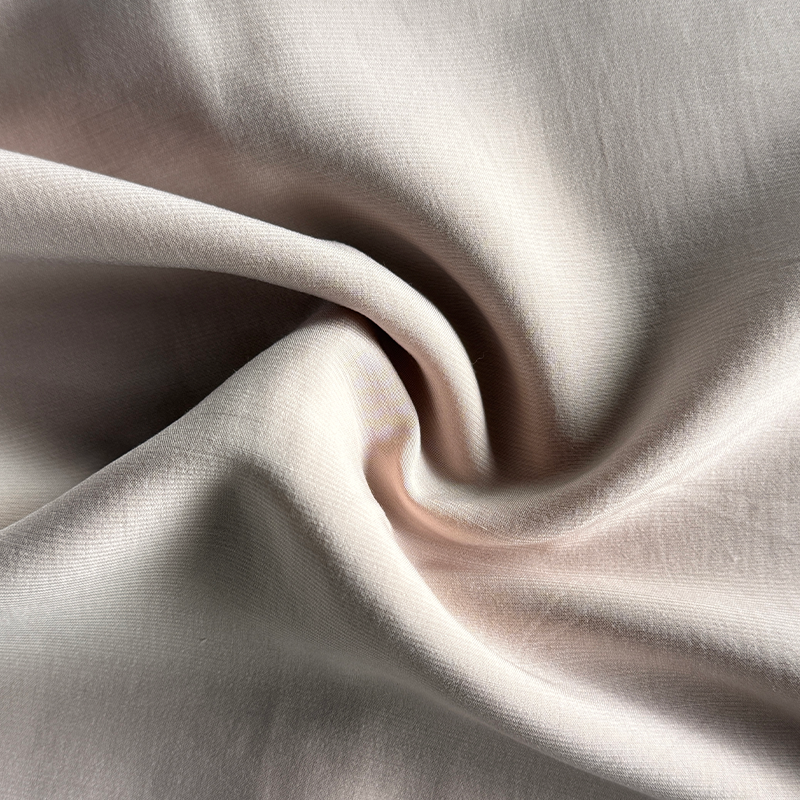
Echoes does not simply sell generic linen fabric for apparel; it develops product series around specific garment and hand-feel goals. For example, the linen-like slub filament crepe fabric in the blended series gives designers the dry surface and slub texture of linen with a more forgiving structure for cut-and-sew programs. The slubbed linen-look plain weave serves shirting and dress styles that need an authentic linen aesthetic at a controlled budget. And the rayon-linen cavalry twill offers the crisper drape and surface definition required for trousers and structured skirts.
 Linen-look Slub Filament Crepe Fabric with Rayon BlendThis lightweight rayon-nylon-linen blend offers a dry, slubby texture that mimics linen while remaining smooth and breathable. Its layered surface adds visual depth, making it a practical choice for relaxed everyday dresses.View Product →
 Slubbed Linen-look Plain Weave Fabric for Easy-care ApparelA crisp, dimensionally stable fabric with 3% linen content that provides a dry, rustic feel and natural moisture-wicking. Its easy-care structure makes it suitable for breathable summer shirts, tops, and pants.View Product →
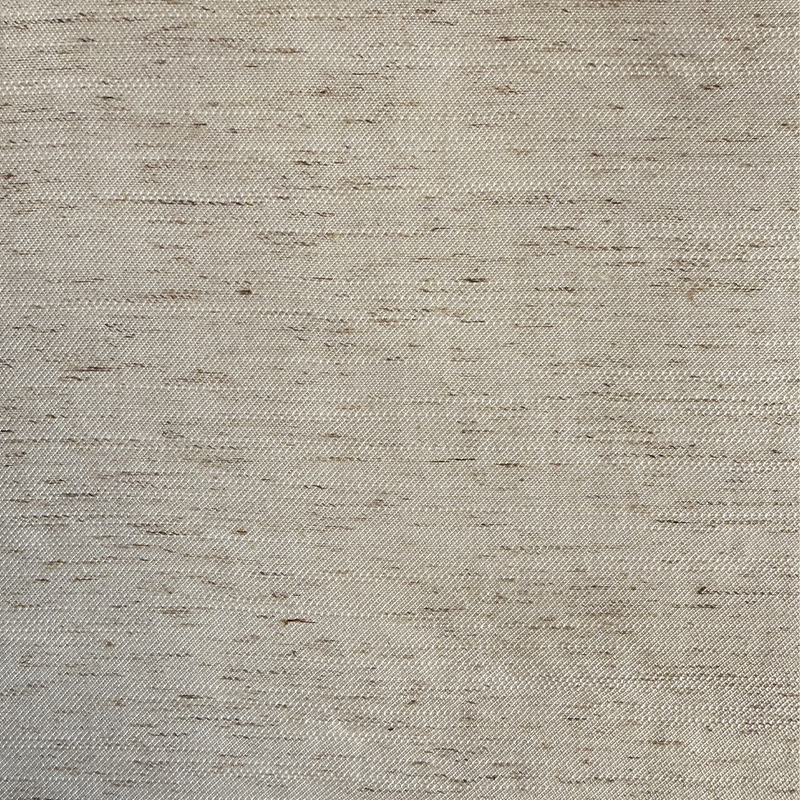 Rayon Linen Cavalry Twill Fabric with Structured Diagonal TextureThis twill weave combines natural linen slubs with a soft rayon sheen, offering a crisp drape and defined diagonal lines. Its structured yet breathable feel makes it ideal for trousers and tailored skirts.View Product →
These are not merely style names; they are engineering decisions. A slub filament crepe gives the garment a slightly puckered texture that hides daily creases. A slubbed plain weave offers a flatter surface for fine prints and embroidery. A cavalry twill adds a sharp diagonal line that reads as tailored and refined. Buyers who understand these differences can approach a supplier with a clear reference point, which shortens the sampling cycle and reduces the chance of disappointment.
| Selection factor | 100% linen | Linen blend | Linen-look fabric |
|---|---|---|---|
| Raw material | Flax only | Flax with cotton, rayon, Tencel, nylon, etc. | Usually polyester, viscose, or blended filament yarns without flax |
| Cost level | High | Medium | Low to medium |
| Shrinkage control | Needs careful pre-treatment | Easier to control | Very stable |
| Wrinkle resistance | Low | Moderate | Good |
| Surface texture | Natural slub, herbal character | Visible slub but softened | Deliberately engineered slub |
| Drape and softness | Starts crisp, softens with washing | Soft quickly | Controlled by filament type |
| Best for | Premium natural collections | Commercial shirts, dresses, trousers | High-volume fast fashion and uniforms |
The comparison table confirms an honest market rule: 100 percent linen is the sensory champion, but it demands more from the garment factory and the user. Linen blends are the practical workhorse, because they move the fabric closer to the care habits of modern consumers. Linen-look fabrics are the efficient filler for programs where price and consistency are the first priority. A brand can use all three categories in one collection without confusing the consumer, as long as each fabric is assigned to the right silhouette.
Wholesale buyers should also evaluate the availability of greige goods when comparing these options. Pure linen requires a longer replenishment cycle because the flax yarn is often produced in smaller lots. Blends and linen-look fabrics, especially those based on rayon and polyester yarns, can be repeated more quickly once a design is confirmed. In a fast-moving apparel market, that shorter lead time is a commercial advantage that designers eventually learn to respect.
How to Source Linen Fabric for Apparel Without Guesswork
Sourcing linen fabric for apparel is different from ordering a standard cotton poplin. The product has a wide quality range, and the finishing route can change its behaviour completely. A disciplined sourcing process protects the brand, the factory, and the end customer. Below is the sequence that we recommend to buyers, from first enquiry to bulk delivery.
Step 1: Define the application and season
The first conversation with a supplier should describe the garment silhouette, the target price, the wash care label, and the volume. If the item is a flowing, printed dress for summer, the supplier will propose a lighter plain weave or a rayon-linen blend. If the item is a tailored jacket, the supplier will steer toward a twill or heavy canvas. Without this context, the supplier can only offer generic stock, and the sampling may take several rounds instead of one.
Step 2: Write a technical specification sheet
Cover composition, yardage, weight, weave, width, dyeing method, finishing details, shrinkage, colorfastness, and required certificates. A clear technical sheet gives the mill a production target. When the mill knows the buyer is professional, it tends to offer better scheduling and more honest feedback about constraints. The sheet also becomes the legal standard for bulk inspection.
Step 3: Request a pre-production sample and lab dip
Swatches are useful but not sufficient. Ask for a pre-production sample in the actual finish that will be used for bulk, plus a lab dip or digital colour standard. Confirm that the hand feel, GSM, and shrinkage of the sample match your target. If the sample arrives heavily softened with a silicone finish, check its performance after one wash; a sample that looks beautiful may not survive commercial laundering.
Step 4: Run a cutting test
Send a few meters of the candidate fabric to the garment factory before approving bulk production. The cutting team can check the fabric’s slipperiness, shrinkage during steam ironing, and seam stability. A fabric that performs poorly on the cutting table will cause delays and extra fabric consumption, even if the hand feel is perfect.
Step 5: Evaluate lead times, MOQ, and production capacity
Ask about minimum order quantity per color, repeat order lead time, and maximum monthly output. A supplier that can spin its own yarn will generally be more flexible than one that must order yarn externally. If production capacity is limited to a single weaving line, peak season delays become a critical risk.
| Evaluation area | Questions to ask | Why it matters |
|---|---|---|
| Raw material chain | Do you have your own spinning or yarn sourcing? | Vertical control keeps yarn quality and delivery stable |
| Weaving capacity | Are looms owned or outsourced? | Own looms improve defect management and scheduling |
| Finishing flexibility | Can you pre-shrink, cashmere-wash, resin-treat, enzyme-wash? | Finishing decides the final hand feel and shrinkage level |
| Testing support | Do you have an in-house lab or third-party reports? | Faster color and quality troubleshooting |
| MOQ structure | What is the minimum per color and per style? | Critical for pilot collections and test orders |
| Production capacity | What is the daily meter output? | Prevents missed deliveries during peak season |
| Export experience | Which markets have you served, and what certificates do you provide? | Reduces customs, documentation, and compliance friction |
Working directly with a manufacturer or wholesaler
There is a meaningful difference between buying from a trading agent and buying from a company that controls the production chain. A manufacturer who also operates yarn production and weaving departments can explain why a particular construction behaves as it does. If a problem occurs during finishing, the manufacturer can adjust the formula in-house instead of sending the issue back to an unrelated mill. For apparel programs that need repeatable results, this level of vertical integration is worth more than a slightly lower price per meter.
Echoes Textile fits that profile. With two production bases, one for greige fabric and one for cotton yarn, the company integrates research, production, and sales under one management system. Buyers can speak directly with a professional export team that understands fabric performance, shipping terms, and the documentation required for international trade. The company’s scale also allows it to offer a wide catalogue covering polyester, natural fiber, knitted, printed, sustainable, and blended series, so a single supplier relationship can cover more than one seasonal program.
To evaluate whether Echoes is the right fit for your project, the most practical step is to discuss the garment type and volume with the sales team. Ask for references that are similar to your intended product and request a pre-production sample with your target shrinkage and hand-feel values. Then compare the sample with the technical data sheet, not just with the initial visual impression.
If you want to explore the full product range, visit the Echoes fabric library on the company website. The product pages can help you identify the exact construction that matches your design idea. Once you have a shortlist, the export team can arrange for a physical sample and a technical discussion. You can also reach out directly through the contact page to described your linen fabric for apparel needs and request a confidential sourcing plan.
Explore the Echoes fabric library to compare linen, linen-blend, and linen-look constructions
Contact the Echoes sourcing team to discuss your linen fabric for apparel project
Frequently Asked Questions about Linen Fabric for Apparel
Is linen fabric good for apparel?Yes, linen fabric for apparel is an excellent choice when the right weight and finishing are selected. It is highly breathable, strong, and becomes softer with washing. However, the garment must be designed with linen’s low elasticity in mind, and the fabric must be pre-shrunk and finished for the intended care routine. Without those precautions, pure linen can shrink and crease more than a brand or consumer expects. |
Does 100 percent linen fabric shrink?Yes, unfinished 100 percent linen can shrink by 8 percent or more in the warp direction. A reliable fabric manufacturer will pre-shrink the material during finishing so that the final shrinkage is around 3 to 5 percent. A supplier that cannot prove its shrinkage values with a test report should be treated with caution. Garment factories should still run their own wash test on the production fabric before cutting expensive styles. |
Is linen blend better than 100 percent linen for apparel?It depends on the product story. For premium garments where pure natural character and texture are the selling point, 100 percent linen is hard to beat. For commercial programs where cost, easy care, and dimensional stability are priorities, a linen blend with cotton, Tencel, rayon, or nylon is often better. Blends keep the visual identity of linen while reducing shrinkage and improving wrinkle recovery, which translates into fewer customer complaints and lower production loss. |
What is linen-look fabric made of?Linen-look fabric, also called imitation linen, usually contains polyester, viscose, or a blend of both. The yarns are engineered with slubs, unevenness, or filament loops to copy the surface texture of real flax. Sometimes real linen is added in a small percentage to improve the hand feel. Linen-look fabrics are easy to care for, stable, and more affordable than pure linen, which makes them popular for uniforms, fast fashion, and seasonal basics. |
How do I choose the right GSM for linen garments?Choose the GSM according to the garment silhouette and season. Light blouses and shirts generally work with 120 to 160 GSM. Flowing dresses and skirts are comfortable in 160 to 220 GSM. Structured jackets, trousers, and overalls need 250 to 320 GSM or heavier. Remember that GSM alone does not determine drape; weave density and finishing also change the way the fabric moves. |
How can a buyer reduce risk when ordering linen fabric for apparel from overseas?Start with a precise technical specification sheet and request a pre-production sample that matches your shrinkage, colorfastness, and hand-feel targets. Run a small cutting test in the actual garment factory, and ask for a third-party inspection report before shipment when the order is large. Work with a supplier that controls yarn production and weaving so that any quality issue can be corrected at the source rather than becoming an expensive dispute at the port. |
Final Guidance for Apparel Brands, Wholesalers, and Manufacturers
The market for linen fabric for apparel is larger than most buyers realize. It covers light summer dresses, refined shirting, relaxed suiting, denim-like woven pants, printed blouses, and even outerwear. The successful approach is not to ask “is linen better than cotton” and stop there. The successful approach is to ask which linen construction, blend ratio, and finishing route will deliver the specific garment promise at a cost that fits the selling price.
For a premium or independent brand, pure linen remains the clearest way to communicate natural quality. Choose it when your consumer already knows how to care for linen and values the patina that develops with age. For a mass-market retailer or a uniform supplier, linen blends and linen-look fabrics offer the visual effect of linen without the risk of shrinkage complaints or ironing fatigue. Use them in high-volume styles that need to perform the same way every time.
On the supply side, experience changes everything. A manufacturer that spins its own yarn, weaves in its own factory, and finishes the fabric under the same management structure can identify and solve problems faster than a trader who simply reroutes a phone call. The vertical structure also gives the buyer access to research and development, which becomes valuable when a design team asks for a custom blend or a special hand feel.
Before you approve any order, remember the checklist: composition, yarn count, GSM, density, shrinkage, colorfastness, pH, and finishing details. Request a pre-production sample that matches your care label. Test the cutting behavior in the actual garment factory. Then inspect the bulk production against the approved sample. This process may take a few extra days at the beginning, but it saves months of corrective work after the goods have landed in your warehouse.
If you are evaluating a new source, use the Echoes product library and contact channels mentioned in the sourcing section. Prepare your specification sheet before you write the first email, share the intended garment type honestly, and ask for data that supports every claim in the technical sheet. When both sides bring professional discipline to the conversation, linen fabric for apparel can become one of the most enjoyable and reliable categories in your collection.